IrrigationNZ says that introducing a nationwide water tax is not workable.
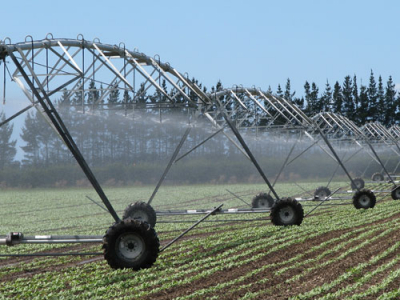
Allowing irrigators to continue to invest in more modern irrigation systems rather than taxing them will result in the biggest improvements in water use efficiency, says Irrigation NZ chief executive Andrew Curtis.
“A water tax has been considered in other countries internationally but in every case it has been abandoned. Other countries have found it too complex and expensive to design a fair water tax which can be easily implemented without resulting in adverse outcomes,” says Curtis.
The Interim Tax Working Group Report touches on some of the complexities around a water tax, like the need to address Māorirights and interests, with many more issues yet to be examined. However, it is good to see the report recognise that many groups use water, and taxation would not just affect irrigators, notes Curtis.
“In Canterbury, for example, 55% of water is consented for hydro-generation, 29% is consented for irrigation and 16% is consented for other uses.”
The Tax Working Group sees a water tax as a way to increase water use efficiency.
Regulations and limits on water availability are already driving the adoption of more efficient irrigation systems – this is reflected in NZ Agricultural Production Survey statistics which show a big drop in the use of flood irrigation systems which now only account for 5% of irrigated land.
“Modern irrigation systems have less water and nutrient run-off which is good for the environment. But they are expensive – for example in Canterbury some irrigators will need to spent a total of $80 million replacing their irrigation systems to meet new council rules,” says Curtis.
“The government and the primary sector agreed this year that audited Farm Environment Plans should be introduced nationwide to improve farm practices including irrigation efficiency. Irrigators have already invested significant time and resources to meet Farm Environment Plan requirements.”
Curtis says that introducing a blanket national water tax will make it more difficult for farmers and growers to install more efficient irrigation systems and will reduce the amount of money available to change farm practices by adding a new cost for irrigators.
“Internationally there is also increasing investment occurring in water infrastructure as governments recognise they need to store water in an increasingly volatile climate to provide communities and food producers with a secure water supply. A water tax could make the development of new water infrastructure like the Waimea dam less viable at a time when New Zealand also needs to prioritise developing more rural and urban water storage infrastructure,” Curtis adds.