The recent case of animal mistreatment on Invercargill farms is a “sad slur” on the good reputation of New Zealand dairy farmers, says DairyNZ.
It says what happened at Castlerock Dairies Ltd in 2015 was appalling and it welcomed Ministry of Primary Industries decision to prosecute the company and two managers.
Castlerock and its two managers, Jared Matthews (41) and Dean McMillan (44), were fined a total of $60,000 in the Invercargill District Court last week for the worst case of long-term neglect seen in the dairy sector in the South Island. They had earlier pleaded guilty to eight charges under the Animal Welfare Act.
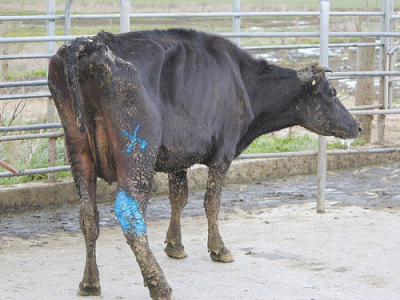
A total of 193 cows had to be euthanised and 761 required veterinary treatment. Fourteen vets were required to spend weeks on the property, initially on their own, later assisting MPI staff.
Matthews and McMillan both manage 700ha farms with 2000 cows each. Both men had overall responsibility for animal welfare on the two properties and the maintenance of farm infrastructure.
Castlerock Dairies Ltd was fined $37,500 and ordered to pay prosecution costs of more than $11,500.
Matthews and McMillan were fined $10,000 each, ordered to pay court costs of $130 each and were both sentenced to 275 hours community service.
MPI brought charges against the company and the two managers after being advised in 2015 of serious animal welfare issues at the properties.
The offending involved a serious failure to maintain the lanes used by the cows to get to the milking shed on both properties. The lanes needed constant maintenance to prevent lameness but this was not done.
By the time MPI became involved, the lanes had been torn to pieces by constant use and were in places knee deep in thick mud and excrement. Any maintenance of the lanes was either inadequate or simply not done when required.
MPI manager of compliance investigations, Gary Orr, says the lameness suffered by the animals was catastrophic with animals presenting such a degree of lameness that they could not be treated and were in significant pain.
“The walk to the milking sheds, because of the mud and the distance from the paddocks to the sheds, would take up to three hours one way during which time the lame animals would have been in significant pain.
“The lanes had not been adequately maintained for about two years which is what contributed to the situation.
“The lack of work on the tracks was known to the defendants. As the animals walked long distances for milking, the lameness got worse. The tracks weren’t repaired to prevent this.”
DairyNZ’s animal welfare specialist, Helen Thoday, says it’s “just not okay” for animals to be treated in this manner.
“The farming community around New Zealand will be appalled; they care about their animals, and treat them with care and respect,” she says.
“This case of mistreatment is a sad slur on the good reputation of the thousands of good dairy farmers who are committed to providing their animals with a healthy and safe environment, and farming to high standards.”
Shocking
MPI manager of compliance investigations, Gary Orr, says a senior attending veterinarian with over 18 years experience described the situation as “disturbing” and the extent of animal welfare issues on the farm as almost beyond comprehension.
“He described it as unparalleled and unprecedented in his direct experience. Another witness described it as “horrible” and the worst case of neglect she had ever seen.
“It is MPI’s view that the seriousness of the situation should have been immediately obvious to all concerned. The suffering of these animals was fully preventable.
“As well as the humanitarian grounds, failure to meet animal welfare requirements could have serious consequences for the wider agricultural industry.
“Fortunately, offending on this scale has been rare in New Zealand.”