
Beef + Lamb New Zealand Awards 2026 Winners Announced in Christchurch
Last night saw the winners of the 2026 Beef + Lamb New Zealand (B+LNZ) Awards named at a gala dinner at Te Pae Christchurch Convention Centre.
 increase font size
 AgResearch scientist Dave Leathwick is leading the world-leading research into new parasite control.
A new AgResearch science project is believed to be the first of its kind in the world.
It will investigate the potential of tricking animal parasite larvae to shed their protective shell (a process called 'exsheathing') on pasture so they die rather than being ingested by animals.
This work will be funded for two years, costing $1.15 million, by the Ministry of Business, Innovation and Employment 'Smart ideas' scheme.
Internal parasites cost New Zealand sheep, beef and deer farmers $700M each year in lost production and treatments. If the project succeeds it will benefit those farmers and the owners of horses, alpaca and other non-commercial livestock.
Principal scientist Dave Leathwick, AgResearch, says the idea is to stimulate nematode parasite larvae to exsheath while still on the pasture, rather than in the host, causing them to rapidly die by being in the wrong place at the wrong time.
An effective treatment capable of killing parasite larvae on pasture would have many and wide-ranging benefits for farmers. For example, it would improve the ability of sheep and beef farmers to prevent the importation of resistant worms onto their farm with bought-in stock.
Also, parasites bother milking goat farmers because of the milk withholding periods when normal drenches are used. An effective paddock treatment for worm larvae would reduce or eliminate drenching of milking goats.
Leathwick says the project could also benefit pastoral farmers worldwide by reducing dependence on animal health remedies and cut labour costs.
"The aim of the study is to find triggers that will stimulate larvae to exsheath outside the host. The team realises this will not be easy.
"Our team has capability in chemistry, microbiology, soil biology and parasitology."
Leathwick says the concept of triggering larvae to exsheath outside the host is logical, but it appears from the literature that no-one has previously investigated the possibility. The major focus of R&D over previous decades has been on targeting control through the animal.
Sheep and cattle farmers in NZ spend around $150M annually on anthelmintics to kill parasites, and there is growing concern at increasing resistance to many of these remedies.
Keeping on top of resistance
Internal parasite resistance is now reckoned to cost New Zealand sheep, cattle, deer, and goat farmers at least $20 million per annum.
Given that resistance can develop to any drench, every farmer needs a plan to manage the risk of worm resistance to drench. Future animal welfare and productivity will rely on farm plans developed today to control the emergence of drench resistance.
Drench chemicals are limited in number and no new ones are forseen in the near future, so drench use must be part of an overall parasite management plan so that today's drenches remain effective for many years.
The industry initiative Wormwise has developed a national worm management strategy which provides simple and important tactics for farmers in managing internal parasites.
Wormwise shows collective responsibility to use anthelmintics responsibly and sustainably, by establishing best management practices. The aim is to ensure farmers get well-researched, up-to-date advice agreed on by the industry. Wormwise achieves this by managing and integrating research work, education, communication and extension services for farmers, veterinarians, key influencers and retailers.
Farmers should review their drench use and overall parasite management over the last few years. To determine the resistance status of the different worm species present on their farms, a drench test should also be done.
Each farm is different, so veterinarians and animal health advisors are essential for farm-specific animal health plans. These must be flexible and be regularly revised as indicators of stock performance. They should also monitor signs and symptoms of parasitism.
As resistance develops drenching becomes less effective, farmers must reassess their worm management practices regularly.
Mark Ross is chief executive of Agcarm.
Last night saw the winners of the 2026 Beef + Lamb New Zealand (B+LNZ) Awards named at a gala dinner at Te Pae Christchurch Convention Centre.
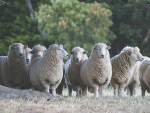
A significant breakthrough in understanding facial eczema (FE) in livestock brings New Zealand closer to reducing the disease’s devastating impact on farmers, animals, and rural communities.
A breakthrough in the understanding of Facial Eczema (FE) in livestock could bring New Zealand closer to reducing the disease’s impact.
An innovative idea for transforming mechanically deboned meat (MDM) into a meat flake for seasoning has taken top honours in the Meat Industry Association’s (MIA) first-ever Dragon’s Den competition.
The Government's plan to merge the seven crown institutes presents exciting possibilities for plant technology company Grasslanz Technology, says chief executive Megan Skiffington.


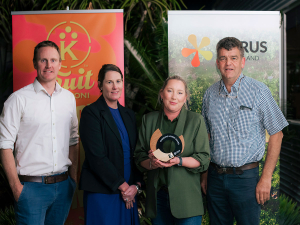
New Zealand's citrus growers were challenged to build their future on the value embedded in their fruit rather than the volume they produce, at Citrus New Zealand's annual gathering in Gisborne on 17 September.
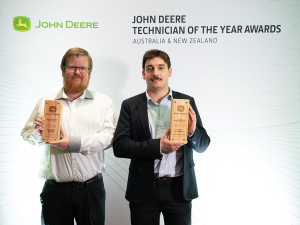
Leading John Deere technicians and apprentices from New Zealand and Australians were recognised at the recent sixth annual JD Technician of the Year Awards, held in Brisbane.
In Dacre, near Invercargill in New Zealand’s South Island, Bruce Dinnington is running a dairy operation unlike any other.
A free online platform aggregating governance vacancies across rural and regional New Zealand has been launched.
Environment Minister Nicola Grigg has announced details of a new rural plastics recycling scheme.
Agricultural drone operators say that a government decision to allow lower-risk drone work without certification won’t lower standards but drive innovation and efficiency.