Rabobank Launches HortPathways for Emerging Hort Leaders
Twenty-eight emerging leaders from across the horticulture sector spent two days last month learning valuable skills and connecting with industry experts.
 increase font size
 In the North Island, average store cattle prices in May were 8.33% higher compared to last year.
Dairy
Fonterra's opening milk price forecast of NZ$ 8.00/kgMS for the 2023/24 season was broadly in line with Rabobank's expectations (NZ$ 8.20/kgMS).
A farmgate milk price forecast around these levels means dairy farm profitability will remain a real challenge for many dairy farmers over the coming season. Global milk production is still growing - but is losing steam. Signs of weakening dairy demand are spreading across some markets.
The cumulative effects of high food price inflation over the past 24 months, in most cases significantly higher than salary growth, along with slowing economic activity in 2023 (under the tight monetary conditions) have translated into slower dairy demand in developed and emerging markets.
Beef
The store cattle market has gone from strength to strength, supported by a bank of feed across the country.
In the North Island, average store cattle prices in May were 8.33% higher compared to last year, with the price of R1 Friesian bulls lifting 16.42% (or 56c) year-on-year to NZD 3.90kg lwt.
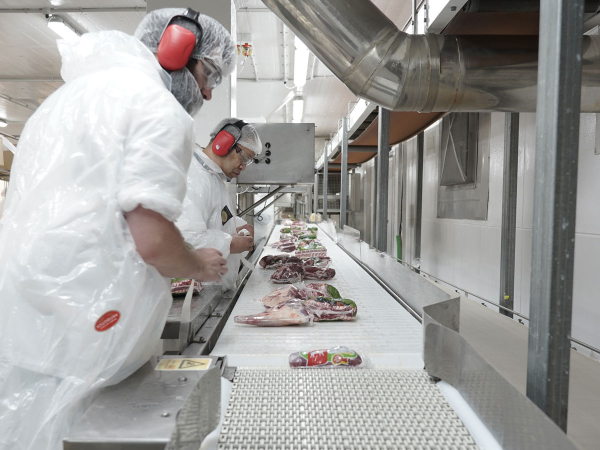
Total beef export volumes in April increased 6% year-on-year, with equal volumes of beef exported to China and the US.
Improved Chinese demand and very strong US consumer demand has provided pricing tension. RaboResearch anticipates beef schedules through winter will track 2022 pricing. Strong US wholesale demand and a recovering Chinese foodservice sector will provide price support. However, high current inventory levels in China are something to watch.
Sheepmeat
The supply of lambs to the slaughter board in New Zealand has been slow throughout May - but it is starting to pick up.
Farmers have been holding onto lambs for longer due to plentiful amounts of feed on-farm. Retaining lambs for longer has enabled farmers to achieve heavier weights and the margins needed.
In May, the average store lamb price was 7% higher month-on-month. As a percentage of the schedule, South Island store lamb prices averaged 51% of the schedule in May - the ratio was 44% in May 2022.
RaboResearch anticipates that the lamb schedule will continue to slowly improve through winter.
The ongoing repairs to boundary fences damaged during Cyclone Gabrielle will soon enable farmers in Hawke's Bay to bring their lambs in to count - filling data gaps with respect to how many lambs are still out there.
Fertiliser
Nitrogen prices are back on the downward trend following the natural gas bearish correction and finishing of the bulk of the crop area in the US.
The May hiccup is gone, and for phosphate and potash the story remains the same: global oversupply or feeble demand. The current situation for natural gas sources is in much better shape than 6 months ago for European manufacturers.
The storages are at high levels, around 60% of their capacity, for this moment of the year that has a weaker demand and there are attempts to expand Russian imports by vessels via the Baltic Sea.
This is leading the market correction and bearish forecast until October.
The situation may look like solved for now, but plant curtailments are in place.
Around 8% of global urea exports are mothballed due to energy price hikes, compared to 2021 figures. The recovery in fertiliser affordability is clear and unquestionable but not enough, so far, to put application rates on pre-covid and pre-Black Sea shocks levels.
Currency and Interest Rates
The RBNZ increased the OCR by 25bps to 5.5% in May, in line with Rabobank's forecast.
Pleasingly, the RBNZ also indicated that this was likely to be the last hike in the cycle.
The New Zealand dollar was sold off sharply as traders again found themselves incorrectly positioned ahead of an RBNZ decision.
The currency has been under pressure because of the weakening outlook for the economy and the deteriorating trade balance but may now have found a near-term floor as data showed the trade balance swung to surplus in April.
On the negative side, goods trade is expected to remain under pressure in the months ahead as prices and volumes for some of New Zealand's key commodity exports continue to face headwinds.
The after-effects of the Auckland floods and Cyclone Gabrielle are also still working their way through the economy, with government investment spending picking up in the short term to replace the capital stock destroyed by these events.
We expect that this will present a short-term boost to inflation, but that price growth will fall quickly toward the end of the year.
Twenty-eight emerging leaders from across the horticulture sector spent two days last month learning valuable skills and connecting with industry experts.

A 'tsunami' of milk from key exporting countries is winding down and this may be good news for New Zealand dairy farmers.
Chinese beef trade quotas and a looming suspension of Brazilian beef imports into the European Union are expected to reshape global beef trade flows over the remainder of 2026, with implications for New Zealand exporters, according to Rabobank's Q3 Global Beef Quarterly report.
New Zealand consumers are paying more for beef mince than ever before, with the average retail price now sitting above $24 per kilogram, according to Rabobank.
West Otago dairy farmer Luke Kane has been awarded the 2026 Rabobank Dr John Morris Business Development Prize.


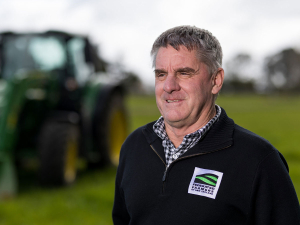
National’s pledge to introduce 19 new national standards shows the party is serious about getting Wellington out of farming, Federated Farmers says.
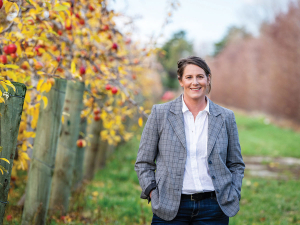
The National Party’s policies to make it easier to grow fresh vegetables, secure reliable water and energy and simplify farm planning are practical changes that will give growers the confidence to invest, according to Horticulture New Zealand (HortNZ).
Fonterra Co-operative Group chief financial officer Andrew Murray has resigned to take up a role outside the dairy giant.
A major move is about to get underway to improve the quality and viability of dairy beef and cattle in NZ.
Veterinarians say changes to the code of welfare for dairy cattle provides a positive foundation for improved cattle welfare across the country.
Today, 15 October, is the International Day of Rural Women, which recognises rural women’s contribution to farming, communities and the environment.