Pork Remains Among NZ's Most Affordable Meats: Stats NZ
As the cost-of-living crisis continues to put pressure on household grocery budgets, new figures show pork remains one of the most affordable fresh meat options for New Zealand families.
 increase font size
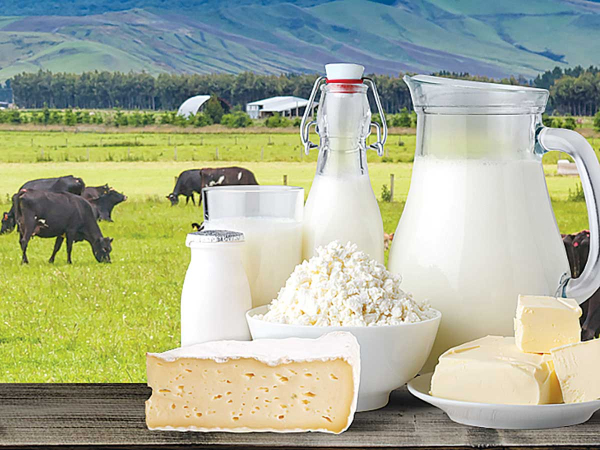 Dairy exports have led a rise in the value of total good exports.
The value of total good exports rose strongly in March, driven by increases in dairy products, beef, and aluminium, Stats NZ says.
These increases were mainly the result of higher prices.
In March 2022, total goods exports rose $978 million (17%) from March 2021 to reach $6.7 billion.
Exports of dairy products (milk powder, butter, and cheese commodity group) led the rise, up $461 million (30%) to $2 billion in March 2022.
This rise was led by milk powder, up $180 million on a year earlier. The rise was price-led, as quantities exported fell 9.3 percent. Rises in butter (up $111 million), cheese (up $71 million), and milk and cream (up $56 million) were also price-led.
Compared with March 2021, unit price changes for dairy products included:
“The recent high prices for exported dairy products have pushed values higher in almost all months of the 2021/22 export season to date, despite a fall in the overall quantity exported this season,” says international trade statistics manager Alasdair Allen.
Exports of milk powder, butter, and cheese in the 2021/22 season to date (August–March) were 18 percent higher in value, but 6.7 percent lower in quantity than in 2020/21.
The total value exported in the season to date is higher than in the strong dairy export season of 2013/14 when international prices were also high.
Other contributors to the rise in exports were beef (up $101 million), unwrought aluminium (up $57 million), and casein (up $31 million). These increases were all price-led; average unit price changes for these commodities compared with March 2021 were:
Of New Zealand’s main export markets, the United States had the largest rise, up $225 million (39 percent) to $796 million. The rise was led by increases in lamb, mechanical machinery and equipment, and casein.
As the cost-of-living crisis continues to put pressure on household grocery budgets, new figures show pork remains one of the most affordable fresh meat options for New Zealand families.
OPINION: In the 1980s, concern was expressed in West Germany about the falling birth rate. Some simple analysis was performed by Professor Helmut Sies, physician and biochemist at Dusseldorf University. His letter ‘A new parameter for sex education’ was published in Nature in 1988:
OPINION: With 10,500 dairy farms, New Zealand continues to punch above its weight around the world.
Fonterra has reduced its forecast 2026/27 Farmgate Milk Price.
OPINION: According to media reports, the eye-watering price of butter has prompted Finance Minister Nicola Willis to ask for a 'please explain' from her former employer Fonterra.


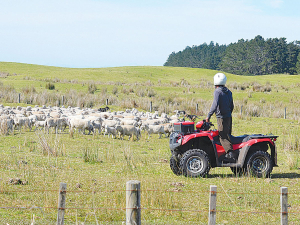
Farmers across parts of Southland and South Otago are continuing to deal with difficult conditions after a prolonged run of wet weather, with pressure building around feed supply, stock management, pasture damage, farm infrastructure and everyday workloads.
Federated Farmers says it welcomes Labour's commitment to reviewing the Sharemilking Agreements Act, calling on other major parties to do the same.
For Canterbury dairy farmers Sian Meijer and Rick Wobben, wearable technology has become one of their most valuable on-farm tools - helping manage 1850 cows across an expansive, high-performing dairy operation while improving efficiency, mating outcomes and day-to-day decision making.
Fonterra has unveiled its annual results for the 2026 financial year, posting $27 billion in revenue and close to $20 billion returned to New Zealand farmer owners and unit holders.
The first major update to the Dairy Cattle Code of Welfare in more than a decade has been released, marking what DairyNZ describes as an important step in ensuring animal welfare standards continue to evolve alongside scientific evidence and on-farm realities.
Ravensdown shareholders have elected Jane Montgomery and Kate Acland to the Ravensdown Board for three-year terms, following a closely contested director election.