
NZ Apple Growers Ready to Share Expertise in India
New Zealand's role is not to compete with Indian growers, according to NZ Apples and Pears.



 increase font size
 NZ Apples and Pears chief executive Danielle Adsett with Jagat Singh Negi, Horticulture Minister for state of Himachal Pradesh and Special Agricultural Trade Envoy, Nathan Guy.
As the India-New Zealand free trade agreement enters into force, New Zealand’s apple industry has reaffirmed its commitment to the long-term development of India’s apple sector.
New Zealand Apples and Pears (NZAPI) Chief Executive Danielle Adsett and Apple Action Plan Project Manager Lachlan McKay spent a week in India earlier this month with Special Agricultural Trade Envoy Nathan Guy. They were there to advance plans for an India-based Centre of Excellence.
The delegation met senior government officials, industry leaders and apple growers in New Delhi and Himachal Pradesh. New Zealand High Commissioner Patrick Rata supported the visit.
Meetings included India’s Horticulture Commissioner, Dr Prabhat Kumar, and APEDA Chairman Shri Abhishek Dev. In Himachal Pradesh, the delegation met Chief Minister Sukhvinder Singh Sukhu, Horticulture Minister Jagat Singh Negi, horticulture officials and local growers.
Discussions focused on progressing the Apple Action Plan, developing a Centre of Excellence, and identifying opportunities for technical collaboration and knowledge sharing between the two countries’ apple industries.
Adsett said the visit highlighted strong goodwill between the two industries and reaffirmed the challenges and opportunities growers share.
“Wherever we travelled, it was clear that apples are enormously important to local communities and regional economies,” she said. “We met growers and leaders who are passionate about the future of their industry and keen to work together on practical solutions.”
She said Indian growers, like those in New Zealand, are dealing with climate pressures, orchard productivity challenges, pest and disease management, and the need to invest in modern infrastructure. “There is significant value in sharing knowledge, expertise and innovation to help address those challenges.”
The planned Centre of Excellence will serve as a practical demonstration and training hub for apple growers. A Digital Centre of Excellence online will support it.
Adsett said the Apple Action Plan reflects New Zealand’s commitment to ensuring the free trade agreement delivers practical benefits beyond market access. “The FTA is about much more than trade,” she said. “And our growers get that.”
Adsett said New Zealand growers recognise that helping India renew its orchards does not automatically make it a direct competitor. She said a counter-seasonal and complementary supply of premium fruit can strengthen India’s consumer apple market.
“New Zealand’s role is not to compete with Indian growers,” she said. “Our commitment is to work alongside them, sharing expertise where it can add value and supporting the long-term success of India’s apple sector.”
The New Zealand Government says the agreement gives New Zealand valuable new quota access for apples and kiwifruit, and that New Zealand is the first country to secure preferential access for apples in any Indian free trade agreement. Trade press reports that access is managed through tariff rate quotas, minimum import prices and seasonal import windows, with safeguards intended to address import surges. The agreement also includes an Agriculture Productivity Partnership covering apples, kiwifruit and honey. One analysis has described apples as the most politically sensitive agricultural issue in the deal.
The agreement is reported to enter into force on 20 October 2026.
Work is now underway to progress the next phase of the Apple Action Plan and turn high-level commitments into practical outcomes on the ground, NZAPI said. It noted strong enthusiasm for collaboration across government, industry and grower groups.
New Zealand's role is not to compete with Indian growers, according to NZ Apples and Pears.

A seasoned horticulturist has been appointed to deliver the Apple Action Plan, a key initiative of the India-New Zealand Free Trade Agreement.
The apple sector is working with the Government to unlock access to two key markets that could bring millions in revenue for apple growers.
The avocado sector is entering the new season with a larger crop and positive market opportunities.
Associate Agriculture Minister Mark Patterson says his party – NZ First - isn’t opposed to the “trade element” of a free trade deal with India.

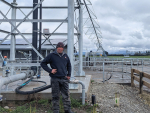

As the India-New Zealand free trade agreement enters into force, New Zealand’s apple industry has reaffirmed its commitment to the long-term development of India’s apple sector.
Fonterra shareholders can begin voting on Tuesday 20 October in the 2026 Board of Directors’ election, a Co-operative Council election in one Ward, and seven Annual Meeting resolutions.
National’s pledge to introduce 19 new national standards shows the party is serious about getting Wellington out of farming, Federated Farmers says.
The National Party’s policies to make it easier to grow fresh vegetables, secure reliable water and energy and simplify farm planning are practical changes that will give growers the confidence to invest, according to Horticulture New Zealand (HortNZ).
Fonterra Co-operative Group chief financial officer Andrew Murray has resigned to take up a role outside the dairy giant.
A major move is about to get underway to improve the quality and viability of dairy beef and cattle in NZ.


OPINION: The same mainstream media muppets that brought you Jacindamania in 2017 have been flat out pimping for the Opportunities…
OPINION: Your old mate reckons the atrocious way farmers in the UK are treated by their lords and masters in…