Could previously unproductive land be used to produce truffles?
The Ministry for Primary Industries (MPI) seems to think so. It’s providing more than $155,000 in Government funding from MPI’s Sustainable Food and Fibre Futures (SFF Futures) fund to Ohiwa Black Diamond Truffles, a Bay of Plenty-based truffle growing company.
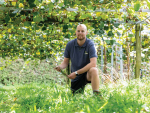
Ohiwa-based couple Matiu Hudson and Annette Munday run the business and will use the funding to share their knowledge with interested growers so New Zealand can grow enough truffles for a robust export industry.
MPI director of investment programmes Steve Penno told Hort News the programme with Ohiwa Black Diamond Truffles meets the SFF Futures fund’s aims of supporting innovation in the food and fibre sector to grow productivity, profitability, sustainability, and jobs.
“It aims to boost capability within the truffle sector, to grow both productivity and profitability,” Penno says.
He adds that as well as growing truffles, the programme aims to develop new food products applying the health benefits of the truffle, with traditional Maori Rongoa (medicinal use of plants) for the hospitality sector.
“Workshops will be held for Māori landowners to grow and sell their own truffles, and the project will also explore export markets.”
This, Penno claims, will grow the industry and therefore create jobs.
Ohiwa-Black Diamond Truffles owner Annette Munday says they have already received orders for approximately 10,000 inoculated truffle seedlings and have helped one family in Kawhia set up a truffiere (truffle farm).
“We’d like to see Māori land trusts and farmers around New Zealand growing truffles on unproductive land,” she says. “It’s an opportunity to make money out of land with poor soil and could offer a side-line income for farmers if they planted seedlings beside trees used for riparian planting, for example.”
Truffles can fetch between $2,500 and $3,500 per kilogram, and set-up costs per hectare for growing truffles range between $35,000 and $70,000.
Munday says each tree is capable of yielding 200 grams to one kilogram in well managed plantations.