
Diplomatic Incident
OPINION: Your old mate hears an international incident is threatening to blow up the long-standing Anzac alliance as Kiwis and Aussies argue over who wants new Australian resident and former NZ Prime Minister Jacinda Ardern.
 increase font size
 John Droppert, Dairy Australia.
Dairy Australia senior industry analyst John Droppert chaired a panel discussion on volatility in the dairy industry. Here are excerpts:
Volatility is a word we hear a lot in dairy these days.
But it’s more than a buzzword; it’s a phenomenon that anyone running a business in this industry can firmly attest is the swinging voter on big dollars and many sleepless nights.
Volatility is actually a tricky term to nail down. Everyone has an idea of what it is, but outside the mathematics and chemistry definitions you get a lot of variation.
Put simply, volatility is the liability to change rapidly and unpredictably, especially for the worse. It’s fluctuation, variation, risk. Movement of a given measure around the expected value is part of it – that’s variance (the up and down). The other aspect of volatility is the frequency. So how big are these fluctuations, and how fast are they happening?
In the dairy industry, we face volatility in the price of inputs – feed, water, even electricity (and the availability of some), volatility in the milk price, the weather, sentiment, business relationships (for example between farmer and processor), in corporate structure – who owns what – in market access, in milk production, and who wants it. Those risks are interrelated, some have causal relationships, where volatility breeds more volatility.
Some of that volatility is driven by market interactions (like growing milk production drives prices down) and some by shocks (a drought, or closure of a key market, for example). Some recent examples are millennium drought, 2010-11 floods, DCD, botulism, bluetongue.
Volatility is everywhere. And in many cases, it’s becoming a bigger deal. We’re told the climate is becoming more volatile. Dairy markets certainly are and that reflects commodity markets more broadly.
Very few of the driving forces are within our control, and economic history in particular is littered with examples of well-intentioned attempts to ‘smooth out’ markets ending in expensive failure (examples: wool scheme, Thai rice stockpile, European exchange rate mechanism).
OPINION: Your old mate hears an international incident is threatening to blow up the long-standing Anzac alliance as Kiwis and Aussies argue over who wants new Australian resident and former NZ Prime Minister Jacinda Ardern.

OPINION: Your old mate hears that at a recent China Business Summit, PM Christopher Luxon delivered a none-too-subtle "could try harder" report card on the red meat industry regarding its exports to China - particularly when compared to Australia.
More Australian states are embracing virtual fencing technology, opening growth opportunities for Kiwi companies like Halter.
Fonterra says its ongoing legal battle with Australian processor Bega Cheese won’t change its divestment plans.
Farmers in the Australian state of New South Wales will soon be able to use virtual fencing and herding technology to boost farm productivity.


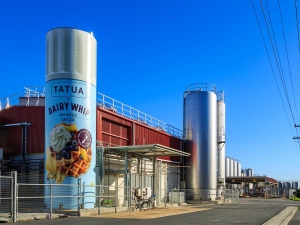
Waikato milk processor Tatua has again declared a record milk payout to farmer shareholders, leaving other processors in the dust.

A Labour-led Government won’t be bringing back the controversial freshwater rules of 2020.
National’s much-touted free trade deal with India featured in the Rural Issues Debate at Mystery Creek, Hamilton on Wednesday night.
New Zealand's 2026-27 freshwater fishing season has opened, with anglers encouraged to head to rivers and lakes over the coming days as conditions look favourable across much of the country.
Central Otago District Council (CODC) has voted against a plan to spread treated sewage sludge from Cromwell and Alexandra on farmland near Lauder, a decision Federated Farmers says reflects strong opposition from rural residents.
Pāmu has released its FY26 Integrated Annual Report, reporting a Net Operating Profit of $113 million, more than double the $49 million recorded in FY25.




