Too Lenient
OPINION: Reckless action by Greenpeace in 2024 forced Fonterra to shut down a drying plant for four hours, costing the co-op about $300,000.
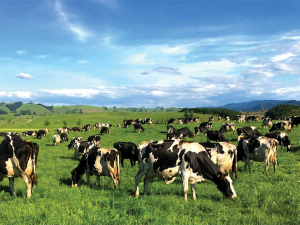
OPINION: Greenpeace boss and former Green Party leader Russell Norman claims there are about ten million beef and dairy cattle in New Zealand and that each one produces the same faecal load as about 14 people.
So, that's equivalent to 140 million people. 'It's just too much faeces and urine for the rivers, lakes and groundwater to handle,' Rusty laments.
However, as one Twitter user pointed out: the daily output of E. coli from a human is estimated at more than 11,000 more than that of a cow.
Also, dairy cattle are fenced from waterways and most of their effluent goes back on pasture.
Something for Russell to ponder!

New Zealand dairy farmers are set to be the first in the world to receive access to a new digital physical milk pricing tool that enables them to fix the price for their physical milk.
State farmer Pāmu is opening its farm gates this summer in an effort to give the rural sector the opportunity to see how large-scale, multi-system farming is delivering productivity and profitability across New Zealand.
A five-year study has found that the cost of reducing emissions without technology may be significant and unsustainable for Northland dairy farmers.
DairyNZ says Waikato farmers need certainty on Plan Change 1, but they say that certainty must be matched with practical, workable rules and a clear transition that doesn't get ahead of the new resource management system currently under review.
While the Government has moved quickly to make commercial hauliers' lot easier during the current fuel crisis, they appear to be stuck in the creep box when it comes to the agricultural industry.
Waikato farmers have been told that the Government’s new planning system legislation and the region’s Plan Change 1 (PC1) “won’t mesh together very well”.