
Upbeat crowd, exhibitors at field days
With an enforced absence of two years, brought about by its cancellation in 2020, the Central District Field Days at Feilding heralded the first event of its type for 2021.
 increase font size
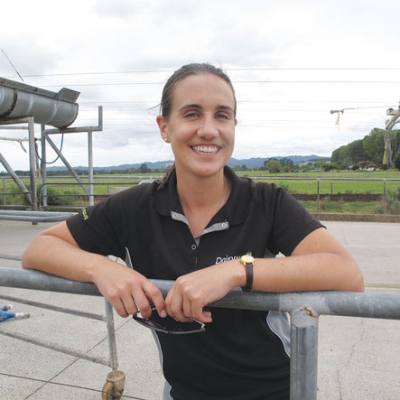 DairyNZ sustainability specialist Nicola McHaffie.
DairyNZ has begun running dairy farm field days nationwide to highlight water usage – the quantities used and simple measures to minimise volumes and costs.
The first was held recently on the farm of Robin Barkla near the Kawerau town boundary, run by DairyNZ consulting officer Christine Southam and Nicola McHaffie, a development and sustainability specialist.
“With the growing importance of water usage and sustainability, and increasing government and regional council regulations it was opportune to remind farmers of changing rules and the need to look at their water usage,” said Southam. Efficient use of water can control power use and reduce costs, manage effluent better and improve staff time usage.
Turnout was good at two forums, one discussing irrigation, the other farm and dairy shed water usage. Farmers were reminded that water meters are expected to be compulsory by 2020, and “you can’t manage what you don’t measure”.
With the increasing use of ‘green’ water for yard washing/flushing, regulations prohibit its use under pressure or within 15m of a farm dairy.
“If farmers took away one thing after today’s forum, it was to make a greater effort to control water leaks and overflowing water troughs,” said McHaffie.
She emphasised that a 100mm nail-sized leak in a pipe can spill at least 14000L/day. A helpful hint was to connect to the water pump an external LED light that glows when the pump is going, alerting to excessive running.
The forum concluded with a ‘Smart water plan – steps to success’:
Assess opportunities for improvement starting with a comprehensive farm plan and a map showing troughs, pumps and storage points.
Prepare a plan listing the changes that are going to be made, highlighting those that need to be done now or within a set time.
Get everyone involved – easier on smaller farms, and important when more staff are employed.
Review progress periodically.
Novel washdown
Robin Barkla’s farm is a flat 300ha where he has been “forever”. From the Kawerau River on one boundary he has a permit for an annual water uptake for irrigation year round. The usage is metered and he supplies monthly figures to Bay of Plenty Regional Council.
The farm is a seasonal supplier to Fonterra and milks 1110 cross-bred cows through a 44-aside herringbone dairy. He employs a contract milker who in turns employs five staff.
The water is spray irrigated to 280ha through travelling irrigators. The farm also has permission to spray irrigate dairy shed effluent to 36ha.
The area is prone to dry spells from November onwards.
The farm has a novel way to flood irrigate its rectangular dairy yard: a half-round stainless steel tank raised above the yard which cows walk under as they enter the milking area. After each milking it is filled with fresh water from the milk cooler.
“I was with a friend when were we looking at ideas to improve our milking methods and stock movement; he said he would build one for me,” says Barkla.
They use a scraper to push effluent to the bottom of the yard, then the tank rolls forward and washes the stuff away. Because it is fresh water there are no worries about splashing or its use near the farm dairy. Barkla says the system works well.
With an enforced absence of two years, brought about by its cancellation in 2020, the Central District Field Days at Feilding heralded the first event of its type for 2021.

The South Island Agricultural Field Days, held in Kirwee on the outskirts of Christchurch, will celebrate its 70th year in March 2021 with a bigger demonstration area.
Australia has introduced a support package for struggling field days organisations.
Manawatu District Council Mayor, Helen Worboys says the district is very proud to host the Central Districts Field Days because the region sees itself as the agritech hub of NZ.
Good crowds are expected for the well-established 27th Central Districts field days being held at the Manfeild racetrack, at Feilding, from March 19 to 21.

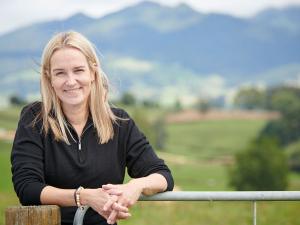
Minister of Conservation Hon Tama Potaka has appointed Susan O'Regan as Chair of the Queen Elizabeth II National Trust (QEII) for a three-year term.
Red meat farmers are welcoming Labour’s plan to review the Emissions Trading Scheme and not to campaign on pricing agricultural emissions.
Where any worker in the kiwifruit industry is mistreated, we expect the authorities to take action.
Mid Canterbury Federated Farmers arable chair, Bevan Lill, said Beef + Lamb NZ data indicated that for the last six years, the average arable return on investment was about 0.8% while inflation ran about 4% - so the average arable farm was going backwards at about 3% a year.
Seed and grain companies share the concerns of arable farmers about the viability of their sector, says Seed and Grain New Zealand chief executive Dr Sarah Clark.
The New Zealand Institute of Forestry (NZIF) says unnecessary changes to New Zealand’s Emissions Trading Scheme (NZ ETS) will seriously erode investor confidence and result in significant reductions in forest planting rates.