Continental to discontinue agricultural tyre production amid strategic shift
Continental was founded in 1871, offering solutions for vehicles, machines, traffic and transportation.
 increase font size
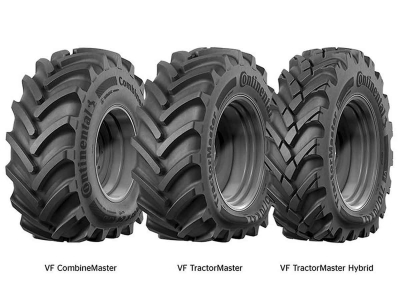
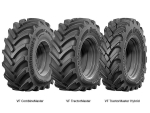
Tyre maker Continental will present its new Very High Flexion (VF) technology for its TractorMaster, TractorMaster Hybrid and CombineMaster agricultural tyres at Agritechnica, in Hanover in November.
The tyres’ highly flexible sidewalls maintain its durability and directional stability when operated at reduced pressures or high loads. This is made possible by an optimised belt and bead geometry.
Continental recognises that agricultural tyres must be able to handle changing terrain, loads and speeds, and its VF concept is said to save time and fuel and to prevent damaging compaction of the soil.
The savings are accrued as the tyres achieve constant carrying capacity at all speeds, with their pressure reduced for the same performance relative to standard tyres. Previously, tyre pressures would need to be adjusted to deal with loading or changes between road or paddock tasks.
The new VF tyres can provide the same payload at 40% lower pressure than standard tyres or, alternatively, they carry a 40% heavier load at top speed at the same pressure as a standard tyre.
VF tyres have a larger, more flexible bead profile with a smaller apex, allowing improved deflection of the tyre and lower integral stresses at the extremes of use. So the service life is extended.
The carcase of the tyre has its integral belts adjusted to cope with more rigorous use. In conventional tyres, very low pressures or overloading can quickly lead to damage, whereas with VF tyres, the belt and shoulder areas are larger and stiffer to lower the risk of deformation and damage.
They also embody N.flex technology, a patented carcase material which is flexible enough to absorb impact and return to the original form. This also guarantees rounder tyres for a comfortable ride, and it reduces their propensity to develop flat spots and a poor ride.
Continental was founded in 1871, offering solutions for vehicles, machines, traffic and transportation.
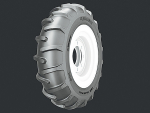
Alliance, a part of Yokohama Off-Highway Tyres, has introduced a new tyre, especially designed for pivot irrigation systems.
Based in Hannover, Germany, Continental started making farm tyres in 1928 and continued right until 2004.
Tyre manufacturer Continental has launched its all-new ‘Agriculture TireTech’ app, aimed specifically at the farming sector.
Trelleborg Wheel Systems and Dana Inc have jointly developed a revolutionary central tire inflation (CTIS) system for farm machines.


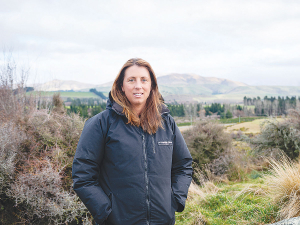
Beef + Lamb New Zealand (B+LNZ) says it welcomes the passage of the Natural Environment Bill and Planning Bill, calling the bills a positive step for sheep and beef farmers.
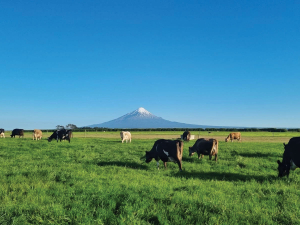
A spate of southerly winds bringing cold temperatures has presented challenges for Taranaki dairy farmers.
Converting a longstanding cropping farm to dairy was the only way to ensure the land stayed in the family long term, says new dairy farmer Rod May.
As the election heats up, Organics Aotearoa New Zealand (OANZ) has launched its election scorecard designed to help voters wanting to support policies that grow organic and New Zealand's organic sector.
A 'tsunami' of milk from key exporting countries is winding down and this may be good news for New Zealand dairy farmers.
Will the good times last? That's one of the key issues to come out of the latest Federated Farmers confidence survey.