Claas Balers Turn 30
Claas built its first variable chamber round baler - the Variant 100 - in 1996, so 2026 marks 30 years and the fifth generation of the Variant name, recently complemented by the new Cerex Series introduced in 2025.
 increase font size
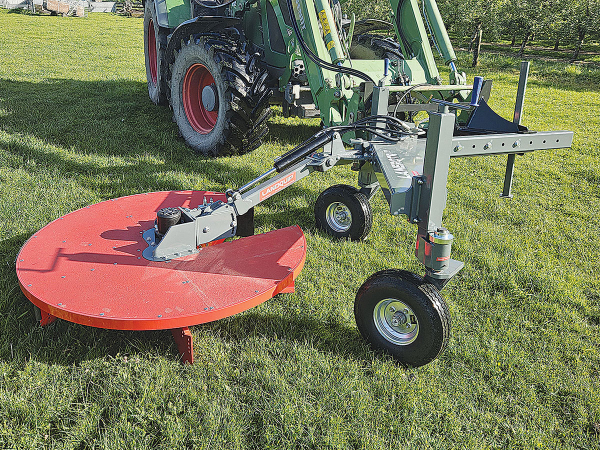 The Lanerotr R1 quickly removes the soil and grass build-ups along the edges of races.
Farm races or laneways are central to moving animals, people and machinery around the farm. In the case of dairy farms, their maintenance is paramount as cows may walk considerable distances two or even three times a day.
Ideally, races need to have a slight crown in the centre that slopes away to either side, allowing surface water to drain away freely, helping to reduce the formation of holes and mud.
Over time, the preferred track of animals moving in a procession can mean the build-up of “berms” or ridges along the sides of the race, meaning water is stopped from draining.
Typically, races are maintained and reprofiled using tracked excavators to remove the build-up of material at the side of the race, which needs to be hauled away with a tractor and trailer. Research suggests that this process is relatively slow, with the machines typically able to remove around 125 metres of build-up per hour, with a rate for the machine and driver at around $225/hour.
Back in 2021, Hastings- based Landquip were displaying a range of products for horticulture at the Mystery Creek Fieldays, one of which was a sweeper designed to move orchard prunings. Several dairy farmers and contractors asked if the orchard sweeper could be used for cleaning the edges of dairy races or laneways.
Fast forward to 2024, Landquip put their thinking caps on and came up with a solution. Built in Hawke’s Bay, the Lanerotr R1 quickly removes the soil and grass build-ups along the edges of races to restore drainage, leading to a drier surface and a reduction in lameness.
The manufacturer suggests operating at around 1 to1.5km/h it’s easy to restore up to 5km races during a working day. A 5-minute set-up time means it is easy to fit the machine during a busy day or even between milkings. Mounted on a front-end loader, using standard Euro quickhitch couplings, a robust frame carries the clearing rotor, offset to the righthand side of the tractor. The operating height is maintained via a wheeled under-carriage, with the loader in the float position to ensure the unit follows any undulating contours.
The frame incorporates an integral breakaway pivot if the scraper paddles encounter any immovable objects, while the rotor motor is also equipped with hydraulic overload protection.
Said to be suited to a tractor with minimum 90hp, with 60 litres/ minute hydraulic oil flow, the loader will require a third service function, with a detent function to maintain constant flow to the rotor.
Offered with a 2-year warranty, the R1 features a minimum number of wearing parts, while offering the ability to restore up to 750 metres of race edges per hour, with a typical cost of $150/km, compared to a more traditional method that would run to $1,800/ km.
www.landquip.co.nz
Claas built its first variable chamber round baler - the Variant 100 - in 1996, so 2026 marks 30 years and the fifth generation of the Variant name, recently complemented by the new Cerex Series introduced in 2025.
Distributed in New Zealand by OriginAg and supported by its nationwide dealer network, the Italian-built Alpego brand offers an extensive range of solutions including power harrows, rotary hoes, mulchers and subsoilers.
John Deere is introducing its 500R self-propelled sprayer to the NZ market, offering small-grain growers a new option designed for precise application, operator comfort and efficient field performance.
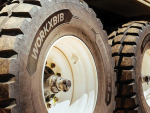
Global tyre manufacturer Michelin has extended its agricultural trailer tyre range, with the introduction of its new WorkxBib series, designed for tipping trailers, slurry tankers and manure spreaders.
Following the record-breaking success of its hydrogen-powered Hydromax, JCB is ramping up its investment in the business, key to the first major change at the executive level of the business, with George Bamford stepping up to the post of joint chairman, alongside his father Lord Bamford.


Farmers have until the end of this week to help shape DairyNZ’s future focus.
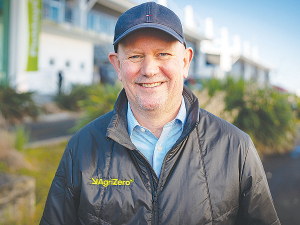
Wayne McNee, chief executive of AgriZeroNZ, has resigned and will leave the organisation on 15 January 2027.
The New Zealand dairy sector set a record in the 2025/26 season, producing more than two billion kilograms of milksolids for the first time.
Milk powder prices are continuing their merry run, firming up a potential $10/kgMS farmgate price this season.
Teachers are welcoming the outgoing Government’s U-turn allowing agriculture and horticultural science to remain a standalone Year 11 subject.
Outgoing ACT MP and dairy farmer Mark Cameron says Saturday’s election result reflects voters deeply impacted by the cost of living.