CowManager Winners Say Tech Is a "No-Brainer" to Keep
The inaugural winners of the NZ Dairy Awards’ CowManager Experience prize say it will be a no-brainer to keep the technology in their farm business after experiencing the results.
 increase font size
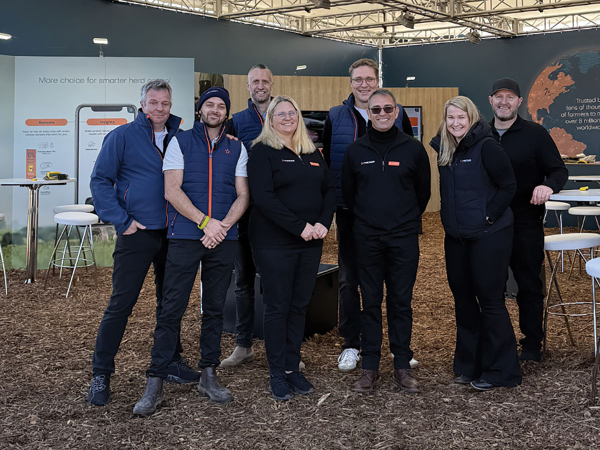 Nedap team at the National Fieldays last month.
As the dust settles after Fieldays, we're once again reminded of the sheer volume of technology now available to New Zealand dairy farmers.
From cow monitoring and animal health systems through to automation, data management and an array of farm machinery, there was no shortage of innovation on display. For many farmers, it also provided a valuable opportunity to step back from the day-to-day demands of the farm and thoroughly evaluate what technology could help support the future of their business.
But identifying the technology priorities that matter most to your farm is only part of the decision-making process.
Once you've established the outcomes you're trying to achieve and developed a clear picture of the functionality and capabilities you need, the next challenge is determining which provider is best positioned to help deliver those outcomes.
Whether the goal is improving reproductive performance, gaining better visibility of animal health, reducing labour pressure or preparing for future automation, choosing the right technology partner is becoming just as important as choosing the technology itself.
As technology adoption continues to accelerate across the dairy industry, many solutions can appear similar on the surface. Product brochures often highlight comparable features, similar claims and increasingly sophisticated functionality.
But the real difference between providers is often not just what the technology can do. It is what sits behind it.
One of the first areas worth considering is the provider's track record.
Technology is becoming increasingly embedded in the day-to-day operation of dairy farms and, in many cases, these systems will remain part of the business for years to come. Understanding a company's history, experience within the dairy sector and track record of innovation can provide valuable insight into how well positioned they are to support farmers over the long term.
Scientific validation should also form part of the evaluation process.
As farmers become more reliant on technology to support decision making, confidence in the information being provided becomes increasingly important. Many providers make similar claims around performance, but it is worth understanding what independent research, testing and real-world data sits behind those claims.
The value of technology is ultimately determined by the quality of the information it provides. Reliable data supports better decisions. Unreliable data can create unnecessary work, confusion and missed opportunities.
Integration is another factor that deserves careful consideration.
In many cases, cow monitoring technology is no longer operating as a standalone tool. It is increasingly connected to herd management software, milk data, drafting systems and a growing range of other technologies used on farm.
As these ecosystems become more connected, the ability for systems to communicate effectively becomes increasingly important. Where integration is limited, the responsibility often falls back on the farmer or farm team to bridge those gaps through additional administration, duplicated processes or manual data handling.
The most successful technology investments are often those that fit seamlessly into existing farm systems while remaining flexible enough to accommodate future developments.
Support and service can be equally important.
Dairy technology is rarely a simple install-and-walk-away investment. Every farm operates differently, and the greatest value is often achieved when farmers work alongside experienced support teams who understand both the technology and the farming systems it is being applied to.
Good support extends beyond troubleshooting. It includes training, ongoing optimisation and helping farmers extract the maximum value from the technology over time.
Durability and reliability should also be considered.
New Zealand dairy farms present challenging operating environments, and technology needs to perform consistently year after year. Hardware lifespan, wearable durability and long-term serviceability all contribute to the overall value proposition of a system.
Technology that performs well over the long term often delivers greater value than solutions that appear attractive initially but require frequent replacement or ongoing intervention.
Finally, farmers should consider where the provider is heading in the future.
Technology is evolving rapidly, and the systems being installed today may remain on farm for many years. As automation, artificial intelligence and connected farm systems continue to develop, it is worth understanding whether a provider has a clear vision for how its technology will evolve alongside the changing needs of dairy businesses.
Perhaps the most important thing farmers can do is ask questions.
Ask what evidence supports the claims being made. Ask how systems integrate with existing technology. Ask what support looks like after installation. Ask about future development plans and long-term commitment to the industry.
The answers to those questions will often reveal more than a feature list ever can.
Technology will continue to play an increasingly important role on New Zealand dairy farms. As farmers become more informed and strategic in their decision making, evaluating the provider behind the product is becoming just as important as evaluating the technology itself.
Ultimately, successful technology investments are built on more than functionality alone. They are built on trust, support, proven performance and confidence that the provider will continue delivering value long after the initial installation.
Greg Hamill is general manager Oceania for Nedap.
The inaugural winners of the NZ Dairy Awards’ CowManager Experience prize say it will be a no-brainer to keep the technology in their farm business after experiencing the results.
Walking around the Fieldays this year, expected most of the conversations to be about machinery purchases and farm infrastructure upgrades. Instead, one topic seemed to keep cropping up more frequently with farmers – the price of PKE.
A leading British farming politician says he's impressed with the positive attitude of New Zealand farmers that he met during his recent trip here.
New research suggests the ag sector can unlock a $2.9 billion increase in profitability, not by farmers and growing more, but by making their farming systems simpler.
A new digital assistant is now helping Ballance Agri-Nutrients farmers speed up nutrient information and ordering.

B+LNZ's Wormwise veterinarian Mary Bowron has won the Best Sheep and Beef Vet of the Year Award in recognition of her outstanding contribution to New Zealand’s sheep and beef sector.
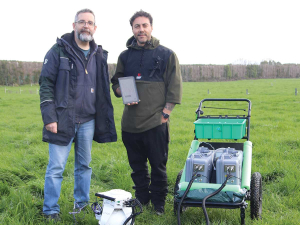
Researchers at Massey University are using a special piece of scientific equipment to improve the measurement of greenhouse gas emissions from pasture soils.
More signs of a booming kiwifruit sector.
OPINION: David Seymour and James Meager's plan to make it easier for farmers and orchardists to operate drones can best be described a 'courageous' move.
New Zealand wool is reaching new heights as air filtration companies move away from synthetic products to biodegradable alternatives.
Opuha Dam's ability to protect South Canterbury communities from major flooding has taken a significant step forward, with Opuha Water Limited (OWL) successfully commissioning a new outlet valve capable of releasing record volumes of water from the dam ahead of a weather event.