Te Pari Acquires NZ Sheep Handler Brand Combi Clamp
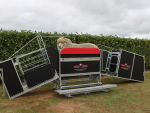
Oamaru-based livestock handling specialist Te Pari has bought Combi Clamp, the New Zealand manufacturer of Combi Clamp manual sheep handlers.
 increase font size
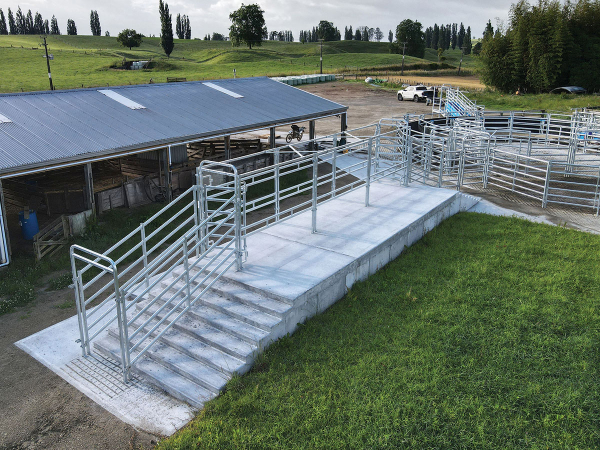 Te Pari’s new modular AB race can be integrated into both new or existing dairy facilities.
With the artificial breeding season creating increased activity and the need to handle cattle safely and efficiently, a dedicated AB race is becoming increasingly popular on New Zealand dairy farms.
Oamaru-based Te Pari has introduced a new modular AB race for integration into both new or existing dairy facilities, providing safety and efficient access for technicians and farm staff.
With AB technicians no longer permitted to work in herringbone pits due to health and safety requirements, alongside LIC’s updated AB facility standards, many dairy farmers are now considering upgrading their yards to include compliant AB races.
Benefits of a dedicated AB facility include reduced risk of injury to cows, staff, and technicians, faster, more streamlined insemination, a calmer working environment for animals and the potential for improved in-calf rates. In addition, the set-up also lends itself for other tasks such as vaccinations, blood testing, and scanning.
As part of the design, an optimal race width of 1050mm allows cows to stand on an angle to provide good access for AB technicians, reducing delays and the risk of injury.
As part of a dedicated installation, the AB Race can be complemented by an optional pit, making jobs like teat sealing much easier. The pit is covered by strong FRP (fibre reinforced plastic) grating that is easily removed for access. The grating doubles as a great anti-slip standing for AB technicians. visit www.tepari.com
Oamaru-based livestock handling specialist Te Pari has bought Combi Clamp, the New Zealand manufacturer of Combi Clamp manual sheep handlers.
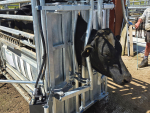
With wearables becoming the “must have” for dairy and, more recently, for beef operations, fitting collars for virtual fencing or health monitoring can be an awkward and potentially risky job in the cattle yards.
The Dairy ProQ robotic rotary, the first of its kind in the Southern Hemisphere, has proven to be an impressive addition for Victorian farmers Paul and Marsha Smith.
With the artificial breeding season creating increased activity and the need to handle cattle safely and efficiently, a dedicated AB race is becoming increasingly popular on New Zealand dairy farms.
Oamaru-headquartered Te Pari’s recent acquisition of Vetmarker from Fenemor Innovations includes all trademarks and patents associated with the sheep docking apparatus.



Ravensdown shareholders have elected Jane Montgomery and Kate Acland to the Ravensdown Board for three-year terms, following a closely contested director election.

Federated Farmers says new legislation replacing the Resource Management Act will cut red tape, unlock investment and help grow New Zealand's export-led economy, after the Planning Bill and Natural Environment Bill passed their third reading in Parliament yesterday.
Leading figures from the major political parties will be questioned on their primary sector policies at the Rural Issues Debate at Mystery Creek Events Centre, Hamilton, on 30 September.
OPINION: Have a plan in place now!
Beef + Lamb New Zealand (B+LNZ) says it welcomes the passage of the Natural Environment Bill and Planning Bill, calling the bills a positive step for sheep and beef farmers.
A spate of southerly winds bringing cold temperatures has presented challenges for Taranaki dairy farmers.