Milk Powder Prices Prop Up Farmgate Milk Price
Milk powder prices are keeping farmgate prices up, helping processors offset the dip in milk fat prices.
 increase font size
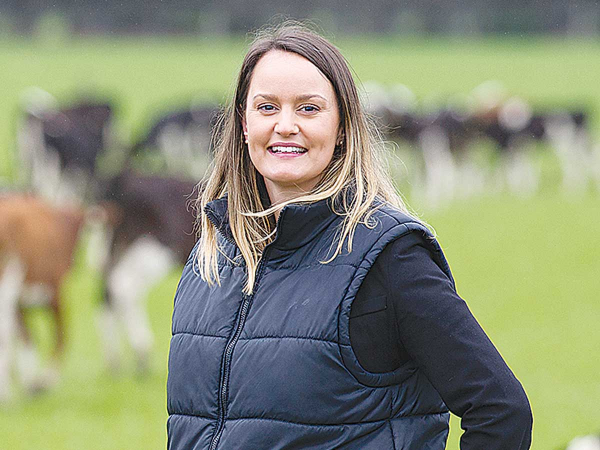 Emma Higgins, RaboResearch says strong Chinese demand is fuelling dairy price rises.
RaboResearch senior analyst Emma Higgins says resilient Chinese demand is helping dairy prices remain high.
She says there’s “upside potential” for the forecast farmgate milk price if prices the recent price rises on Global Dairy Trade (GDT) auctions continue this year.
The latest Global Dairy Trade (GDT) auction, the first for 2021, recorded solid gains in whole milk powder (WMP) and fat product prices, building on gains in the two December auctions.
WMP prices, used by Fonterra to set its payout, sit at a 12-month high of US$3,306/metric tonne.
Skim milk powder prices rose 4.1% to over US$3,000/MT.
Higgins says while an overall lift in commodity prices for the last GDT event wasn’t surprising, the magnitude of the rise was unexpected – particularly for skim milk powder (SMP).
“We are happy with our current forecast milk price of $7/kgMS for now, but there’s certainly upside potential for the forecast farmgate milk price should these prices continue into the New Year,” she told Dairy News.
Last month, Fonterra narrowed its forecast payout range to $6.70-$7.30/kgMS. ASB lifted its forecast to $7/kgMS.
ASB senior economist Chris Tennent-Brown notes that the latest GDT price rise built on gains of December that led to the bank lifting its forecast price.
He says WMP prices have now edged comfortably ahead of where they were a year ago.
“The contract curve remains flat and stable, so price gains aren’t being driven by short-term supply fears.
“The latest GDT result provides a buffer to our $7 forecast, and more of the same over the coming events could well see Fonterra narrow its forecast range.”
Gains on GDT auctions over the past two months are being mostly attributed to strong demand from China.
While most countries are still dealing with waves of Covid-19, China’s economy is bouncing back after weathering the Covid storm.
Fonterra said last month that China was continuing to recover well from Covid-19 and this was reflected in recent GDT auctions.
The co-op noted a strong demand from Chinese buyers for WMP.
“The impact of Covid-19 continues to play out globally, and we continue to have a watchful eye on the increasing Northern Hemisphere milk production and New Zealand dollar,” said Fonterra chief executive Miles Hurrell.
“However, we have contracted a good proportion of our sales book for this time of the season, which has given us the confidence to narrow and lift the bottom end of the forecast farmgate milk price range.”
New Zealand milk production also impacts GDT prices; a drop in production can spark supply fears.
Data released in late December by the Dairy Companies Association of New Zealand (DCANZ) showed NZ November milk production was down 2.5% on a tonnage basis and down 2.7% on milksolids basis on November 2019.
Milk powder prices are keeping farmgate prices up, helping processors offset the dip in milk fat prices.

The avocado sector is entering the new season with a larger crop and positive market opportunities.
OPINION: With 10,500 dairy farms, New Zealand continues to punch above its weight around the world.
A team effort that is paying dividends for the wider New Zealand economy.
A milk glut around the world shows no sign of easing, putting downward pressure on farmgate milk prices for the next few months.

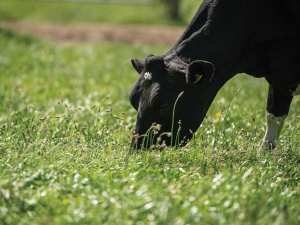
Farms across the upper North Island are trialling different pasture mixes as part of a research programme that aims to build greater resilience into farming systems.
Election years are always a concerning time for farmers, according to DairyNZ chair Tracy Brown.
The Ballance Farm Environment Awards are coming to the West Coast of the South Island.
Most dairy regions around the country have had a pretty good season so far says Tracy Brown.
Rural leader Mark Hooper has been appointed as an independent director to the NZPork board, bringing extensive farming, governance and advocacy experience to the role.