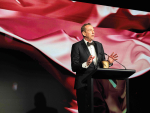
Leon Fung confirmed as Synlait CEO
Canterbury milk processor, Synlait Milk has confirmed Leon Fung as its chief executive officer.
 increase font size

SYNLAIT HAS reduced its forecast net profit after tax by about $7.5 million in this financial year.
This is the result of a reduced advantage from a favourable product mix in the second half of the year, and a consistently high New Zealand foreign exchange rate, it says.
Synlait Milk chairman Graeme Milne says as a result the forecast the financial year 2014 net profit after tax has been revised from a range of $25 to $30 million to a range of $17.5 to $22.5 million. The prospectus forecast is $19.8 million.
"We had been expecting to maintain the benefits of a very favourable product mix for the remainder of this financial year, however the exceptional market conditions experienced in the first half of the year have moderated," says Milne.
International commodity price volatility coupled with a high New Zealand foreign exchange rate has resulted in the forecast milk price for the FY2014 season being expanded from a range of $8.30 to $8.40 per kgMS to $8.20 to $8.40 per kgMS.
The new season forecast milk price for FY2015 is $7 per KgMS.
Synlait Milk managing director John Penno says despite challenging market conditions the company's financial performance remains on track.
"The infant formula and nutritional market continues to prove challenging due to regulatory changes in China and it is clear that we will not meet our volume targets for this financial year. However, the development of this business in key markets outside of China with our tier one multi-national companies continues to be strong and we remain confident of meeting our long term objectives.
"China remains an important market for us. We are confident of receiving the required Chinese regulatory approval to export finished infant formula into China following the approval of our Risk Management Plan by MPI for our dry blending and consumer packaging facility. Construction of this facility is scheduled for completion in June 2014.
"Along with this facility our other growth initiatives are on track. Commercial production of the high-value product, lactoferrin, commenced in April," says Penno.
Canterbury milk processor, Synlait Milk has confirmed Leon Fung as its chief executive officer.
Waikato milk processor Tatua has again declared a record milk payout to farmer shareholders, leaving other processors in the dust.
Synlait has swung to second-half profit as operations stabilise, but the dairy processor still posted a $75.4m annual loss.
A 'tsunami' of milk from key exporting countries is winding down and this may be good news for New Zealand dairy farmers.


Decades piloting planes has ensured vet and farmer David Hayes is focused on safety. So, after a serious accident while welding on farm, he is sharing his experience so others can learn from it.
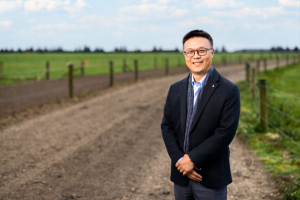
Canterbury milk processor, Synlait Milk has confirmed Leon Fung as its chief executive officer.
OPINION: Making it easier to collect rainwater and use it to grow crops and livestock is a no brainer.
As part of its Election 2026 coverage, Rural News asked political parties how they would help pull the arable sector out of the doldrums. Here's what they said:
Farmers are being encouraged to rethink how they manage waste on farm with the launch of ruralwastesorted.co.nz, a new website bringing together practical tips, real farmer experiences and resources.
New Zealand Winegrowers (NZW) is celebrating the India-New Zealand Free Trade Agreement (FTA) coming into force today, bringing New Zealand wine improved access to one of the world’s fastest-growing economies.