Why Now Is the Time to Plan Farm Succession, Findex Says
OPINION: Succession and long-term planning are perennial topics because it is perpetually sidelined on busy farms.
 increase font size
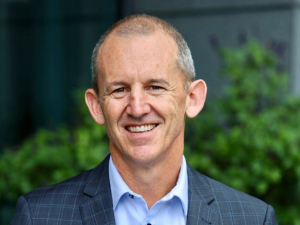
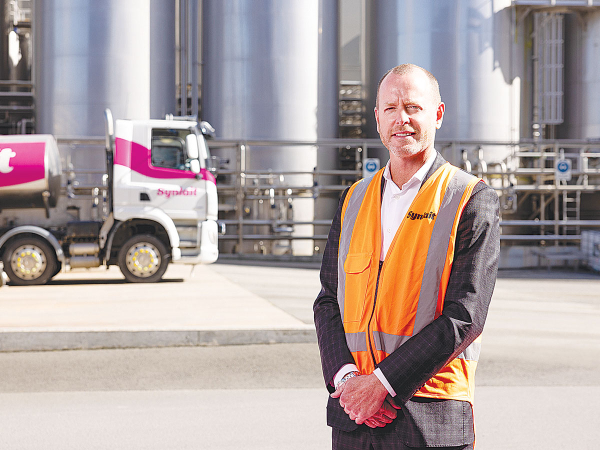 Former Synlait chief executive Grant Watson.
Former Synlait chief executive Grant Watson says the past two years have been quite the journey.
Watson, who stepped down last week, says now feels like the right time to leave the company following a turbulent period at its helm.
“It’s been quite the journey, I have to say, over the last two-and-three quarter years, but I’m really proud of the reset we’ve taken the business,” he told Dairy News. “So, for me, it certainly feels like the right time to leave.”
Watson’s decision follows a disappointing financial result which saw a 61% profit loss and a 221% drop in operating cashflow.
Those followed a difficult year for Synlait, one in which many farmers issued cessation notices.
However, Watson says he’s confident that “the business has really good momentum”.
“Financially, 2025 should be a really good year for Synlait, and for me personally, it’s time to decompress, time to spend some time with my family,” he says.
Despite the turbulence of the past few years, Watson says there have been some successes, among them the recapitalisation plan which took effect earlier this month.
The plan saw Bright Dairy of China increase its shareholding in Synlait from 39% to 65%, while a2 Milk Company’s stake remains at 19%.
“Between the shareholder loan from Bright Dairy and the equity from Bright Dairy and a2, injecting $350 million of new capital into the business when you’re sitting on a market capitalisation of $70 million is a real achievement,” Watson says.
He adds that another significant milestone in his time as chief executive was the strategy reset which he says enabled the company to diversify growth. “We’ve now commercialised the plantbased product in the North Island. We’ve also launched the highly profitable foodservice cream in the South Island.”
Coming off a tumultuous financial year, Watson says Synlait will need to continue its newfound momentum.
“Off the back of the reset, we’ve been through the foundations of the business,” he says. “We’ve paid down debt, we need to keep going.”
He says that in terms of lifting production, demand, and cost, the company has experienced good momentum. “That needs to continue to increase profitability.”
Finally, Watson says it will be important for the company to retain its suppliers.
“Obviously, we’ve had a lot of cease notices that were put into the company and we’ve put a programme in place to withdraw those cease notices and that’s been received really well, but it’s about making sure that that milk supply moving forward is shored up and gives the company the certainty it needs,” he says.
Watson will be replaced temporarily by Dairyworks chief executive Tim Carter, who has been appointed acting CEO of the company from 21 October.
OPINION: Succession and long-term planning are perennial topics because it is perpetually sidelined on busy farms.
OPINION: It seems Canterbury processor Synlait is still in the doldrums.
Farms across the upper North Island are trialling different pasture mixes as part of a research programme that aims to build greater resilience into farming systems.
Election years are always a concerning time for farmers, according to DairyNZ chair Tracy Brown.


Westpac NZ is calling on farmers and growers to start preparing now for the possibility of a dry summer, as likely El Niño conditions raise the risk of drought across parts of the country.
Fonterra Co-operative Group has confirmed the independently assessed candidates standing for election to its board in 2026.
Fonterra has revised its Farmgate Milk Price forecast for the 2026/27 season, lifting the midpoint and narrowing the range on the back of improving global dairy commodity prices.
New Zealand's citrus growers were challenged to build their future on the value embedded in their fruit rather than the volume they produce, at Citrus New Zealand's annual gathering in Gisborne on 17 September.
Leading John Deere technicians and apprentices from New Zealand and Australians were recognised at the recent sixth annual JD Technician of the Year Awards, held in Brisbane.
In Dacre, near Invercargill in New Zealand’s South Island, Bruce Dinnington is running a dairy operation unlike any other.