Federated Farmers is renewing its call for Greenpeace to be stripped of its charitable status immediately, following the activist group's latest publicity stunt.
In the early hours of July 22, members of Greenpeace used a cherry picker to hang cartoon crosses over the trout statue in Gore and hung a sign over the town's 'Welcome to Gore' sign, adding 'Where Dirty Dairy Wrecked The Water'.
This was after a do not drink notice was issued on July 18 after nitrate levels in the water supply exceeded legal limits, which Greenpeace blames on the effects of dairy farming in the region.
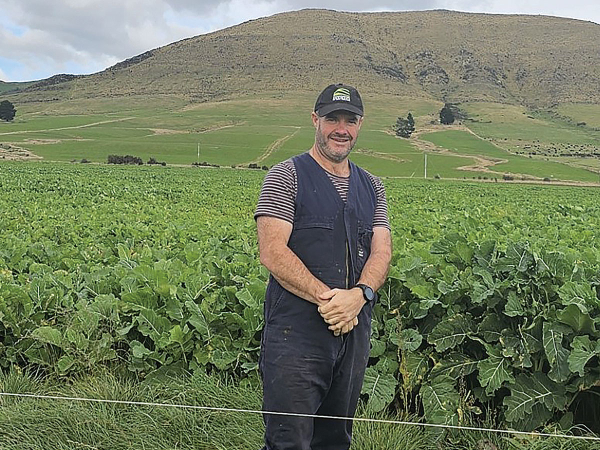
Southland Federated Farmers president Jason Herrick said that Greenpeace needed to be held accountable "for their repeated illegal activity and the spread of harmful misinformation" - not just limited to the recent actions in Gore.
Charitable status in New Zealand is intended to support organisations that advance public benefit through education, relief of poverty and other recognised charitable purposes.
Under the Charities Act, organisations must operate for the public good and not primarily serve political or advocacy purposes.
Herrick says he sees Greenpeace's ongoing activities as clear evidence that it no longer meets these criteria for charitable status.
Read More:
In April, Federated Farmers called for the Government to strip Greenpeace of its charitable status after the group's occupation of Port Taranaki.
At the same time, Federated Farmers lodged a formal complaint with the Charities Services requesting an inquiry into Greenpeace's conduct and eligibility for charitable status, focusing on Greenpeace's 'repeated involvement in premeditated unlawful protest activity'.
This included a 2024 protest at Fonterra's Te Rapa dairy factory where seven individuals were arrested, and last year's occupation of Straterra's Wellington office where five were arrested during a staged lockdown.
"Storming offices, intimidating people who thought they were in a safe workspace, defacing public property... a charitable organisation should not be behaving in the manner that they're behaving," said Herrick.
"How can they be recognised as a charity under the requirements of the Charities Act 2005 when they're breaking all kinds of laws? It sends a poor message that anyone who wants to deface public property can plead that they're protesting as an example."
Herrick says Greenpeace's vandalism was a "shameless attempt" to divide the small rural community, which relies heavily on the economic impact of dairy farming, and to spread anti-farming propaganda.
"Farming plays a huge role in not only our local economy, but in our social fabric too. Misinformation can cause disruption and mistruth out there by targeting a specific group like dairy farmers that can have a flow on effect by the public perception. We've heard enough of that over the last 3-4 years."
Although no permanent damage was caused to the statue and sign and no one was hurt, Herrick explained that there was easily room for things to go wrong, with materials used to stick protest signs up having potential to cause damage and the use of cherry pickers at height without supervision could have led to injury.
"There's no proof that dairy farmers were the cause of the high nitrates in the well that was affected.
"There are opinions out there and protest, no two ways about that, but Greenpeace overstepped the mark while threatening livelihoods with misinformation about farming."
However, Herrick says it's not just Greenpeace that needs to be held accountable for how it's operating as a charity, with the Charities Services and the Government needing to be held accountable too and answer some "tough, but fair questions about how this is being allowed to continue".
A copy of Federated Farmers' complaint has been sent to Community and Volunteer Sector Minister Hon Louise Upston and Minister of Internal Affairs Hon Brooke van Velden.