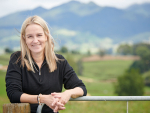
Susan O'Regan Appointed New Chair of QEII National Trust
Minister of Conservation Hon Tama Potaka has appointed Susan O'Regan as Chair of the Queen Elizabeth II National Trust (QEII) for a three-year term.
 increase font size
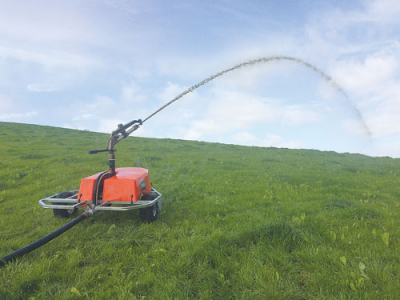 The Waikato Regional Council is targeting high risk farms.
Waikato Regional Council has resumed aerial monitoring of ‘at risk’ farms by satellite imagery, drones, fixed wing aircraft or helicopters.
This was revealed in the council’s response to a Forest and Bird (F&B) report which gave Waikato an ‘F’ grade -- the worst in the country -- for its compliance monitoring.
The council says the F&B report contained information the council believes is “outdated, inaccurate and misleading”. But it also admits staff provided inaccurate information to F&B on enforcements.
But the council has also revealed that aerial inspections were part of a more risk-based monitoring programme the council adopted in June this year.
It will combine one-on-one visits to high risk farms with aerial inspections by satellite imagery, drones, fixed wing aircraft or helicopters.
“Our new way of monitoring has only been in place for just over a month, and it is targeting high risk farms,” says farming services manager, Nicole Botherway. “That means it’s not surprising we’re picking up higher levels of non-compliance than we were previously, but it’s too soon to tell if this trend will continue.”
The council in 2014 stopped aerial monitoring after farmers complained of feeling intimidated and intruded on.
The F&B report also criticised the council for making announced visits two years ago.
But the council says announced visits enable staff to meet one-on-one with farmers to discuss their farm matters including minor earthworks, the Healthy Rivers/Wai Ora plan change and water consents.
“Now a significant portion of the farming population have or are attempting to improve their systems, and working with them one-on-one has helped,” says resource use director Dr Chris McLay.
Local Government NZ (LGNZ) says the F&B report on dairy compliance monitoring shows the potential benefits of a national methodology for reporting.
LGNZ’s regional sector is working with the Ministry for the Environment to develop a national system to enable regional council compliance, monitoring and enforcement practices to be compared between regions.
LGNZ regional sector chair Doug Leeder says Forest and Bird used an apples-vs-oranges approach in its report when comparing compliance, monitoring and enforcement between regional councils.
Each council monitors and enforces according to the conditions of a resource consent and the planning approach taken is specific to its region.
“A national reporting methodology will provide a much better platform for comparing data across different regional councils, and will take those differences into account, so we’ll be able to compare apples with apples.”
The methodology used by the Forest and Bird researchers has led to inaccuracies in the report which could have been avoided by engagement with the sector, he says.
Misinterpretation of the Waikato Regional Council’s data implied significantly non-compliant farms had not been visited for 10 years. This did not take into account the council’s aerial monitoring done before 2014.
Minister of Conservation Hon Tama Potaka has appointed Susan O'Regan as Chair of the Queen Elizabeth II National Trust (QEII) for a three-year term.
Farms across the upper North Island are trialling different pasture mixes as part of a research programme that aims to build greater resilience into farming systems.
The Government has announced it will pause key parts of Waikato Plan Change 1 (PC1) in a decision that is set to give Waikato farmers a reprieve from new consenting and farm-planning requirements while the wider resource management system is overhauled.
When Fraser Hasnip returned to his family farm in Pirongia, Waikato, he saw an opportunity to do things differently.

The Royal New Zealand College of General Practitioners (the College) and Hauora Taiwhenua Rural Health Network are calling for investment in a proposed new training pathway for rural GPs, warning that many rural practices are struggling to recruit while a large share of the existing workforce nears retirement.
Federated Farmers has called on Central Otago District Council (CODC) to drop or vote down a plan to truck sludge from Alexandra and Cromwell to farmland near Lauder, warning it would compound an "outrageous" situation created by a separate council's decision weeks earlier.
Synlait has swung to second-half profit as operations stabilise, but the dairy processor still posted a $75.4m annual loss.
LIC shareholders have elected a new North Island representative to the co-operative's Board, along with five representatives to its Shareholder Reference Group (SRG), following the company's Annual Meeting held in Invercargill.
Farmers across parts of Southland and South Otago are continuing to deal with difficult conditions after a prolonged run of wet weather, with pressure building around feed supply, stock management, pasture damage, farm infrastructure and everyday workloads.
Federated Farmers says it welcomes Labour's commitment to reviewing the Sharemilking Agreements Act, calling on other major parties to do the same.