DairyBase and MINDA Link Up to Cut Farmer Paperwork
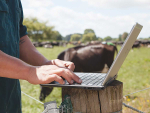
Farmers can spend less time on paperwork, thanks to a new data sharing agreement between DairyNZ’s DairyBase and LIC’s MINDA software.
 increase font size
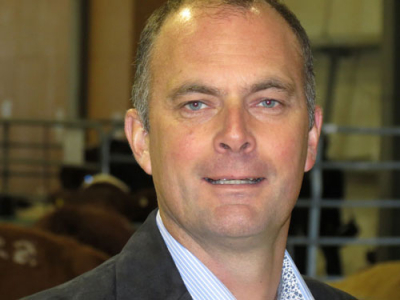 Gerard Hickey.
Two New Zealand farmer-owned co-ops are jointly offering an alternative revenue stream for farmers through a Wagyu programme.
The LIC and First Light Wagyu scheme enables dairy farmers to cross their dairy cows with Wagyu sires, creating more value for the farmers and a reliable source of export-quality Wagyu stock for First Light.
First Light chief executive Gerard Hickey says the scheme is helping to meet global demand for grass-fed Wagyu.
“The dairy-Wagyu cross creates a desirable product for export, with more of the marbling for which Wagyu beef is renowned. Our experience has shown dairy breeds, including the Kiwicross cow, produce a high quality marbled beef when mated with First Light Wagyu sires,” he says.
“Grass-fed Wagyu beef is increasingly popular with NZ and overseas consumers... who have shown they are willing to pay more for a verified traceable product with the superior eating characteristics of Wagyu.”
LIC’s general manager of biological systems, Richard Spelman, says the scheme enables farmers to see non-replacement calves becoming a valuable product.
“It gives income diversification from calf sales in early spring and provides an alternative to bobby calves. Farmers can extend their existing artificial breeding period to include First Light Wagyu,” says Spelman.
He says the partnership with First Light is happening at an opportune time as interest in dairy-cross beef options is rising.
“It offers new options for dairy farmers and creates high-value beef that fits with the NZ grass-fed story.
“The partnership also connects the dairy and red meat value chains to create an emerging value-added product.”
Farmers can spend less time on paperwork, thanks to a new data sharing agreement between DairyNZ’s DairyBase and LIC’s MINDA software.
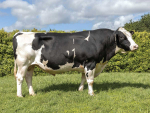
An LIC bull, Tronnoco AR Sadio-ET S3F, bred by Tony and Keri O'Connor of Tronnoco Farming Co Ltd near Timaru, has won the 2026 Mahoe Trophy.
Bovine Viral Diarrhoea (BVD) is estimated to cost New Zealand's dairy and beef industries more than $150 million every year, yet many of the tools needed to control it are already well understood. After more than 25 years in veterinary practice, Andrew Weir, animal health technical specialist at LIC, has seen firsthand the impact BVD can have on herd performance. We asked him about the role of persistently infected (PI) animals and the practical steps farmers can take to reduce their risk.
In the past, a bull could sit comfortably in a breeding team for several years with little change, but today, that’s no longer the case.
Paynes Titus Excelsior ET, an LIC bull bred by Brad Payne and Claire Brodie in the Waikato, has won the JT Thwaites Sire of the Season 2026 Award.


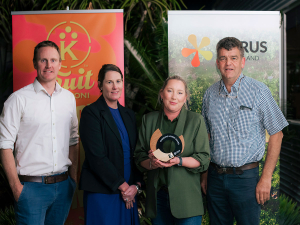
New Zealand's citrus growers were challenged to build their future on the value embedded in their fruit rather than the volume they produce, at Citrus New Zealand's annual gathering in Gisborne on 17 September.
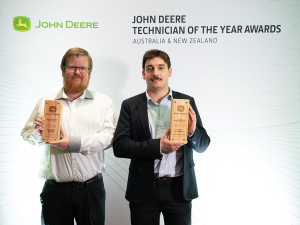
Leading John Deere technicians and apprentices from New Zealand and Australians were recognised at the recent sixth annual JD Technician of the Year Awards, held in Brisbane.
In Dacre, near Invercargill in New Zealand’s South Island, Bruce Dinnington is running a dairy operation unlike any other.
A free online platform aggregating governance vacancies across rural and regional New Zealand has been launched.
Environment Minister Nicola Grigg has announced details of a new rural plastics recycling scheme.
Agricultural drone operators say that a government decision to allow lower-risk drone work without certification won’t lower standards but drive innovation and efficiency.