
Editorial: Punching Above Our Weight
OPINION: With 10,500 dairy farms, New Zealand continues to punch above its weight around the world.
 increase font size
 Chinese demand remains around the 10-year average and overall prices remain near their highest since June 2023.
Dairy prices pulled back a bit in the overnight Global Dairy Trade (GDT) auction and it’s mostly to do with New Zealand’s biggest market, China.
According to Westpac NZ chief economist, Kelly Eckhold, Chinese buyers pulled back a little and Southeast Asian buyers picked up the slack in the auction.
He notes that Chinese demand remains around the 10-year average and overall prices remain near their highest since June 2023 and modestly above long-term averages.
“Of interest in terms of the market environment is the recent Chinese National People’s Congress held this week,” he says.
“The Chinese authorities laid out their targets for the economy this year. They set their growth target at 5% - in line with the 2023 target - but somewhat lower than average growth in the last 20 years and likely weaker than potential growth.
“Interestingly, the Chinese authorities also set a target for inflation at 3% - somewhat higher than the zero to negative outcomes seen of late.”
Eckhold believes it will be challenging for the authorities to meet these targets without significant policy stimulus – which so far is modest.
“Hence, we suspect the operating environment for exporters to China will remain challenging. Downside risks remain even though these may be a little less prominent than feared around August 2023.”
At last night’s auction, the GDT price index dropped 2.3% and the key whole milk powder (WMP) prices fell 2.8%.
The auction was weaker than recent auctions but more in line with recent weaker futures market trends, particularly the outcome of the GDT Pulse auction held on 27 February, noted Eckhold.
Most products posted price falls although cheese prices continued recent volatility, rising another 4%.
OPINION: With 10,500 dairy farms, New Zealand continues to punch above its weight around the world.
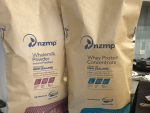
A milk glut around the world shows no sign of easing, putting downward pressure on farmgate milk prices for the next few months.
Fonterra has reduced its forecast 2026/27 Farmgate Milk Price.
New Zealand dairy farmers are set to be the first in the world to receive access to a new digital physical milk pricing tool that enables them to fix the price for their physical milk.
Seven catchment groups across New Zealand have been awarded $10,000 grants as part of the Westpac Water Care Project.

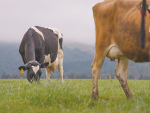

An Auckland gelato shop and an established New Zealand ice cream maker have both been named Supreme Champions at the NZ Ice Cream & Gelato Awards 2026.

As the cost-of-living crisis continues to put pressure on household grocery budgets, new figures show pork remains one of the most affordable fresh meat options for New Zealand families.
OPINION: In politics, credibility is and should be big. It must surely rank higher than charisma, which is quite trite and superficial. Yet, voters nowadays are often wooed and influenced by how someone looks or talks at a superficial level. TV plays a huge role in this.
Farmers can spend less time on paperwork, thanks to a new data sharing agreement between DairyNZ’s DairyBase and LIC’s MINDA software.
Kaikōura families affected by July's severe storm have found a practical solution to a problem that's kept some children away from regular schooling for weeks: a washed-out section of Inland Kaikōura Road, which has stopped the local school bus from running its usual route.
Rural New Zealand is welcoming the Government’s recent package of rural healthcare initiatives.