Lanaco and Blueair Launch World-First NZ Wool Air Filter
New Zealand wool is reaching new heights as air filtration companies move away from synthetic products to biodegradable alternatives.
 increase font size
WE SHOULD give thanks for those fearless souls who still believe they can save the strong-wool industry. As those who have gone before have found, the path to this salvation can be unforgiving.
The latest rescue plan is driven by those who seem to have access to Wools of New Zealand's intellectual property. To those who have watched the tragic demise of the Wool Board the latest call to arms may sound familiar.
There is a recycled look about those promoting what will be called the Wools of NZ Trust. The story that accompanies the promotional document could prompt a 'same-old same-old" response. But this may be unfair.
Many of those involved with Wools of NZ Trust were enthusiastic supporters of Wool Partners, which started out brilliantly but failed to get the numbers. If nothing else the Wool Partners campaign should have shown potential flaws in any exercise aimed at getting farmers to voluntarily front-up with money.
Wools of NZ Trust's and Wool Partners' mission aimed at uniting strong-wool growers from the wool shed through to the marketplace. The back-up information is extensive (85 pages), emphasising the likelihood that time is running out.
Strong wool, in the lucrative flooring market, now makes up about 2% of the world's wool; New Zealand wool makes up about 0.6 % of this market. However, there are huge opportunities to expand New Zealand wool in countries such as China with a growing, wealthy, middle class who are prepared to pay extra for quality.
The Wools of NZ Trust prospectus lists a range of considerations; the key requirement seems to be how to activate strong-wool growers. While noble visions and fine mission statements all sound great, farmers, are the ones to be persuaded to buy into something that isn't revolutionary, but evolutionary.
Timing can be essential. It was unfortunate timing that helped sink Wool Partners. Before its prospectus came out, prices in the market place increased. Out in the other world there were wool brokers and exporters handling about two thirds of the country's strong-wool clip. They could claim to have helped lift prices.
Sadly, after the failure of Wool Partners plan, prices for strong wool declined. But for some there were still some good bits worth revisiting and instead of failure the approach should be seen as an industry at the crossroads.
So the new model is born with Wools of NZ on the letterhead. My mates are generally negative, possibly because there is still a cost. Growers will be expected to buy a minimum 5000 $1 shares in Wools of NZ, based on one share/2kg of greasy wool produced. There will also be an annual 15c/kg levy (called a commitment) on all wool produced.
Wools of NZ Trust aimed initially to collect $10 million. It could still get up and running on $5 million.
However, there are some mates who congratulated Wools of NZ Trust on their efforts and who already have their chequebooks out. These positive folk know it is a long shot, but are reassured to find people out there still who feel passionate about wool. They agree this may the last chance for strong wools to move out of the bargain basement market and into the high value sector where they belong. Failure to act now will mean more dairy conversions and forestry blocks.
My positive mates suggest the amount of money involved is not onerous and will be an excellent investment if the Wools of NZ Trust succeeds. - John Stirling
New Zealand wool is reaching new heights as air filtration companies move away from synthetic products to biodegradable alternatives.
Will a stronger, more coordinated voice help rebuild confidence and improve returns in the wool sector?
OPINION: Confidence in the wool sector is rebounding as prices hit levels not seen in more than 15 years.
The recently signed free trade agreement with India is an invitation to strengthen relationships between the New Zealand and Indian strong wool industries, says Wool Impact chief executive Andy Caughey.
Strong competition and tightening supply have seen wool reach its highest prices paid at auction since 2011.


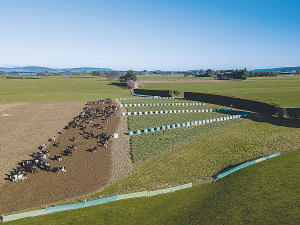
Central Otago District Council (CODC) has voted against a plan to spread treated sewage sludge from Cromwell and Alexandra on farmland near Lauder, a decision Federated Farmers says reflects strong opposition from rural residents.
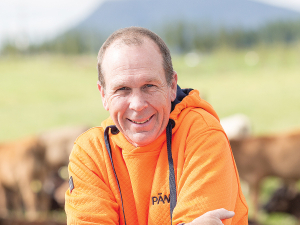
Pāmu has released its FY26 Integrated Annual Report, reporting a Net Operating Profit of $113 million, more than double the $49 million recorded in FY25.
Meat Industry Association data, released alongside the Red Meat Sector conference in Wellington, shows export value climbing across the US, China, UK and Canada.
Applications are set to open for the 2027 Zanda McDonald Award, a trans-Tasman award recognised for identifying and fast-tracking talented young leaders in agriculture and agribusiness.
The Royal New Zealand College of General Practitioners (the College) and Hauora Taiwhenua Rural Health Network are calling for investment in a proposed new training pathway for rural GPs, warning that many rural practices are struggling to recruit while a large share of the existing workforce nears retirement.
Synlait has swung to second-half profit as operations stabilise, but the dairy processor still posted a $75.4m annual loss.