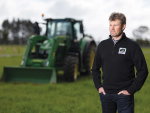
Fonterra CFO Andrew Murray Resigns
Fonterra Co-operative Group chief financial officer Andrew Murray has resigned to take up a role outside the dairy giant.
 increase font size
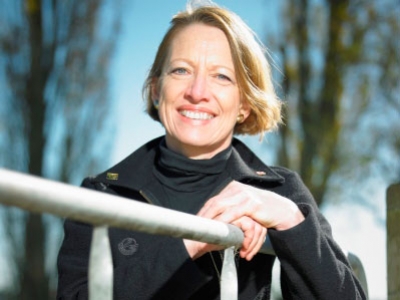 Jacqueline Rowarth.
To call it a perfect storm trivialises the difficulties primary producers are facing in the balance between environment, welfare (human and animal) and economics.
Processing companies are clear that farmers have to be compliant so that what they produce in milk and meat can be sold. In the case of milk, however, questions are being asked why companies overseas don’t face the same difficulties when their dairy farmers have far lower compliance costs.
In the case of Fonterra, operating in several countries, there are big questions being raised. Are waterway protection, minimum wages and animal health regulations the same in all countries? How can Fonterra sell milk from countries where standards are lower?
The standard answer is that the rules of the country apply, but as Fonterra sells milk globally, the standard answer doesn’t make a lot of sense. Do consumers care or not? If yes, apply the standards everywhere. If not, don’t apply them in New Zealand.
Blunt force trauma for unwanted calves is a case in point. In Chile, where Fonterra operates, and various New Zealanders including past and present Fonterra directors have invested in farms, blunt force trauma is illegal. Calves have to be despatched by veterinarians. Since the news item from Chile hit YouTube, blunt force trauma has been eliminated in New Zealand (except in extreme circumstances); despatch is by bullet or captive bolt.
This year the question is on inductions. Because they can no longer be used as a tool to synchronise a late calving cow with grass growth (and the main herd), bulls were taken out of the herd earlier than usual. The result is an increased number of empty cows: reports indicate a 40% increase from 12% to 17%.
Good cows are being sent to the works because they are empty, and cows which normally might have been culled for health or yield reasons are being kept.
The implications are deterioration in the quality of the national herd and increase in costs of production. The latter involves keeping 30% replacements in future rather than the traditional 20%.
The dairy farms in Chile supplying Fonterra-owned Soprole and trying to emulate New Zealand’s mostly grass-based and efficient milking system still have inductions as a tool to synchronise the start of milking with grass growth. On top of the differences in environmental compliance and employment conditions, it isn’t surprising that forward-thinking businessmen have invested over there. The milk price is higher, too.
Because it was the money of New Zealand farmers that allowed the purchase of Soprole by Fonterra, and to set up dairy hubs in China, the shareholders are right to be questioning exactly what the policies and procedures are in other countries. The Sanlu incident in China cost New Zealand famers hundreds of millions of dollars once the melamine was discovered. The 1080 threat in New Zealand is continuing to cost farmers this year because of increased surveillance and testing, to ensure that there is nothing to be discovered.
A level playing field doesn’t appear to exist in either penalties or rewards.
The big picture is whether or not New Zealand primary products can be branded in a manner that includes high environmental and welfare standards which are then marketed in such a way that the farmers become financially viable. Marketing has been done in some cases on clean green spectacular scenery, but what about the health benefits (however small) of the omega-3 fatty acids found in pasture-fed milk and meat? And the fair trade aspects of employment?
New Zealand’s regulatory approach, in many cases for justifiable reasons, means that we can no longer compete in the global market on ‘least cost’, but progress on ‘meeting premium customer demands through quality’ is in jeopardy when different rules apply in different countries for the same company.
Perfect storms do not result in pretty outcomes.
• Jacqueline Rowarth is professor of agribusiness at The University of Waikato.
Fonterra Co-operative Group chief financial officer Andrew Murray has resigned to take up a role outside the dairy giant.

Four candidates have been confirmed for two director positions on Fonterra’s board.
A record farmgate milk price and strong global demand is laying the foundation for continued growth of organic dairy farming in New Zealand.
OPINION: New British Prime Minister Andy Burnham has said that farming and food production is a matter of ‘core national resilience’ and must be spoken about in Whitehall at the same level as issues with ‘defence, energy, water and steel’.
Waikato milk processor Tatua has again declared a record milk payout to farmer shareholders, leaving other processors in the dust.



Fonterra Co-operative Group chief financial officer Andrew Murray has resigned to take up a role outside the dairy giant.
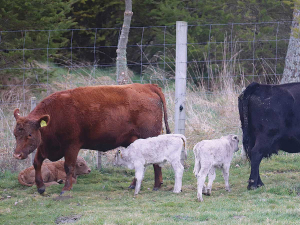
A major move is about to get underway to improve the quality and viability of dairy beef and cattle in NZ.
Veterinarians say changes to the code of welfare for dairy cattle provides a positive foundation for improved cattle welfare across the country.
Today, 15 October, is the International Day of Rural Women, which recognises rural women’s contribution to farming, communities and the environment.
Global dairy giant Lactalis has integrated its Australian operations with the Mainland Dairy consumer business it acquired from Fonterra earlier this year.
High country stations, mixed sheep and beef farms, Māori-owned farms, corporates and family operations are among the nine commercial farms taking part in the Livestock Innovation Farming Transformation programme, known as LIFT.