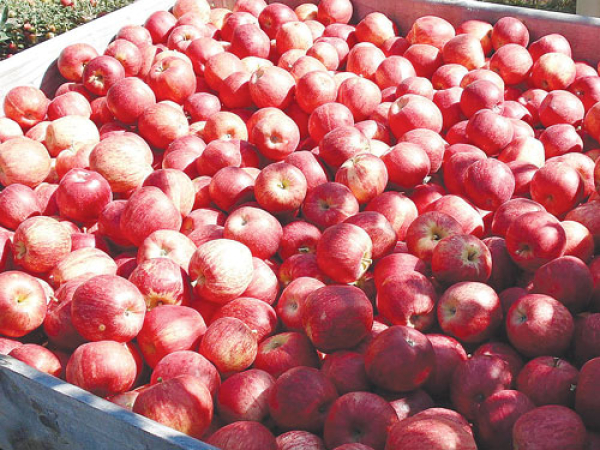
Research carried out by consultancy MartinJenkins unveiled that New Zealand's apple and pear industry contributes almost $2 billion of total revenue impact to the national economy.
The industry boasts a growth rate that outstrips the national export growth rate, increasing its export value - largely due to productivity increases and value gains - from $347 million in 2012 to more than $892 million in 2023. More than 12,000 permanent and seasonal employees work in the sector.
The industry contributes $918 million to the New Zealand's gross domestic product (GDP), comprised of $348 million direct sector contribution and $570 million of industry linkages and spending. Regionally, the industry is more significant again, particularly in Nelson Tasman and Hawke's Bay, where it is the second and third largest contributor to regional GDP respectively.
In Hawke's Bay, home to 65% of apple and pear plantings, the industry contributes $424 million to the region's GDP. In Tasman, where 23% of pipfruit plantings can be found, the industry contributes $166 million to the local GDP.
In Tairawhiti, the third largest region by apple and pear planted area, the industry injected $25.5 million into the local GDP figures - a figure that is expected to grow even further with plenty of new apple varieties in the ground. Apples and pears contributed $28 million to Central Otago's regional GDP.
And the industry isn't resting on its laurels. Farmers and exporters continue investing in research and development and are reaping the rewards with innovation in growing systems and post-harvest processes already showing increased productivity.
Read More
-
Growers seek regulatory support to boost exports
-
NZ apples and pears revenue tops $2 billion
-
Ideal weather for growers
However, the industry is warning that future growth is dependent on the supportive economic and regulatory conditions.
Since 2020, conditions have not been ideal with growers struggling to access labour due to Covid-19 border closures, and Cyclone Gabrielle decimating the 2023 crop. The sector is banking on local and central government to recognise the value of the industry and work with them to ensure there is an operating environment conducive to growth.
The ball is in the Government's court. With the right regulatory settings, the valuable role of the apple and pear industry to national and regional economies can be secured.