Subaru New Zealand Unveils All-Electric Trailseeker SUV Ahead of September 2026 Launch
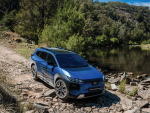
Subaru New Zealand has announced the all-new, all-electric Trailseeker will join its SUV line-up in September 2026.
 increase font size
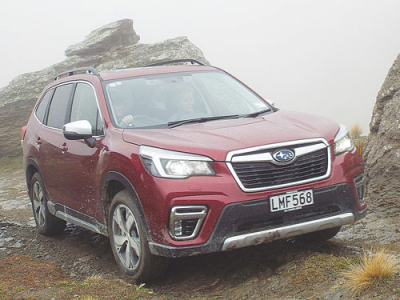 The fifth-generation, 2019 Forester is an impressive SUV.
Given that the Subaru Forester virtually started the trend to SUVs years ago, the New Zealand motoring public’s assigning to it the label ‘wagon’ was woolly.
Launched in 1997, the Forester straightaway grabbed rural dwellers and urban folk wanting to get off the beaten track. It offered 4WD and a remarkable 226mm of ground clearance, making it great for going bush and generally exploring.
Back then SUVs made up less than 10% of what we now call SUVs, whereas in 2018 they make up at least 41% and that looks like increasing. So the recent release of the fifth-generation Forester shouldn’t leave anyone wondering: this is an impressive SUV.
Rural News got the chance to see it first hand at Bendigo Station, near Cromwell, Otago, home of Shrek the sheep. More importantly, it is 12,000ha of high country station with a huge array of roads and tracks to put any vehicle under the cosh.
It sports a larger presence, better looks and even more technology than we have become used to with Subaru. The 2019 Forester also has had major reworks to its underpinnings to deliver 40% greater torsional rigidity and 100% greater front lateral rigidity. This gives a more comfortable, planted feel for the occupants, on or off-road.
Add a new 2.5L flat-four (cylinder), naturally aspirated, direct-injected engine and you get 136kW and 239Nm of pure punch.
Available in Sport, Sport Plus and Premium versions, the Forester packs the well-known Subaru symmetrical all-wheel-drive system, and the Premium version also gets X-mode control with two stage selection to help it deal with deep snow or mud.
The driveline has the Lineratronic CVT system that Subaru’s engineers have cleverly designed to mimic seven steps for drivers who want to use the steering wheel mounted paddle shifters for manual control.
But it’s the enhanced technology that makes this SUV stand out from the pack.
In the Sport Plus and Premium options, a driver monitoring system (DMS) uses facial recognition to detect up to five drivers on entry, to automatically adjust seat and door mirrors and to adjust the air conditioning.
More importantly, it also detects driver inattention and drowsiness and sounds an audible warning – so watch out farmers out for a ride trying to eyeball what their neighbours are up to.
Also new is the maker’s third-generation Eye Sight crash avoidance, lane keep assist, lane centring control and a manual speed limiter.
This builds on the already impressive functions of the previous incarnations such as pedestrian avoidance, pre-collision braking assist, adaptive cruise control and emergency stop signals.
Add in a host of practical solutions like front, rear and side-view cameras, reverse automatic braking and reverse interlocking door mirrors that tilt down when reverse is selected, and the Forester is really the business.
Further practicality comes from repositioning the C pillars to give a larger door opening for rear seat passengers, a step plate to allow short folk to reach the roof rack, a faster opening and closing rear electric door lift, electronic park brake and auto vehicle hold on hills.
Meanwhile, the rear load space offers a total volume of 1768L with the rear seats down, and flatter seat backs to create a smoother load floor, meaning you can shift the kitchen sink.
Subaru New Zealand has announced the all-new, all-electric Trailseeker will join its SUV line-up in September 2026.
Subaru's XV has evolved, with the popular, AWD compact SUV reimagined and re-christened as the Crosstrek.
A firm favourite of rural families and those seeking to get off the beaten track, Subaru has announced the introduction of its first battery electric vehicle (BEV) with the longawaited Solterra all wheel drive SUV confirmed for here in early 2023.
Now in its 25th year, and sixth edition, the 2021 Subaru’s Outback wagon was recently launched in New Zealand.
Given that we already know already the Subaru Forester is a great SUV – after all it won the 2018 New Zealand Car of the Year Award – we were keen to get to grips with the latest e-Boxer Hybrid.



Now in its fourth year, the 2026 Fencing Industry Awards, formed part of the proceedings of the FCANZ Conference, held in Nelson during August.

DairyNZ deputy chair Cameron Henderson has been re-appointed unopposed for another term.
OPINION: The stats speak for themselves.
Farms across the upper North Island are trialling different pasture mixes as part of a research programme that aims to build greater resilience into farming systems.
Election years are always a concerning time for farmers, according to DairyNZ chair Tracy Brown.
The Ballance Farm Environment Awards are coming to the West Coast of the South Island.