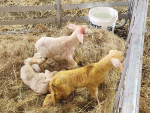
Beef + Lamb NZ's Lambing Kit Checklist for a Tough Season
With lambing underway in many regions, Beef + Lamb New Zealand is encouraging farmers to put together a wellequipped lambing kit to help minimise lamb losses, particularly in bad weather.
 increase font size

I HAVE been surprised to hear farm workers say their bosses won't allow them any sheep to train their dogs on. I suppose it isn't surprising as sheep prices have never been so high.
In the past it has been a common practice to have a few dry sheep or some hoggets available on farms for dog training, but it seems that on today's market, some places feel sheep are worth too much, and they aren't prepared to leave even half a dozen close at hand, for this important purpose.
Mind you, I have seen some pretty poor stockmanship, non-existent dog training skills and dogs being allowed to get away with near murder on some undeserving sheep, so I don't blame the farmer; they have probably seen it as well.
However, farm dogs do need training. Yes, there is a certain amount you can do without sheep but a dog will perform more efficiently if it has some experience of handling sheep and any problems are ironed out before it gets to the job.
Bosses, consider for a moment: isn't it better for a dog to run amuck on six sheep rather than 600? I have to say though, if people adopt training methods similar to mine the sheep won't be abused and injury to them is highly unlikely.
If you employ staff to handle stock with dogs, it is in your interest to allow them the use of the facilities and a small number of healthy sheep to train a dog on. Dogs can get injured, sick and sometimes die prematurely and shepherds need to have a young dog coming on as insurance. They need x number of capable dogs to do their job, so it is a win-win situation for both employer and employee.
If you are concerned for the sheep, you need to point out to your worker that if the sheep are harmed or mistreated you will take away the privilege. But staff should be allowed the opportunity to prove they will treat stock with humanity, and respect your generosity.
I cannot put a high enough value on my training sheep; they are worth their weight in gold to me and I don't allow any dog to terrorise them; the last thing I want is for them to panic at the sight of a dog.
Dog-training sheep need to be healthy; it is cruel to hound lame or sickly sheep around day after day with a young dog. And there is no need for sheep to be crashing into fences and rails and being chewed up by an unruly dog.
Incidentally, I do a large part of my dog training in the sheepyards, and when that is going well I move into holding paddocks. If you don't have control of a dog in the confines of a sheepyard how are you going to control it in a holding paddock? And if you can't get a dog to run, stop, go left and right and work sheep calmly in a holding paddock, how are you going to be able to command and control it on hundreds of valuable animals in a big paddock?
• For more see www.annaholland.co.nz or Ph 06) 388 1318 or This email address is being protected from spambots. You need JavaScript enabled to view it.
With lambing underway in many regions, Beef + Lamb New Zealand is encouraging farmers to put together a wellequipped lambing kit to help minimise lamb losses, particularly in bad weather.
Will a stronger, more coordinated voice help rebuild confidence and improve returns in the wool sector?
The vineyards at Pyramid Farm in Marlborough’s Avon Valley have never been run of the mill, with plantings that follow the natural contours of the land, 250 metres above sea level.
Sheep and cattle numbers continue to decline, and this year's drought hasn't helped, according to Beef + Lamb New Zealand (B+LNZ).
High quality feed, reduced stocking rates and shelter will all help enhance triplet lamb survival and ultimately benefit the bottom line.


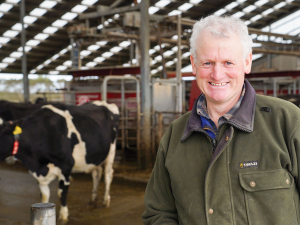
In Dacre, near Invercargill in New Zealand’s South Island, Bruce Dinnington is running a dairy operation unlike any other.

A free online platform aggregating governance vacancies across rural and regional New Zealand has been launched.
Environment Minister Nicola Grigg has announced details of a new rural plastics recycling scheme.
Agricultural drone operators say that a government decision to allow lower-risk drone work without certification won’t lower standards but drive innovation and efficiency.
OPINION: Warning bells are ringing in the arable sector.
Farmgate lamb prices are down by 8%, beef cattle by 4.5% and farm expenditure up by 4.2%.