Tongan Student Wins Final William Gearish Award
Vetekina Pau'u is the first Tongan to win the William Gearish Memorial prize and sadly she will also be the last recipient.
 increase font size
 Professor Ray Geor, Massey University.
Setting popele up to be successful – that’s the challenge Massey University faces according to its new pro vice-chancellor, science, Professor Ray Geor.
Geor, a veterinary graduate of Massey who has worked most of his life in academia in the US and Canada has just returned to take up his new post at the university.
He says New Zealand faces the same challenges as other countries in trying to attract young people into agricultural and science, because the world is becoming urbanised.
“The urban myth is that milk comes from a carton or a bottle not a cow. There is an education challenge for us inform people about the excellent career opportunities that exist in agriculture. This is a big challenge and as universities we need to be outward facing and be as connected as possible to the industries we are linked to.
“But the world outside the university also has a role to play in informing young people of the opportunities that lie before them. Young people may not know about them and it’s our collective responsibility to get that message to them.”
Geor says he’s impressed with the mini farm venture at Mt Albert Grammar school in Auckland. He says universities have to work with them and support that initiative. City kids need to hear that they can have a successful career in agriculture even though they don’t come from a farming background.
According to Geor, the fundamental role of a university is teaching and research. He says the challenge is having qualifications that are constantly evolving and are future-proofed to meet the needs of industry and the goals of students.
He says it’s also pleasing to see that the importance of science and innovation in agriculture are being recognised at the highest level in the country. At Fieldays the Prime Minister spoke about the importance of science and innovation in the primary sector as one of the main tools for economic growth in NZ.
“It’s outstanding that the Prime Minister is recognising the importance of science in agriculture. Those of us on the inside have recognised that for decades and some for our entire working lives. It is excellent that the public is learning more about that and that there is wider recognition that science and innovation will allow the economy to grow.
“The efficiency of agricultural production and our ability to add value to the products we produce is all going to come from innovation, and we need bright people with the right skills to do that,” he says.
Vetekina Pau'u is the first Tongan to win the William Gearish Memorial prize and sadly she will also be the last recipient.
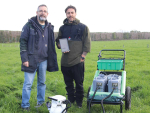
Researchers at Massey University are using a special piece of scientific equipment to improve the measurement of greenhouse gas emissions from pasture soils.
Interest in agritech and production animal systems has prompted Massey University's School of Agriculture and the Environment to new majors to its popular animal science degree.
The industry is crying out for graduates with agricultural related degrees.
A four year trial has reaffirmed that mixing plantain into dairy pastures can help reduce nitrogen losses to freshwater while maintaining milk production and profitability, say researchers.

As part of its Election 2026 coverage, Rural News asked political parties how they would help pull the arable sector out of the doldrums. Here's what they said:
Farmers are being encouraged to rethink how they manage waste on farm with the launch of ruralwastesorted.co.nz, a new website bringing together practical tips, real farmer experiences and resources.
New Zealand Winegrowers (NZW) is celebrating the India-New Zealand Free Trade Agreement (FTA) coming into force today, bringing New Zealand wine improved access to one of the world’s fastest-growing economies.
New Zealand’s red meat sector has welcomed the India-New Zealand Free Trade Agreement taking effect, which removes India’s 33% tariff on New Zealand sheepmeat.
More than 95 per cent of New Zealand’s forestry and wood exports to India can now enter tariff free as the New Zealand-India Free Trade Agreement comes into force today.
Federated Farmers is backing Feilding High School’s call to keep Agriculture and Horticultural Science as a standalone subject in Year 11.