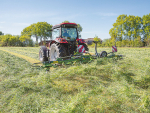
Vendro badged tedders
Masterton based Tulloch Farm Machines has introduced a new series of Krone tedders badged Vendro, to replace the existing KW range.
 increase font size
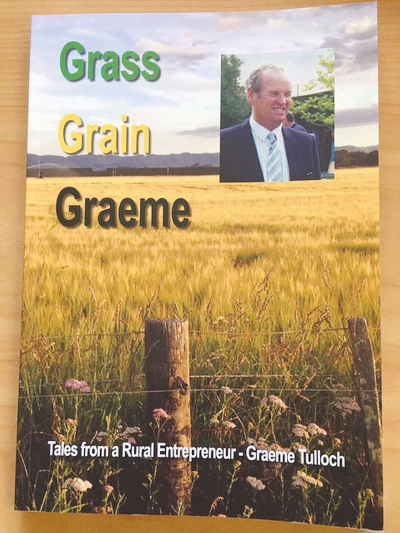
Adversity can bring with it a resilience that allows you to tackle the problems thrown at you and to emerge on the other side in a positive place.
Graeme Hugh Tulloch: 25.6.1936 - 13.11.2019
Among Graeme Tulloch’s first challenges was failing his school exams, probably due to dyslexia, and leaving school at 14. But by then he’d been driving tractors since the age ten.
As a teenager, Tulloch’s practical skills shone through: looking after his father’s dairy farm for a long time when he was 13 and working on neighbouring farms sowing seed and making hay.
After contracting pneumonia at 17, Tulloch found himself on light duties at a farm machinery business in Masterton where he helped sell the machines. Over time it became clear that he had an affinity with rural folk and he quickly developed a good reputation, not least for being 100% honest in his dealings.
Fast forward to 1968, when Tulloch was offered the NZ distribution rights for Gehl farm machinery. This led to a three-month study tour of the American Mid-West and a realisation that silage making in New Zealand was ripe for improvement. At age 32 Tulloch was on a mission to promote wilted fine chop silage throughout NZ – with a vision and no brake pedal.
So began his long career in farm machinery distribution, which saw Tulloch Farm Machines become the leading NZ distributor of grass and forage harvesting equipment in the 1970s and 80s. Wilted, fine chop silage became, and remains, the chief way of conserving grass and other crops to feed stock.
Tulloch in 1969 formed an enduring relationship with the German company Krone, celebrating the 50th anniversary earlier this year. Tulloch’s first trip to Germany, via the USA, required six different flights.
Over the years Graeme Tulloch took on a protectionist government that went out of its way to block the importing of superior machines, making an import licence a requirement for every piece sold. Tulloch personally fronted up to PM Keith Holyoake to get the problem sorted.
Another career highlight was his Masterton company’s production of silage wagons and a design concept for a round baler to increase output. To this day Tulloch’s name adorns the patent documents.
He was for many years also a councillor in Masterton and was elected to the Wellington Harbour Board. He bought a town milk dairy farm in Carterton in 1978.
He was a director of Wairarapa Town Milk and Hawkes Bay Milk. The latter was sold to Kiwi Cooperative Dairies which later merged into Fonterra, with Tulloch negotiating the deal with the late Craig Norgate.
In his seventies, Tulloch decided to study macro-economics at Victoria University which he had not had time to do when he was younger.
Graeme Tulloch was a man of vision with an entrepreneurial nature. His drive and tenacity leaves a legacy that continues in a business still regarded as among the best in the NZ farm machinery sector.
Masterton based Tulloch Farm Machines has introduced a new series of Krone tedders badged Vendro, to replace the existing KW range.
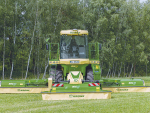
Tulloch Farm Machines will display at Fieldays the latest Krone Big X 780 plus maize header, a Big M 450 self-propelled mower conditioner, a Comprima CF 155XC baler and a Swadro TC 640 rotary rake.
Any company that has a 50-year relationship with a supplier is justified in feeling proud.
Crop establishment, particularly various ways of doing it, was the focus of a recent field day near Taupo.
To farm more sustainably and profitably, many farmers and contractors are exploring the advantages offered by strip-tilling.


Federated Farmers has welcomed new rural policies released by ACT, saying they align closely with its own election priorities.

Rural Contractors NZ says proposed changes to land transport rules for agricultural vehicles are a welcome response by the Government to out of date regulations which have seen members hit with huge fines.
Alliance is calling for final applications for its 2027 Graduate Programme, with applications closing on Sunday 25 October.
Decades piloting planes has ensured vet and farmer David Hayes is focused on safety. So, after a serious accident while welding on farm, he is sharing his experience so others can learn from it.
Canterbury milk processor, Synlait Milk has confirmed Leon Fung as its chief executive officer.
OPINION: Making it easier to collect rainwater and use it to grow crops and livestock is a no brainer.