Southerly Winds Hit Taranaki Dairy Pasture Growth
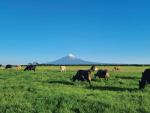
A spate of southerly winds bringing cold temperatures has presented challenges for Taranaki dairy farmers.
 increase font size
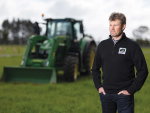
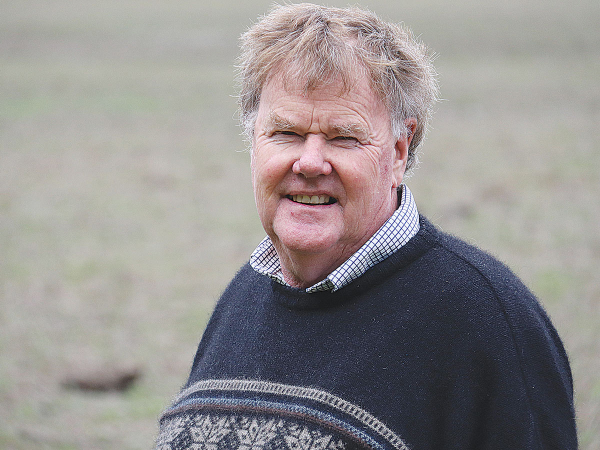 Farm consultant Lochie MacGillivray says farm system changes will be needed to meet new winter grazing regulations.
A Hawke's Bay-based farm consultant reckons there will be a need for farm system changes next season in order for farmers to meet new winter grazing regulations.
Agfirst's Lochie MacGillivray says while farmers in the region are responding to the new requirements, many are still learning how to manage the situation and all the requirements are not yet being met. MacGillivray believes most farmers are working out how they will cope next year.
"Some of the paddocks where they have extensively winter grazed, they won't be able to in the future because of slope. How they manage that going forward is something that is in the back of their minds," he told Rural News.
"They are thinking about the paddocks they have got to turn over or cultivate now and there are question marks around that which haven't been resolved."
MacGillivray says some farmers will sell their stock earlier to avoid having to graze them in winter, while others may cultivate and crop the easy country for a while. Others, he adds, may try and take stock through and graze off pasture - although that might come under the new freshwater plans as well.
"It's all a bit noisy and confused up here. The Government might have a clear idea in their minds about what they want, but how that is implemented on the ground is not clear," he adds.
"For example, I believe that regional councils haven't worked out how they are going to police the regulations because they don't have the staff resource to do that."
From Drought To Deluge
Lochie MacGillivray says it's been a fairly wet July in Hawke's Bay with some areas having received twice the rainfall of previous years.
He says water tables are high - if not at record levels - and this has potentially slowed down pasture growth because soils are very wet.
"This means that pasture utilisation starts to slip off a bit as paddocks get muddy," he explains. "Having said that, we went into the winter with really good pastures covers and that was maintained through June - so there is no concern about a lack of feed for stock, although some farmers are feeding out or speeding up their rotations to avoid pugging."
MacGillivray says generally stock health is quite good but scanning is a bit mixed with some good and some moderate results. He says lambing will be good, but doubts whether it will be a record year.
"The worry for farmers at present is getting stock killed, because there is still waiting time with bobby calves talking precedence for killing space," he told Rural News.
"Some farmers were taking lambs to heavier weights and that's kind of limited their opportunities in terms of marketing because these lambs are almost potentially too heavy."
A spate of southerly winds bringing cold temperatures has presented challenges for Taranaki dairy farmers.
As farmers begin thinking about establishing next year’s winter forage crops, Beef + Lamb NZ is encouraging farmers to carefully consider what crops they are planting and where.
Surprised, humbled and quite thrilled. That’s the reaction of James Allen, one of the founding partners and now chief executive of AgFirst, on being made a life member of the Institute of Rural Professionals.
A warning to dairy farmers not to expect the same good conditions that they experienced last season, has been issued by a leading farm consultant.
As fuel and fertiliser prices rise and with uncertainty in the future, farmers are being urged to go over their budgets with a fine-tooth comb.


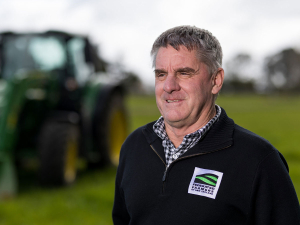
National’s pledge to introduce 19 new national standards shows the party is serious about getting Wellington out of farming, Federated Farmers says.
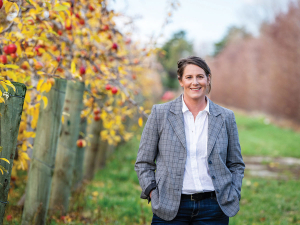
The National Party’s policies to make it easier to grow fresh vegetables, secure reliable water and energy and simplify farm planning are practical changes that will give growers the confidence to invest, according to Horticulture New Zealand (HortNZ).
Fonterra Co-operative Group chief financial officer Andrew Murray has resigned to take up a role outside the dairy giant.
A major move is about to get underway to improve the quality and viability of dairy beef and cattle in NZ.
Veterinarians say changes to the code of welfare for dairy cattle provides a positive foundation for improved cattle welfare across the country.
Today, 15 October, is the International Day of Rural Women, which recognises rural women’s contribution to farming, communities and the environment.