
Former Fonterra Director Urges Bipartisan Support for India Free Trade Agreement
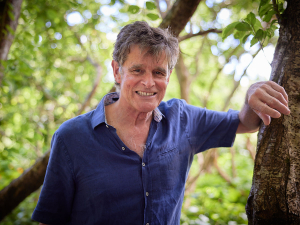
A former Fonterra director with farming interests in India says he's surprised with the political posturing over the Indian free trade agreement.
 increase font size

ABOUT 3500 Waikato farmers will soon require resource consent to take extra water for dairy shed use.
A recent Environment Court ruling has paved the way for the Waikato Regional Council to implement its Variation 6 to the Waikato Regional Plan. This allows the council to progressively introduce new policies and rules for allocating and using water in the region. Developed in response to growing demand for water from various sectors, it sets allocation limits for all rivers and streams, and their minimum flows.
After agreements with the agricultural sector, dairy farms will be allowed to take 15m3/ day/certificate of title for dairy shed use. Takes above this will require a resource consent.
The resource consenting process will be staged over the next few years. Farmers will have till January 1, 2015 at the latest to apply for consents. The council estimates 3500 farmers will need consent.
WRC catchment management programme manager David Speirs says confirmation of the final shape of Variation 6 means the council can now get on with implementing the policies and rules.
"Now we have the court decision, we plan a resource consent implementation strategy with agriculture industry stakeholders. We will tell farmers the details of when they need to apply for resource consent to take more than 15m3/day."
Existing 'extra' takes above 15m3/day will generally be 'grandparented' as at October 2008 levels, Speirs says. Under this provision of Variation 6, farmers will generally get the grandparented 'extra' amount requested provided they apply for a consent and meet the conditions, including riparian management plans to prevent sediment, effluent and nutrients from getting into waterways.
The court has also allowed for more water takes between Taupo and Karapiro than were originally proposed.
Variation 6's requirements will complement a broader regional strategy now being developed, aimed at better protecting Waikato waterways.
Surface water demand in Waikato is 1.36 million m3/day; ground water demand is 430,000m3/day. All water flowing to the sea from the Waikato River is said to have been removed from the natural river channel and used at least seven times before it reaches the ocean.
Pressure on water resources has increased markedly in recent years, says Spiers.
"For example, the area of land being irrigated has nearly doubled in the last ten years. Water is a finite resource and, in some places, is already fully allocated. Variation 6 seeks to strike a balance between managing the adverse environmental effects of taking and using water and [allowing people] to use water in an environmentally sustainable way."
The new rules are to ensure enough water remains in waterways to protect aquatic life and provide for recreation, and to meet domestic, municipal, agricultural and industrial needs as far as possible, Spiers says.
A former Fonterra director with farming interests in India says he's surprised with the political posturing over the Indian free trade agreement.

Taupiri farmer Chris Woolerton is tipped to take over as Federated Farmers Waikato president from next week.
While Cyclone Vaianu remains off the East Coast of New Zealand, the Waikato Civil Defence Emergency Management (CDEM) Group says impacts have been felt overnight.
A Local State of Emergency has been declared for the Waikato for a period of seven days as the region prepares for Cyclone Vaianu to hit the area.
Rural Support Waikato is inviting farmers, growers, and rural communities to take a well-earned break and join us for 'Brunch on Us' - a series of all-sector, relaxed drop-in events across the region.


Āta Regenerative is bringing international expertise to New Zealand to help farmers respond to growing soil and water challenges, as environmental monitoring identifies declining ecosystem function and reduced water-holding capacity across farms.
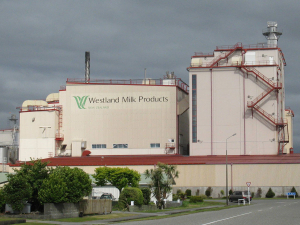
Yili's New Zealand businesses have reported record profits following a major organisational and strategic transformation.
Owners and lessees of certain Hino Trucks New Zealand diesel vehicles have just 10 days remaining to register or opt out of a proposed $10.9 million class action settlement.
Silver Fern Farms has successfully produced and delivered 90 tonnes of premium chilled New Zealand lamb and beef to the United Arab Emirates via airfreight.
For the first three months of 2026, new tractor deliveries saw an increase over the previous two months, resulting in year-to-date deliveries climbing to 649 units - around 5% ahead of the same period in 2025.
QU Dongyu, director-general of the Food and Agriculture Organization of the United Nations (FAO), has issued a warning saying that global fertiliser scarcity caused by disruptions in the Strait of Hormuz will lead to lower yields and tightening food supplies into 2027.