Dairy Sector Drives Strong Rural Property Market Activity in NZ
The latest data from the Real Estate Institute of New Zealand (REINZ) reveals a mixed rural property market due to consistent inflation concerns.
 increase font size
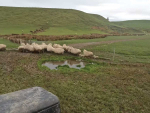
 Farm sales were down in the three months to May 2022 compared to the same period ending May 2021. Photo Credit: Century 21.
Data released this week by the Real Estate Institute of New Zealand (REINZ) shows there were 50 fewer farm sales for the three months ended May 2022 than for the same period in 2021.
Overall, there were 403 farm sales in the three months ended May 2022, compared to 450 farm sales for the three months ended April 2022, and 453 farm sales for the three months ended May 2021.
1,697 farms were sold in the year to May 2022, 130 fewer than were sold in the year to May 2021, with 11.9% more Dairy farms, 33.6% fewer Dairy Support, 12.9% fewer Grazing farms, 4.1% fewer Finishing farms and 15.2% fewer Arable farms sold over the same period.
The median price per hectare for all farms sold in the three months to May 2022 was $29,760 compared to $28,190 recorded for three months ended May 2021.
The median price per hectare increased 3.9% compared to April 2022.
Four regions recorded an increase in the number of farm sales for the three months ended May 2022 compared to the three months ended May 2021, with the most notable being Southland and West Coast, with 13 and five more sales respectively.
Northland, down 19 sales, and Waikato, down 18 sales, recorded the biggest decreases in sales.
Brian Peacocke, rural spokesman at REINZ, says the sales data for the three-month period ending May 2022 reflects an 11% easing in sales volumes from the previous three-month period, and from the equivalent period 12 months ago.
“Categories most impacted were arable, dairy, dairy support and horticulture whereas finishing properties remained resilient with solid growth in sales numbers over the last two years.
“From a climatic perspective, welcome and well-spread rain across the country during the month of May allowed those areas most affected by drought to recover to a level sufficient to provide better levels of pre-winter feed than had been anticipated.”
Peacocke says early snow was a signal for the southern regions that pre-winter feed would be very much needed before spring relief arrives.
“Like most sectors within the New Zealand economy, farming is feeling the full impact of increasing costs, particularly those relating to fuel, fertiliser, general farm inputs and interest rates, with the shortage of labour being a continuing impediment to productivity, particularly in the horticulture sector.
“On a positive note, product prices have been steady, with an expectation of upward pressure on values for beef and lamb, downward pressure on the record prices for dairy products this season, and uncertainty surrounding the reduced volumes of kiwifruit and pip-fruit in the horticultural sector.
“Beyond speculation or debate, or course, is the importance of the agriculture sector to the overall economy,” Peacocke concludes.
The latest data from the Real Estate Institute of New Zealand (REINZ) reveals a mixed rural property market due to consistent inflation concerns.
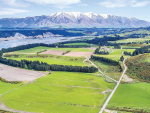
The Real Estate Institute of New Zealand (REINZ) has released its latest rural property report, providing a detailed view of New Zealand’s rural real estate market for the 12 months ending December 2025.
Beef + Lamb New Zealand (B+LNZ) says the Government needs to close loopholes in the guidance around limits on carbon forestry as news of further whole-farm sales emerges.
Farm sales are on the rise. According to recent data from the Real Estate Institute of New Zealand (REINZ), there was an 18.9% increase in farm sales for the three months ending August 2024 compared to the same period in 2023.
It could be that buyers are hunting out the right farm to purchase as farm sales drop for the three months ended December 2023. That’s according to the Real Estate Institute of New Zealand (REINZ).


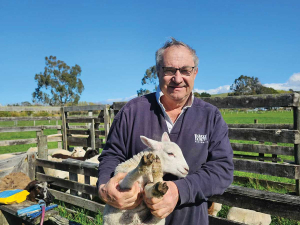
Decades piloting planes has ensured vet and farmer David Hayes is focused on safety. So, after a serious accident while welding on farm, he is sharing his experience so others can learn from it.

Canterbury milk processor, Synlait Milk has confirmed Leon Fung as its chief executive officer.
OPINION: Making it easier to collect rainwater and use it to grow crops and livestock is a no brainer.
As part of its Election 2026 coverage, Rural News asked political parties how they would help pull the arable sector out of the doldrums. Here's what they said:
Farmers are being encouraged to rethink how they manage waste on farm with the launch of ruralwastesorted.co.nz, a new website bringing together practical tips, real farmer experiences and resources.
New Zealand Winegrowers (NZW) is celebrating the India-New Zealand Free Trade Agreement (FTA) coming into force today, bringing New Zealand wine improved access to one of the world’s fastest-growing economies.