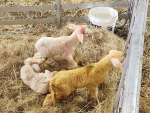
Beef + Lamb NZ's Lambing Kit Checklist for a Tough Season
With lambing underway in many regions, Beef + Lamb New Zealand is encouraging farmers to put together a wellequipped lambing kit to help minimise lamb losses, particularly in bad weather.
 increase font size

The New Zealand Merino Company (NZM) is investing in production science initiatives to unlock the potential of the perfect sheep.
It will thrive across a range of geographic areas and combine great quality meat and wool traits in the same animal.
With assistance from the government's Primary Growth Partnership (PGP), leading this transformation is Dr Mark Ferguson, a respected geneticist who specialises in fine wool sheep.
Ferguson, who has moved to Christchurch from Western Australia to join NZM, says "Merino have been managed and selected mostly to produce wool for the last two centuries and therefore remain relatively unselected for meat and reproduction traits.
"There is enormous scope to bring more balanced selection and more strategic nutrition into the Merino industry to unlock its potential."
Ferguson will drive such initiatives as extending the geographic range of fine wool sheep, facilitating the uptake of estimated breeding values (EBVs), providing robustness including solutions to footrot, and facilitating the development of the sheep that combines the optimum traits for productivity and returns. T
he benefits for the market will be evident in greater confidence of supply and consistency of quality, and exciting contract opportunities with the likes of Icebreaker on the fibre side and Silere alpine origin merino for meat.
"We will be using the latest molecular genetics technologies to build a new footrot genetic test and, importantly, this test will also check the animal's genotype for all production and health traits," says Ferguson.
"This technology means that a drop of blood collected from a lamb's ear at birth could be used to not only predict the likelihood of that lamb contracting footrot, but also to predict how much and what quality wool it will cut as an adult, how fast it will grow, its likelihood of getting a worm burden, and dozens of other traits including what the consumer's eating experience will be when that lamb hits the plate."
John Brakenridge, chief executive of NZM, says: "The desire to provide farmers with an easy care and market-led sheep marks the beginning of a new era in New Zealand's sheep industry. Further good news from the market perspective is that these results can be achieved through the careful selection and amplification of existing genetics, rather than using some of the more controversial techniques that have been discussed in recent years."
Growers will have the opportunity to meet Ferguson and learn more about NZM's production science initiatives at a series of 'Bred well, fed well' workshops, which will take place in November. Anyone interested in attending should contact Nick Hamilton at The New Zealand Merino Company on 03 335 0911.
With lambing underway in many regions, Beef + Lamb New Zealand is encouraging farmers to put together a wellequipped lambing kit to help minimise lamb losses, particularly in bad weather.
Will a stronger, more coordinated voice help rebuild confidence and improve returns in the wool sector?
The vineyards at Pyramid Farm in Marlborough’s Avon Valley have never been run of the mill, with plantings that follow the natural contours of the land, 250 metres above sea level.
Sheep and cattle numbers continue to decline, and this year's drought hasn't helped, according to Beef + Lamb New Zealand (B+LNZ).
High quality feed, reduced stocking rates and shelter will all help enhance triplet lamb survival and ultimately benefit the bottom line.

Dunedin-based company MastaPlex, which provides on-farm mastitis diagnostic platform globally, has named a new independent director.
An independent importer says National’s fertiliser security policy will only work if protects all players.
Nesting birds are behind around $1.2 million worth of tractor fire claims every year, according to rural insurer FMG, which is urging farmers to check under the bonnet before starting work.
Having Ravensdown as the naming rights sponsor of the Canterbury A&P Show demonstrates their confidence in the show as a long-term venture, says Canterbury Agricultural and Pastoral Association (CAPA) board chair Sir David Carter.
OPINION: As election day looms, rural NZ seems to have pressed the pause button – held somewhat in limbo on an orange light.
Will drones be the answer to tackling the problem of wasp and hornet nests high up in trees and other inaccessible places?