NZ Must Prioritise Food Security, Says HortNZ's Malley
New Zealand needs to make sure that it continues to focus on its own food security, according to HortNZ board member and blueberry grower Dermott Malley.
 increase font size
 Spots are filling up fast for a workshop run by Waikato Regional Council.
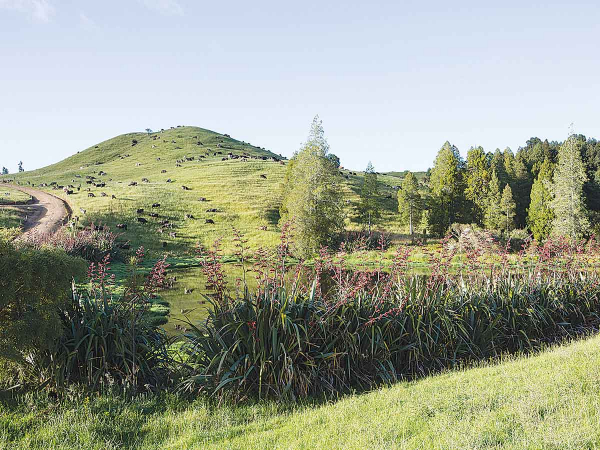
Spaces are filling fast for a workshop being held in Te Kūiti in February on integrating trees and forests into the farm business.
The first of the two workshops was held in Karāpiro last November, with some farmers missing out because all spaces filled up fast.
The workshop is proving popular because farmers are seeing huge opportunity for a fresh approach to integrating trees and forests to maintain and support current farm operations, says Waikato Regional Council’s technical sustainable ag advisor Bala Tikkisetty.
He says it can help farmers meet new environmental requirements while generating additional farm income, and there is access to funding support for this approach.
Peter Handford and John-Paul Praat of Groundtruth Ltd are seasoned farm and forestry consultants with a long history of fitting farming, forestry and ecology together in ways that maximise gains on all fronts.
The pair are guest presenters at the workshop being held on Wednesday 17 February from 8.30am to 3pm at Panorama Motor Inn and Conference Centre, 59 Awakino Road.
The workshop will involve a presentation on the relevant regulations and economic factors, followed by participants collaborating on real-life case study farms – working out which areas are best suited to food production, which could deliver good returns in forestry, and how to make sure water quality requirements are met or exceeded in the process.
The funding incentives around carbon sequestration will be explored and clarified as well, leaving participants with a full view of the potential wins to be had by moving proactively into an integrated land management model.
The benefits that can be gained in terms of soil and water protection, income diversification, biodiversity and overall environmental performance will be addressed in the context of working farms. Details covered will range from fencing and access placement, to riparian planting options, to local and national regulations and how to approach funding applications.
“Concerns over increasing environmental compliance costs are top of the list in farm discussions. At the same time there is growing apprehension as forestry seems to be rolling across the farm landscape and displacing farm communities,” says Tikkisetty.
“What is missed in this discussion is that farms and forestry are not mutually exclusive.
“This is an opportunity for farmers and environmentally concerned people alike to grab the bull by the horns and focus on the positive options in a field that can be polarised,” he says.
“There are resources and incentives available, and this workshop is an opportunity to find out how to make them work for you.”
Places are limited to 25 people and registration is required.
New Zealand needs to make sure that it continues to focus on its own food security, according to HortNZ board member and blueberry grower Dermott Malley.
A pause on Waikato Regional Council's (WRC) plan change that sets new freshwater rules for farming could be announced in the coming weeks.
OPINION: Staying on Plan Change 1, NZ First deputy leader Shane Jones took to social media to gain some political points.
OPINION: All eyes are on the Government as Waikato farmers seek urgent help to fend off the controversial Plan Change 1 (PC1), designed to manage nutrient discharges into waterways in the region.
Waikato farmers have been told that the Government’s new planning system legislation and the region’s Plan Change 1 (PC1) “won’t mesh together very well”.

An Auckland gelato shop and an established New Zealand ice cream maker have both been named Supreme Champions at the NZ Ice Cream & Gelato Awards 2026.

As the cost-of-living crisis continues to put pressure on household grocery budgets, new figures show pork remains one of the most affordable fresh meat options for New Zealand families.
OPINION: In politics, credibility is and should be big. It must surely rank higher than charisma, which is quite trite and superficial. Yet, voters nowadays are often wooed and influenced by how someone looks or talks at a superficial level. TV plays a huge role in this.
Farmers can spend less time on paperwork, thanks to a new data sharing agreement between DairyNZ’s DairyBase and LIC’s MINDA software.
Kaikōura families affected by July's severe storm have found a practical solution to a problem that's kept some children away from regular schooling for weeks: a washed-out section of Inland Kaikōura Road, which has stopped the local school bus from running its usual route.
Rural New Zealand is welcoming the Government’s recent package of rural healthcare initiatives.