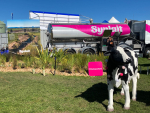
What Would Synlait Be Worth to Fonterra or a2 Milk?
Speculation of a possible joint move by Fonterra and a2 Milk to buy Synlait raises a much bigger strategic question, says agribusiness expert Dr Nic Lees.
 increase font size
 AMINZ executive director Monique Pearson.
A seminar on rural dispute resolution has been organised at Lincoln University, Christchurch this month.
The one-day gathering, taking place on 14 May, will be hosted by the Arbitrators’ and Mediators’ Institute of New Zealand, or AMINZ, the country’s professional association for dispute resolvers.
Valuation disputes, sharemilking agreements and farm ownership structures will be among issues discussed by a group of speakers. Local law firm, Tavendale and Partners, who have a shared goal of promoting effective dispute resolution in the agribusiness sector, are sponsoring the event.
AMINZ executive director Monique Pearson says the seminar is one of an array of similar events hosted by the organisation and is aimed at helping improve dispute resolution and providing continuing professional development across several sectors.
“This particular event is designed to be an insightful and engaging day, focusing on important topics relevant to our rural community,” says Pearson. “The rural sector is our country’s economic backbone, and this is a forum to discuss the many challenges faced in the area of dispute resolution.”
The programme will feature discussions on key areas such as farm debt mediation, rural arbitration, sharemilking agreements, national panel of conciliators and family succession conflicts. Pearson describes these topics are vital for navigating the complexities of the rural sector and resolving disputes.
Among the confirmed speakers are Federated Farmers national vice president Colin Hurst, lawyer Mark Tavendale, arbitrator Penny Mudford, mediator Ann Skelton, consultant Kim Robinson, former crown prosecutor Ben Vanderkolk, commercial mediator Barry Jordan, agribusiness advisor Guy Polson, commercial litigator Alex MacDuff, James Law, arbitrator Ranald Gordon and Peter Glassford.
Peason says all interested parties are invited to join in the crucial conversations that impact the rural sector and to contribute to the development of solutions that are tailored to the unique needs of New Zealand’s rural communities. For more information, they can visit the AMINZ website, www.aminz.org.nz.
AMINZ is a professional institute in New Zealand for people working in dispute resolution. The Institute is a not-for-profit organisation dedicated to promoting high-quality dispute resolution services by its members to the public.
It has a significant role in the New Zealand Farm Debt Mediation Scheme, established under the Farm Debt Mediation Act 2019, and has been granted the status of an Approved Mediation Organisation by the Ministry for Primary Industries.
This accreditation allows AMINZ to oversee and authorise mediators who are competent to conduct these mediations. AMINZ also collaborates in developing and maintaining the standards and training required for mediators under the scheme. The scheme not only helps address the immediate financial disputes but also aims to improve the overall resilience and mental health of the farming community by providing a fair process for handling what can be stressful financial situations.
Speculation of a possible joint move by Fonterra and a2 Milk to buy Synlait raises a much bigger strategic question, says agribusiness expert Dr Nic Lees.

Lynnette Hudson's 30-year obsession with Pinot Noir was sparked working vintage in Burgundy, seeing how subtle changes in terroir were expressed in the glass. It was, she says, "an elightening moment in every way".
A four year trial has reaffirmed that mixing plantain into dairy pastures can help reduce nitrogen losses to freshwater while maintaining milk production and profitability, say researchers.
Twenty five secondary school students from around New Zealand recently completed a three day residential programme designed to explore career opportunities across the food and fibre production supply chain.
A Lincoln University student is set to become the first person to contest both the Young Viticulturist and the Young Winemaker national titles in one year.



Ravensdown shareholders have elected Jane Montgomery and Kate Acland to the Ravensdown Board for three-year terms, following a closely contested director election.

Federated Farmers says new legislation replacing the Resource Management Act will cut red tape, unlock investment and help grow New Zealand's export-led economy, after the Planning Bill and Natural Environment Bill passed their third reading in Parliament yesterday.
Leading figures from the major political parties will be questioned on their primary sector policies at the Rural Issues Debate at Mystery Creek Events Centre, Hamilton, on 30 September.
OPINION: Have a plan in place now!
Beef + Lamb New Zealand (B+LNZ) says it welcomes the passage of the Natural Environment Bill and Planning Bill, calling the bills a positive step for sheep and beef farmers.
A spate of southerly winds bringing cold temperatures has presented challenges for Taranaki dairy farmers.