Keep What Works Working: NZ's New Resistance Campaign
New Zealand growers have always adapted to changing conditions, but one challenge is steadily gaining ground across the horticulture sector: resistance.
 increase font size
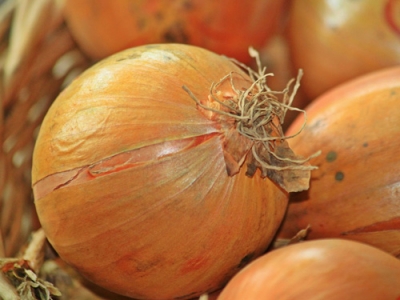 The first Onion Industry Postgraduate Scholarships have been awarded.
The first Onion Industry Postgraduate Scholarships have been awarded.
Melodie Lindsay from the University of Auckland and Jiffinvir Khosa from the University of Otago recieved the scholarships for 2016 to further their postgraduate research.
Their research topics impact very different aspects of the onion industry: onion breeding and genetics, and innovative processing of onion waste to produce high value products.
Last year the onion industry established a postgraduate scholarship fund administered by Onions New Zealand Inc, to encouraging postgraduate research of relevance to onions.
Contributors to the 2016 scholarship funds were Onions New Zealand Inc., Peracto New Zealand Ltd, Seed and Field Services Ltd and Ryan Seeds.
Lindsay is starting her PhD in Biochemistry at The University of Auckland this year.
Melodie writes of her research: "Natural fragrance and flavour ingredients are in high demand worldwide as processed goods and synthetic additives have been negatively received by consumers. As a result, global demand often outstrips the supply of natural additives sourced from traditional methods for example, vanilla extract. This has created a market for "clean-green" natural food ingredients that can be sustainably produced. My research employs microbes, much like those used in wine-making to produce natural fragrances and flavours from waste produced by New Zealand primary industries. Several tonnes of onion waste is produced per hectare of crop in New Zealand which makes it a perfect candidate to use in my trials. The Onion Industry Postgraduate Scholarship has provided me with the opportunity to attend international conferences and workshops in my field. These events are invaluable for advancing my research and the create the potential for collaboration with leading researchers from all corners of the world."
Jiffinvir Singh Khosa is completing his PhD studies in plant genetics and biochemistry at the University of Otago. Jiffinvir writes: "I come from Punjab, India where my family grows various vegetable crops including onions on our farm. As onions are an important crop in India and for my family, I am very interested in finding better ways for breeders to develop new onion varieties.
"I have come to New Zealand to do PhD research studying how onion plants form bulbs at the right time of the year. It has been known for nearly a hundred years that onion plants use changes in day length to form bulbs in the summer.
"If the bulb isn't harvested then it overwinters as a bulb and produces flowers and seed in the next season. My PhD supervisors, Associate Prof. Richard Macknight at the University of Otago and Dr. John McCallum at Plant and Food research discovered a hormone that induces onion plants to bulb.
"The aim of my PhD research is to understand how the synthesis of this hormone is controlled by changes in day length. The different onion varieties required different amount of day length to form bulbs; short day varieties grown in India, only required 8-10 hours daylight to form bulbs. In contrast, long day varieties are grown in New Zealand which need 13-15 hours of light to form bulbs. The goal of my project is to identify genetic markers that could be used by breeders to select plants with short or long day characteristics, to suit different local conditions. The generous funding provided under a Onion Industry Postgraduate Scholarship will allow me to identify these key genes and help the New Zealand onion industry breed and select cultivars best suited to its needs."
"The onion industry is proud to support these two postgraduate students and looks forward to engaging with them as they progress their research; they have very contrasting and exciting research topics that add value to the industry," says Michael Ahern, chief executive officer, Onions New Zealand.
"We hope that the annual onion industry postgraduate scholarships will engage more students to consider research in our industry."
New Zealand growers have always adapted to changing conditions, but one challenge is steadily gaining ground across the horticulture sector: resistance.
Exporters need to understand that India should not be seen as just one country to export to, rather a country of many unique states and regions.
Onion exports to the lucrative Indonesian market are resuming after officials negotiated an end to costly pre-export methyl bromide fumigation.
Some smart planning by NZ’s onion growers has enabled them to quickly cash in on the Free Trade Agreement between New Zealand and the European Union which came into effect on May 1.
Onion growers will be saving $6.5 million on tariffs once the free trade agreement (FTA) with its number one market – the European Union – is ratified next year.



Ballance Agrinutrients chief executive Kelvin Wickham says despite a tough year, he is pleased the business has returned to profit.
When Northland farmer Mark Cameron entered parliament six years ago, the Beehive was a lonely place.
Speculation of a possible joint move by Fonterra and a2 Milk to buy Synlait raises a much bigger strategic question, says agribusiness expert Dr Nic Lees.
I think it's going to greatly weaken National at the election. That's the view of a former senior National MP on the recent attempted coup against Prime Minister Christopher Luxon.
Despite political shenanigans in Wellington, farmers are confident that Resource Management Act (RMA) reforms will get over the line in this term of Parliament.
New Zealand's pest problem has reached crisis point, according to Federated Farmers' second National Pests Survey, which shows farmers are spending more money and effort on control — yet pest numbers keep climbing faster than they were two years ago.