Pork Remains Among NZ's Most Affordable Meats: Stats NZ
As the cost-of-living crisis continues to put pressure on household grocery budgets, new figures show pork remains one of the most affordable fresh meat options for New Zealand families.
 increase font size
 David Baines, chief executive of NZPork.
NZPork says it is disappointed at further delays to the introduction of Country of Origin labelling regulations.
The Government has announced that regulations covering fresh/chilled food, including pork and cured pork, have been delayed for three months until February 2022.
“We were eagerly awaiting these regulations to come into force in November,” says David Baines, chief executive of NZPork.
He says that without the new regulations, imported pork can be “hidden” in ham and bacon processed in New Zealand under a ‘Made in New Zealand’ label.
“Our research tells us that many consumers are surprised that the pork in these products may be imported from a number of countries.
“That’s why this three month delay is hugely frustrating for our New Zealand farmers when cheaper pork imports, that don’t have to meet New Zealand’s high welfare or environmental standards, can be presented to consumers without clear labelling.
“While we appreciate the delay is due to the disruption and uncertainty caused by business by the re-emergence of Covid-19, we are particularly disappointed that the regulations will not be in place for the Christmas period like we expected,” Baines says.
He adds that despite the regulatory delay NZPork will be encouraging consumers to look on the label and ask retailers for NZ born and raised pork, especially going into the Christmas ham season.
The regulations would enable consumers to be more informed as to where their food is being imported from and what pork is New Zealand born and raised, Baines says.
However, NZPork remains concerned the regulations are not comprehensive because they will not apply to all imported pork.
“The regulations will only cover fresh, chilled pork and cured pork. Pork processed in other ways will not have to be labelled. That means imported pork would be labelled with its country of origin if presented as ‘fresh’ (chilled), while the same product, if marinated or infused, would sit alongside New Zealand pork and escape the need for labelling as imported.”
Initially, the Government announced a delay to regulations in May 2020 as part of its measures to manage business disruption due to Covid-19.
As the cost-of-living crisis continues to put pressure on household grocery budgets, new figures show pork remains one of the most affordable fresh meat options for New Zealand families.

New data shows that pork remains one of the more affordable meat options for New Zealand households at a time when grocery costs continue to put pressure on budgets.
NZPork says the Government needs to strengthen its proposed planning laws to ensure New Zealand's pig farmers can continue to produce pork.
Following a recent director election, Canterbury farmer Sean Molloy has been appointed to the New Zealand Pork Industry Board.
Pig farmers are cautiously welcoming new animal welfare standards announced by the Government last week.

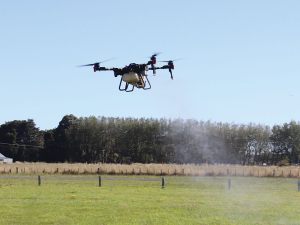
OPINION: David Seymour and James Meager's plan to make it easier for farmers and orchardists to operate drones can best be described a 'courageous' move.

New Zealand wool is reaching new heights as air filtration companies move away from synthetic products to biodegradable alternatives.
Opuha Dam's ability to protect South Canterbury communities from major flooding has taken a significant step forward, with Opuha Water Limited (OWL) successfully commissioning a new outlet valve capable of releasing record volumes of water from the dam ahead of a weather event.
There's been widespread support from the primary sector for the Government's announcement on changes to freshwater farm plans that come under the Natural Environment Bill, which is now set to replace the existing RMA.
A partnership between state-owned enterprise Pāmu (Landcorp Farming Limited) and charity Meet the Need is putting more than quality New Zealand beef into food bank parcels this year.
The Opportunity Party has faced criticism during the election campaign that its policies are too urban-focused and offer little for rural communities.