
Lanaco and Blueair Launch World-First NZ Wool Air Filter
New Zealand wool is reaching new heights as air filtration companies move away from synthetic products to biodegradable alternatives.
 increase font size
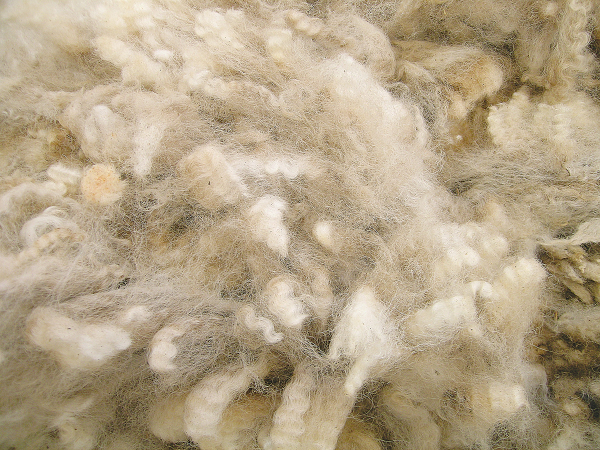 Restricted supply, renewed confidence in natural fibres and increasing global interest in traceable wool products are all contributing to the market’s sharp rise.
Strong competition and tightening supply have seen wool reach its highest prices paid at auction since 2011.
Industry leaders say restricted supply, renewed confidence in natural fibres and increasing global interest in traceable wool products are all contributing to the market’s sharp rise.
After the 14th May auction earlier this month, auction manager Dave Burridge said buyers were aggressively competing for increasingly scarce wool volumes.
"The market continues to break new ground as buyers scramble to secure volumes to meet commitments from a very restricted supply on the open market,” Burridge says.
“All levels of wool types continued to lift from the 5100 bale offering, which was just under half the expected rostered amount. Very keen interest was also shown for the limited amount of fine wools.”
Burridge says that industry reports of supply shortagees would likely continue in the short-term prior to pre-lamb shearing getting underway.
PGG Wrightson Wool (PGW Wool) general manager Rachel Shearer says recent wool sales reflect a sustained period of strengthening prices across the sector.
"After a sustained period of growth, the wool market has continued to hold at significantly improved levels through recent sales," Shearer says.
She says the newly introduced national auction system got off to a positive start, with the first two combined New Zealand wool sales delivering animated bidding and further lifts across most wool types.
"The transition to a national open-cry selling platform is designed to strengthen competition by increasing eyes on the marketplace, increasing buyer participation and improving efficiencies across the sector."
Shearer says that while wider global uncertainty continues to influence international markets, demand for New Zealand wool remains firm.
"Broader global uncertainty continues to influence sentiment across the textile sector, particularly around synthetic fibres and oil-based inputs," she says.
"Rising costs and supply volatility are helping to shift attention toward natural fibres, with wool increasingly being recognised for its reliability, traceability and environmental credentials.
"For the last 20 or 30 years synthetics have been seen as cheap and reliable. Right now, they’re neither.
"At the same time, tightening global wool supplies and improving international interest continue to support demand for New Zealand wool."
While market fundamentals remain strong, Shearer warns that wool preparation standards continue to play a major role in auction performance.
A strong growing season in several regions has increased the risk of vegetable matter contamination, making buyers more selective when purchasing wool.
“While wool growers can’t control global demand, fashion cycles, or currency, they do control what leaves their shed,” Shearer says.
"Managing VM is one of the last levers where effort carries through to the wool cheque.”
Although global market volatility remains a factor, confidence within the New Zealand wool sector continues to improve.
"As an industry, we’re in a much stronger position than we were a couple of years ago," Shearer says.
"Investing in multiple initiatives that are bringing benefit to the wider wool industry is a strong focus for us, and while there will always be market fluctuations, there’s growing confidence around the long-term outlook for wool."
New Zealand wool is reaching new heights as air filtration companies move away from synthetic products to biodegradable alternatives.

Will a stronger, more coordinated voice help rebuild confidence and improve returns in the wool sector?
After delivering a strong financial year, rural trader PGG Wrightson says the coming months will depend on customer confidence and weather.
OPINION: Confidence in the wool sector is rebounding as prices hit levels not seen in more than 15 years.
The recently signed free trade agreement with India is an invitation to strengthen relationships between the New Zealand and Indian strong wool industries, says Wool Impact chief executive Andy Caughey.



LIC shareholders have elected a new North Island representative to the co-operative's Board, along with five representatives to its Shareholder Reference Group (SRG), following the company's Annual Meeting held in Invercargill.
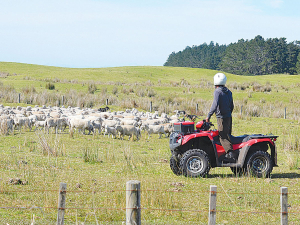
Farmers across parts of Southland and South Otago are continuing to deal with difficult conditions after a prolonged run of wet weather, with pressure building around feed supply, stock management, pasture damage, farm infrastructure and everyday workloads.
Federated Farmers says it welcomes Labour's commitment to reviewing the Sharemilking Agreements Act, calling on other major parties to do the same.
For Canterbury dairy farmers Sian Meijer and Rick Wobben, wearable technology has become one of their most valuable on-farm tools - helping manage 1850 cows across an expansive, high-performing dairy operation while improving efficiency, mating outcomes and day-to-day decision making.
Fonterra has unveiled its annual results for the 2026 financial year, posting $27 billion in revenue and close to $20 billion returned to New Zealand farmer owners and unit holders.
The first major update to the Dairy Cattle Code of Welfare in more than a decade has been released, marking what DairyNZ describes as an important step in ensuring animal welfare standards continue to evolve alongside scientific evidence and on-farm realities.