Campaign targets greater awareness of stink bugs
Biosecurity New Zealand is ramping up a public awareness campaign to encourage people to report possible sightings of the brown marmorated stink bug (BMSB).
 increase font size
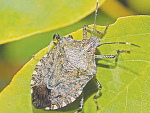
 An adult brown marmorated stink bug.
Scientists have developed a new trap for brown marmorated stink bugs (BMSB).
The trap may help to control a future invasion in New Zealand of BMSB through the removal of future offspring by attracting and removing males and females.
Plant & Food Research says the future invasion of BMSB poses a serious risk to the New Zealand economy.
BMSB has caused enormous crop losses overseas and it has been intercepted at the New Zealand border a number of times.
Professor Max Suckling, science group leader at Plant & Food Research, and colleagues working in Italy (where BMSB have been destroying crops), have developed two traps that could be used in New Zealand for BSMB surveillance or eradication.
“The Nazgûl” trap is based on a “ghost net” design developed in the USA and contains a pheromone and insecticide-treated net attached to a coat hanger and suspended from a tree. “The name is derived from Tolkien’s Ringwraiths and was chosen to help elicit public support for biosecurity in New Zealand to help save ‘Middle Earth'," says Suckling.
During testing The Nazgûl caught and killed all mobile life stages of BMSB and 3.5 more nymphs and adult bugs than the low cost but inefficient sticky panel traps currently used for surveillance in New Zealand.
The scientists also developed a “live trap” which uses the wind direction, via wind vane, to trap bugs inside a pheromone-baited cylinder.
This trap caught up to 15-times more adult BMSB than the sticky panel traps and could be used to remove future offspring by attracting and removing females and nymphs.
“The traps are prototypes that could be used in future as part of a critical surveillance and/or semiochemical-based eradication response and work is ongoing,” says Suckling.
Biosecurity New Zealand is ramping up a public awareness campaign to encourage people to report possible sightings of the brown marmorated stink bug (BMSB).
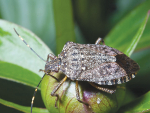
Biosecurity New Zealand says it is ramping up a public awareness campaign designed to encourage people to report possible sightings of brown marmorated stink bug.
A winter campaign is underway to help raise awareness of the brown marmorated stink bug (BMSB).
Biosecurity Minister Damien O’Connor is warning travelling Kiwis to be vigilant as the high-season for the crop-eating brown marmorated stink bug (BMSB) is under way.
New Zealand Winegrowers (NZW) was part of a small delegation that recently visited the beautiful country of Georgia, in the Caucasus region between Europe and Asia.


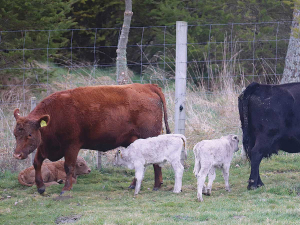
A major move is about to get underway to improve the quality and viability of dairy beef and cattle in NZ.
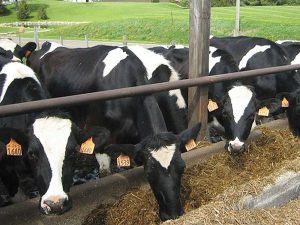
Veterinarians say changes to the code of welfare for dairy cattle provides a positive foundation for improved cattle welfare across the country.
Today, 15 October, is the International Day of Rural Women, which recognises rural women’s contribution to farming, communities and the environment.
Global dairy giant Lactalis has integrated its Australian operations with the Mainland Dairy consumer business it acquired from Fonterra earlier this year.
After almost two decades of sharemilking, saving and building equity, Aaron and Marcia Flay this year realised their long-held dream of settling on their first dairy farm.
Good medium to long term prospects for NZ beef, especially in the US, has heighted the focus on various initiatives to capitalise on this situation.