Esther Guy-Meakin Appointed Chief Executive of the NZ Meat Board
Esther Guy-Meakin has been announced as the new chief executive of the New Zealand Meat Board (NZMB).
 increase font size
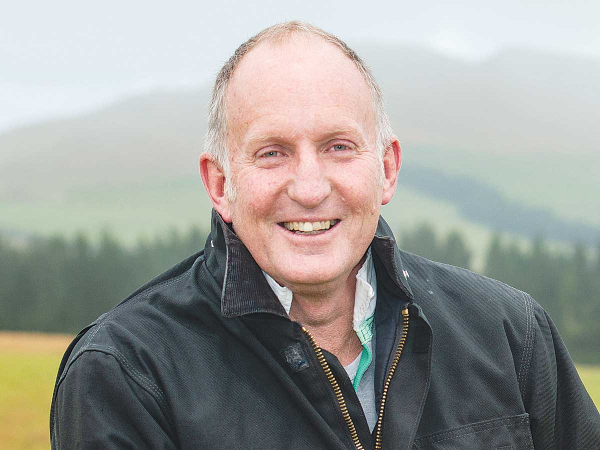 B+LNZ chairman Andrew Morrison says the manifesto should be compulsory early reading for new PM Chris Hipkins.
Within hours of Chris Hipkins being sworn in as the new Prime Minister, the red meat sector issued a series of demands it wants the country's politicians to address in forthcoming election campaign.
A copy of the sector's election manifesto has been sent to every politician and relevant officials. It is produced jointly by Beef+Lamb NZ and Meat Industry Association (MIA) and sets out a comprehensive package of proposed policy changes, aimed at growing export revenues and increasing jobs. It spans five key areas - climate and environment policy, workforce and industrial relations, trade, biosecurity, and innovation, research and development.
In terms of climate change, the sector's demands include backing the He Waka Eke Noa emissions pricing policy, rewarding farmers for their on-farm sequestration and continuing to support the industry through investment in climate change mitigation. The manifesto also calls for policy changes to curb the sale of sheep and beef farms into forestry to offset carbon emissions and wants the introduction of the Biodiversity National Policy Statement delayed until the policy settings are right.
Other key points include deferring the introduction of the winter grazing rules until the Government has operationalised freshwater farm plans and amending the slope rule for winter grazing from 10 degrees to 15 degrees.
The industry wants immigration settings to help address genuine industry labour shortages where they can't be filled domestically. It also calls for efficient processing of work visas without undue delay to ensure workers can be in NZ at the right time in the season.
On trade, the red meat sector wants government to focus on resolving non-tariff barriers and revisiting NZ trade policy strategy ensuring it remains fit for purpose and considers creative pathways for deeper trade relationships.
B+LNZ chairman Andrew Morrison says the summary manifesto should be compulsory early reading for Hipkins to inform what policies should be shelved or changed. He says farmers are absolutely willing to play their part in improving the environment, but the Government has tried to do too much too quickly.
"Because of the scale and pace of change, we've ended up with a lot of poorly crafted and conflicting rules," he says. "These have significant negative financial implications for sheep and beef farmers, rural communities and the wider economy, when there are better ways of achieving good environmental outcomes."
MIA chair Nathan Guy says workforce and immigration are significant priorities for the red meat sector, with an estimated $600 million of value left on the floor as a result of current labour shortages in the industry.
"Our industry wants to play our part to make NZ a better country for every Kiwi, but there is clearly frustration in the sector about the scale, pace and ad hoc nature of regulatory reform in recent years," he says.
Esther Guy-Meakin has been announced as the new chief executive of the New Zealand Meat Board (NZMB).

As expected, the US has launched a safeguard investigation into lamb imports, a move that could impact New Zealand sheepmeat returns.
New Zealand's red meat sector says it welcomes the Government's focus on trade ahead of the general election in November.
New Zealand red meat exports are booming but a pending decision in the White House, Washington D.C., could dent sheepmeat earnings.
Prime Minister Christopher Luxon says the red meat sector is doing an excellent job promoting our pasture-fed system around the globe.


OPINION: In politics, credibility is and should be big. It must surely rank higher than charisma, which is quite trite and superficial. Yet, voters nowadays are often wooed and influenced by how someone looks or talks at a superficial level. TV plays a huge role in this.

Farmers can spend less time on paperwork, thanks to a new data sharing agreement between DairyNZ’s DairyBase and LIC’s MINDA software.
Kaikōura families affected by July's severe storm have found a practical solution to a problem that's kept some children away from regular schooling for weeks: a washed-out section of Inland Kaikōura Road, which has stopped the local school bus from running its usual route.
Rural New Zealand is welcoming the Government’s recent package of rural healthcare initiatives.
Interest in agritech and production animal systems has prompted Massey University's School of Agriculture and the Environment to new majors to its popular animal science degree.
Ballance Agrinutrients chief executive Kelvin Wickham says despite a tough year, he is pleased the business has returned to profit.