North Island maize grain growers are facing an uncertain future in 2025 as the country's energy crisis hits the rural sector.
The situation is so serious that Federated Farmers recently brought all the interested parties - farmers, seed companies, grain merchants and rural contractors - together to discuss what to do next. The Government has also been briefed.
Maize grain is a common supplementary feed in the dairy industry, but is also used for producing corn chips, starch and as a poultry feed.
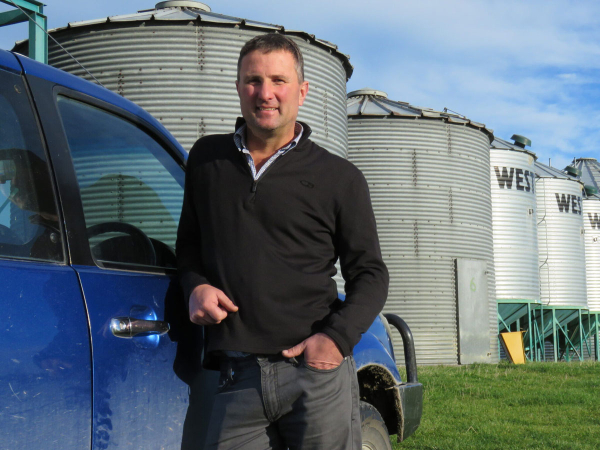
The problem, according to head of Federated Farmers arable group, David Birkett, is that maize grain must be dried to get it down to a moisture level of 14%.
He says in the North Island the grain is dried off-farm at special drying facilities (and not on farm) and that gas is used to do this. He says this is uncertainty about whether there will be the gas to dry the grain in the first place, and if there is, what will be the cost of this. "At this stage no-one knows what the position will be next year and that is creating huge uncertainty for maize grain growers," Birkett told Rural News.
It should be noted that those affected are farmers who grow maize for grain and that those who grow maize silage are not affected. Roughly half the maize grown in NZ is for grain and the other half for maize silage.
He says given that the past season for maize was something of a disaster, most are apprehensive about what might happen in 2025. He says it's highly unlikely that a farmer will grow a maize crop without a contract and he's predicting the maize grain crop will be down next year. But he adds the maize silage will remain about the same as usual.
Read More
"We have also briefed central government on the issue but have had little response and it would appear that they are taking the view that this is a case of the market doing what it does," he says.
But Birkett says the issue is a serious one with implication right across the primary sector. He says if less maize is planted it has implications for rural contractors, among others.
"This is not just about farming - it's something of national importance that needs to be sorted out," he says.
In the North Island, maize grain is usually harvested between April and June and hence is damp when harvested. Normally the companies that put out contracts with farmers to grow the grain know the cost of drying the grain and this is included in the contract price they are offered prior to planting the crop. But for the coming season, the situation is different, according to Birkett.
"Given the uncertainty, companies are reluctant to give out contracts. That's because the cost of drying the grain is a significant component in setting a price to sell the grain on the open market," he says.
Birkett says as planting time looms, there is a suggestion that companies may offer contracts, but these will contain a special clause separating out the drying component to be determined later. Such a move will hardly give much certainty.
Birkett says the situation in the South Island is different because grower there have their own drying facilities and that these are generally powered by diesel. David Birkett adds that very little grain maize is grown in the South Island. On his farm at Leeston in Canterbury, he mainly grows wheat and barley.