Dairy Sector Drives Strong Rural Property Market Activity in NZ
The latest data from the Real Estate Institute of New Zealand (REINZ) reveals a mixed rural property market due to consistent inflation concerns.
 increase font size
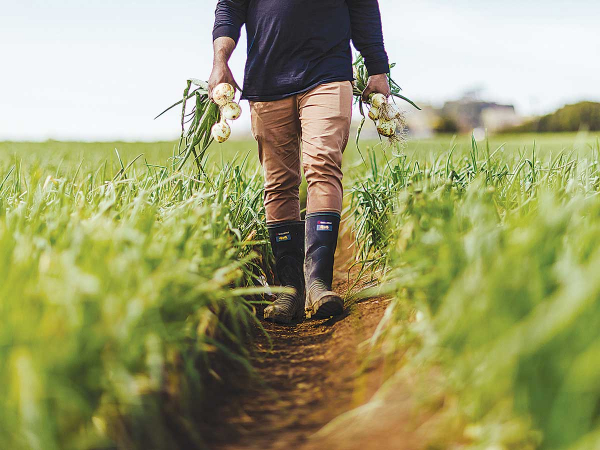 The Real Estate Institute is reporting instances of dairy farms being turned into commercial vegetable growing outfits.
There's a trend of some dairy farms coming on the market to be bought for commercial vegetable growing and other horticultural activities.
That's the view of Real Estate Institute rural spokesperson Brian Peacocke. However, he says such land must have good soil, the right contours and a sustainable water supply.
Peacocke says water is key and in Northland a new water scheme will certainly foster more horticultural development.
"In the Waikato we are seeing a spill over from the Bay of Plenty in terms of demand," he told Rural News. "Alternatively, some of the well-established horticulturalists in the Waikato are expanding their operations and that is to kiwifruit, whereas Northland will be a mixture of kiwifruit and avocados.”
Just recently, Zespri announced that it is halving the number of hectares for SunGold kiwifruit this year and Peacocke believes this is likely to result in record prices being paid for land in areas where kiwifruit can be grown.
He says, last year, prices were around $550,000 per hectare, but says this year it could be up around $700,000.
Peacocke reckons the days of dairy conversions are pretty much done.
He says there are multiple reasons for this including the cost and difficulty of getting a resource consent to do this, availability of water and other environmental issues. He says people wishing to convert lower classes of pastoral land will struggle to gain a consent – given the way that regional councils have classified land use.
“It’s easier to come down a land use category, rather than trying to go up one,” he explains.
According to Peacocke, good dairy farms in prime areas are being sold as dairy farms, whereas in some of the fringe dairy areas there is evidence of a change of land use. He says some marginal dairy farms are going back to beef or heifer grazing dairy support. In some of the country that’s further back, more remote or inhospitable, there’s a move into trees and some land that may be integrated into trees.
“The trend of larger farming operations absorbing small neighbouring blocks is continuing and there are now very few small dairy farms left.”
Peacocke says the demand for good dairy support land is significant and often this land is fetching higher prices than actual dairy farmland.
The latest data from the Real Estate Institute of New Zealand (REINZ) reveals a mixed rural property market due to consistent inflation concerns.
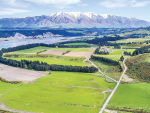
Farm sales are on the rise. According to recent data from the Real Estate Institute of New Zealand (REINZ), there was an 18.9% increase in farm sales for the three months ending August 2024 compared to the same period in 2023.
It could be that buyers are hunting out the right farm to purchase as farm sales drop for the three months ended December 2023. That’s according to the Real Estate Institute of New Zealand (REINZ).
Recently released data from the Real Estate Institute of New Zealand (REINZ) shows there were 77 fewer farm sales for the three months ended November 2023 than for the three months ended November 2022.
Recent data from the Real Estate Institute of New Zealand (REINZ) shows October was another month in which there were fewer farm sales than at the same time in 2022.

High country stations, mixed sheep and beef farms, Māori-owned farms, corporates and family operations are among the nine commercial farms taking part in the Livestock Innovation Farming Transformation programme, known as LIFT.
OPINION: New health and safety guidance unveiled by the Government recently provides farmers greater certainty about what is expected of them when managing risks on farm.
The National Animal Welfare Advisory Committee (NAWAC) is seeking public feedback on proposed changes to the Code of Welfare for Rodeos.
A New Zealand initiative supporting farmers to restore the health of grazing landscapes has received international backing through the Regenerative Fund for Nature, a global collaborative fund supporting regenerative agriculture and the communities that produce natural fibres for the fashion industry.
Combine premium New Zealand products, blend in a family ritual and what do you get? A world-class functional drink.
Entries are now open across eleven regions for the 2027 New Zealand Dairy Industry Awards (NZDIA).