Milk Powder Prices Prop Up Farmgate Milk Price
Milk powder prices are keeping farmgate prices up, helping processors offset the dip in milk fat prices.
 increase font size
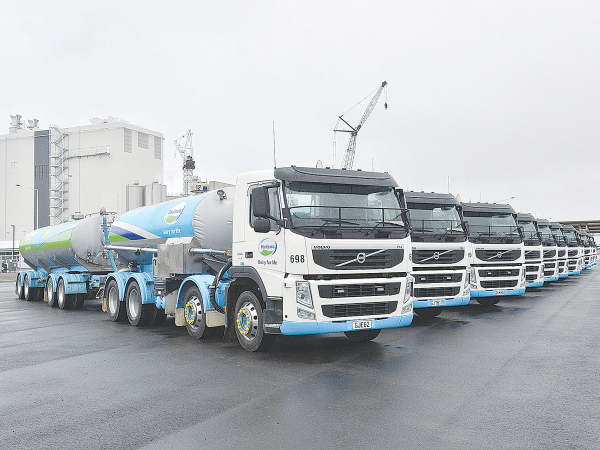 High dairy prices have been providing an incentive for farmers to maximise output.
With global milk prices falling, the question is when will key exporting countries reach a tipping point where production starts to dip.
All eyes will be on milk production in the US and the European Union in the coming months. High dairy prices have been providing an incentive for farmers to maximise output. Production among the top exporters is up about 4% on the same time last year.
However, with lower demand commodity prices on Global Dairy Trade (GDT) auctions have recorded a cumulative 18% drop from the May peak. Fonterra reducedd its forecast milk price range with 50c drop in the mid-point to $9.50/kgMS. ANZ is now forecasting a milk price of $9.65/kgMS this season.
ANZ agricultural economist Matt Dilly points out that nearly half of the current season's production has already been contracted, so GDT results over the rest of the season will have a bigger impact on next year's starting point than this year's endpoint.
He says milk prices are falling overseas, just as they are in New Zealand. At the same time, feed prices have some upside potential after spending two years at low levels.
Dilly says prices for wheat, soybeans, and corn have been rising over the past month, in part due to US soybeans regaining market access into China. "It's hard to say where global grain prices will go from here, but stocks are relatively tight. This provides some upside potential, especially if there are any shocks to the market.
"So, between falling milk prices and rising feed costs, dairy margins look set to continue to tighten over the next year in the US and EU.
"The question is, how close are the US and EU to a tipping point where milk production starts to fall? It won't happen in time to impact New Zealand's price in 2025/26 but easing production could start to support pricing sometime in 2026/27."
The milk price futures contract for next season is sitting at $8.80/kgMS.
A payout below $9 would be difficult for New Zealand farmers, but arguably more difficult for our competitors overseas, especially if their feed costs rise, says Dilly.
"Still, the transition from $10.16 last year to $9.65 this year to under $9 next year will also encourage a mini-reset in New Zealand," he says.
"Dairy farmers had plenty of time leading into the current season to load up on supplementary feed and increase cow numbers to maximise production. For next season, the opposite dynamics are more likely."
BNZ senior economist Doug Steel says that their milk price thinking for the following 2026/27 season is "toward $9".
Steel says this broad view has long been predicated on global supply responding to previous price strength.
"If global milk supply expansion remains rapid, like it has on occasion in the past, and demand doesn't strengthen sufficiently, the risk of a sharper drop and sub $9 milk price next season will increase. Current momentum is in that direction.
"Conversely, if global supply expansion were to slow meaningfully, like it did in 2021, downward price pressure could quickly fade. On that possibility, it is notable that global dairy prices no longer look elevated relative to global grain prices. A relatively low effective NZD conversion rate would offer some support to local milk prices."
Westpac industry economist Paul Clark says their early estimate for next season is also $9/kgMS.
Clark expects world prices to start low but to improve over the course of the season, as the global milk supply rebalances to more sustainable levels.
"The recent weakness in the New Zealand dollar is an upside risk to our milk price forecasts, more so for next season than the current one."
Strong Milk Flows
Fonterra says it is seeing strong milk flows this season, both here in New Zealand and other milk producing nations.
The co-op last week lifted its forecast milk collections for the 2025/26 season from 1525 million kgMS to 1545 million kgMS.
Fonterra narrowed the forecast farmgate milk price range from $9-$11/kgMS to $9-$10/kgMS, with the midpoint changing from $10/kgMS to $9.50/kgMS.
"This increase in milk supply has put downward pressure on globla commodity prices, with seven consecutive drops in recent Global Dairy Trade events. As a result, we have narrowed the forecast farmgate milk price range for the season and adjusted our midpoint," says chief executive Miles Hurrell.
He says the $9.50/kgMS midpoint forecast remains a strong forecast for the season.
"We continue to be focused on maximising returns for farmer shareholders through both the farmgate milk price and earnings. This includes through building strong relationships with customers who value our products, utilising price risk management tools, and optimising our product risk," says Hurrell.
Milk powder prices are keeping farmgate prices up, helping processors offset the dip in milk fat prices.
OPINION: With 10,500 dairy farms, New Zealand continues to punch above its weight around the world.
A milk glut around the world shows no sign of easing, putting downward pressure on farmgate milk prices for the next few months.
Fonterra has reduced its forecast 2026/27 Farmgate Milk Price.
New Zealand dairy farmers are set to be the first in the world to receive access to a new digital physical milk pricing tool that enables them to fix the price for their physical milk.


South of the central Hawke’s Bay town of Waipukurau is Taniwha Station – a highly successful 550ha bull beef farming operation.
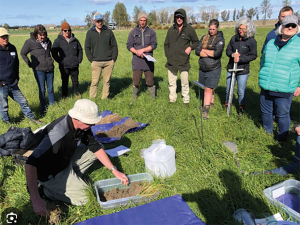
Beef + Lamb NZ funded research has shown that some simple changes to pasture management could help farmers make better use of rainfall and build resilience before dry conditions hit.
OPINION: There could hardly be a more appropriate theme for a conference than the one chosen by the red meat sector - Navigating Volatility.
When Northland leather worker Vernon Suckling started making horse saddles 50 years ago, quad bikes and side-by-side vehicles were unheard of.
Alliance Group has confirmed that eligible farmer-shareholders who supply and continue to back the business will receive up to $20 million later this year, following the strategic investment partnership with Dawn Meats.
With a general election under five weeks away, Rural News is asking major political parties about their policies and positions on key issues facing the primary sector. We will run their responses to each question over the next four weeks. The ACT Party and the Greens didn't respond in time.