Ah Tatua, You've Done It Again!
Waikato milk processor Tatua has again declared a record milk payout to farmer shareholders, leaving other processors in the dust.
 increase font size
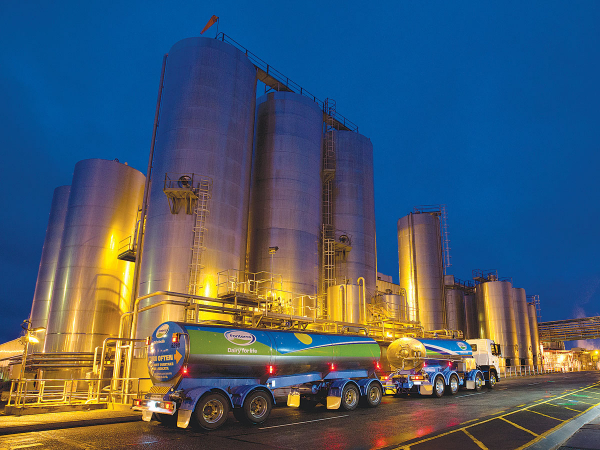 Fonterra has announced a new 2021/22 forecast farmgate milk price range.
Successive drops in the price of whole milk powder have prompted Fonterra to revise its forecast milk price for the season.
The co-operative announced a new 2021/22 forecast farmgate milk price range of $9.10 to $9.50/kgMS, down from $9.30 - $9.90/kgMS.
This reduces the midpoint of the range, which farmers are paid off, from $9.60/kgMS to $9.30/kgMS.
Despite the 30c drop, Fonterra farmers remain in line for a record payout.
Fonterra chief executive Miles Hurrell says the news will be disappointing for farmers.
But Hurrell notes that the change in global dairy prices is coming off record high levels.
“At a midpoint of $9.30/kgMS, this would continue to be the highest forecast farmgate milk price in the co-op’s history and would see us contribute almost $14 billion into New Zealand’s economy through milk price payments, which supports the wellbeing of our local communities,” he says.
Hurrell says the change in the forecast milk price is due to a number of recent events which have resulted in short-term impacts on global demand for dairy products - in particular, the lockdowns in China due to COVID-19, the economic crisis in Sri Lanka and the Russia-Ukraine conflict.
“While the long-term outlook for dairy remains positive, and we expect global demand and supply to be more balanced over the rest of the year, we have seen these short-term impacts flow through into pricing on the Global Dairy Trade (GDT) platform.
“For example, average prices for whole milk powder (WMP), a key driver of the milk price, have decreased by 18% over the past four GDT events.
“As an exporter to 140 countries we deal with these kinds of global events all the time, but right now we’re seeing the impact of multiple events. Coupled with inflationary pressures, it’s not surprising to see buyers being cautious.
“Our scale and ability to move products between different markets and categories remains important, and reinforces our strategic focus on ensuring our milk is going into the highest value products.”
Hurrell believes global milk production is expected to remain constrained as high feed, fertiliser and energy costs continue to impact production in the Northern Hemisphere.
“We expect demand to recover as the short-term impacts begin to resolve.
“While there is still a high level of uncertainty in global markets, the majority of our milk has been contracted for the season. It’s for this reason that we’ve made the decision to narrow our forecast range to +/- 20 cents.
“As always, there are a number of risks we are continuing to keep a close eye on, including potential impacts on demand from inflationary pressures and rising interest rates, increased volatility as a result of high dairy prices, and further disruptions from COVID-19 and geopolitical events.”
Waikato milk processor Tatua has again declared a record milk payout to farmer shareholders, leaving other processors in the dust.
Fonterra has unveiled its annual results for the 2026 financial year, posting $27 billion in revenue and close to $20 billion returned to New Zealand farmer owners and unit holders.
Fonterra Co-operative Group has confirmed the independently assessed candidates standing for election to its board in 2026.
Fonterra has revised its Farmgate Milk Price forecast for the 2026/27 season, lifting the midpoint and narrowing the range on the back of improving global dairy commodity prices.
Outgoing Fonterra Co-operative Council chair John Stevenson says that it has been a privilege to represent the co-op's farmer shareholders.


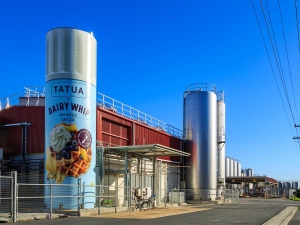
Waikato milk processor Tatua has again declared a record milk payout to farmer shareholders, leaving other processors in the dust.

A Labour-led Government won’t be bringing back the controversial freshwater rules of 2020.
National’s much-touted free trade deal with India featured in the Rural Issues Debate at Mystery Creek, Hamilton on Wednesday night.
New Zealand's 2026-27 freshwater fishing season has opened, with anglers encouraged to head to rivers and lakes over the coming days as conditions look favourable across much of the country.
Central Otago District Council (CODC) has voted against a plan to spread treated sewage sludge from Cromwell and Alexandra on farmland near Lauder, a decision Federated Farmers says reflects strong opposition from rural residents.
Pāmu has released its FY26 Integrated Annual Report, reporting a Net Operating Profit of $113 million, more than double the $49 million recorded in FY25.