
Fonterra CFO Andrew Murray Resigns
Fonterra Co-operative Group chief financial officer Andrew Murray has resigned to take up a role outside the dairy giant.
 increase font size
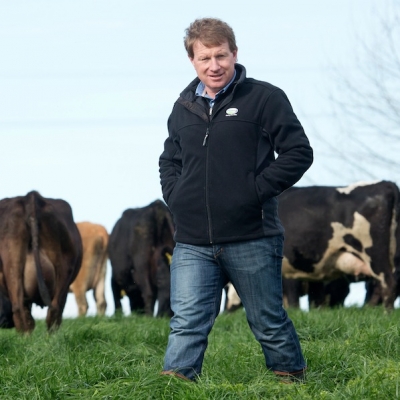 John Wilson: “We should have handled some things differently.”
FONTERRA CHAIRMAN John Wilson admits the co-op should have handled some aspects of last year’s false botulism scare differently, but he says the co-op’s food safety has been proven world-class.
Wilson was commenting on the final report from the independent inquiry into last year’s false WPC80 botulism scare. The report found shortcomings in the co-op’s traceability system and crisis management.
Wilson told Rural News the findings were “similar” to Fonterra’s own investigation report. “What is pleasing is that the recall had no food safety issues; it was a false alarm. “We should have handled some things differently… but overall our food safety is world-leading.”
The inquiry team was headed by Miriam Dean QC and assisted by Tony Nowell and Dr Anne Astin; Professor Alan Reilly was an independent peer reviewer.
It notes that having notified MPI, Fonterra had “no well-prepared (or reviewed or rehearsed) group crisis plan to implement, including crisis communications (particularly in social media)”.
Fonterra took until 18 August to trace all the affected products, “a seriously deficient effort,” it says.
“Fonterra did not effectively co-ordinate its actions with those of the ministry, Danone and the Government during the crisis. Fonterra’s communications were neither well conceived nor co-ordinated and lacked a tone that encouraged consumer trust and loyalty.”
The report also finds that the Ministry of Primary Industries did not have a coherent crisis plan for a food incident that it could implement straight away after receiving notification of C. botulinum.
It notes that the ministry’s response was hampered by Fonterra’s late notification overstating the certainty of C. botulinum and by Fonterra’s drawn-out and deficient tracing.
The report gives MPI credit for many aspects of its response, “but it should have had better-documented decisionmaking processes, used more rigorous science-based risk assessment and co-ordinated better with the industry to avoid unnecessary confusion among consumers and others”.
Primary Industries Minister Nathan Guy says the report is a “very robust piece of analysis.” “The rigour and conclusions of the report, and the actions of key players since the incident, should further strengthen confidence in New Zealand’s world class food safety system.”
Fonterra chief executive Theo Spierings says food safety and quality are its number one priority.
“At the time of the recall, we did what was right based on the evidence we had. It was subsequently confirmed that the recalled WPC80 did not present a health risk,” says Spierings.
Fonterra Co-operative Group chief financial officer Andrew Murray has resigned to take up a role outside the dairy giant.

Four candidates have been confirmed for two director positions on Fonterra’s board.
A record farmgate milk price and strong global demand is laying the foundation for continued growth of organic dairy farming in New Zealand.
Waikato milk processor Tatua has again declared a record milk payout to farmer shareholders, leaving other processors in the dust.
Fonterra has unveiled its annual results for the 2026 financial year, posting $27 billion in revenue and close to $20 billion returned to New Zealand farmer owners and unit holders.


National’s pledge to introduce 19 new national standards shows the party is serious about getting Wellington out of farming, Federated Farmers says.
The National Party’s policies to make it easier to grow fresh vegetables, secure reliable water and energy and simplify farm planning are practical changes that will give growers the confidence to invest, according to Horticulture New Zealand (HortNZ).
Fonterra Co-operative Group chief financial officer Andrew Murray has resigned to take up a role outside the dairy giant.
A major move is about to get underway to improve the quality and viability of dairy beef and cattle in NZ.
Veterinarians say changes to the code of welfare for dairy cattle provides a positive foundation for improved cattle welfare across the country.
Today, 15 October, is the International Day of Rural Women, which recognises rural women’s contribution to farming, communities and the environment.