Southerly Winds Hit Taranaki Dairy Pasture Growth
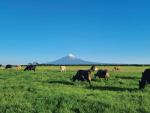
A spate of southerly winds bringing cold temperatures has presented challenges for Taranaki dairy farmers.
 increase font size
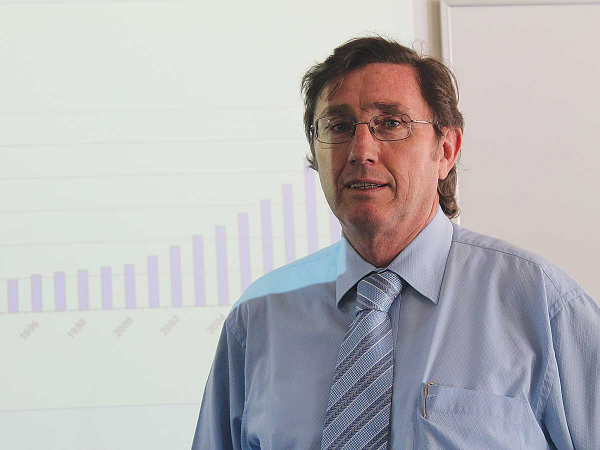 Farm Consultant Phil Journeaux says the pressure is on farmers with the advent of all the new water, animal welfare and labour regulations.
Farmers are getting overwhelmed by all the new regulations and compliance requirements they are facing now and in the future.
Leading farm consultant Phil Journeaux, of AgFirst, told Rural News that farming is a complicated enough business as it is. But he says the compliance cost on farm - in terms of time and paperwork - is growing rapidly and with the advent of all the water, animal welfare and labour regulations, the pressure is on farmers.
"I have been doing a lot of work in the last few years around greenhouse gas emissions, which is very complicated and this has yet to really hit farmers," Journeaux explains.
"I don't think they (farmers) understand how much paperwork and compliance they will be required to do. This whole compliance thing is becoming a really big component of farming and that's why a lot of farmers are reaching for advisors to help them work it through."
Therein lies the challenge. It is well-known that there are insufficient farm consultants that are fully trained to meet what is expected to be a huge influx of demand for the likes of Journeaux and other experienced farm advisors.
Recently, Agriculture Minister Damien O'Connor announced that the Government was investing $25 million to "expand and strengthen the primary sector advisory services to ensure farmers and growers have access to the highest quality farm planning support and advice".
"Employers hiring new advisers, or upskilling existing staff, could receive up to $22,500 annually per adviser to help cover salary and training costs," he said in a statement. "A career pathway scheme will focus on growing the diversity and number of advisers, with an emphasis on attracting more women and Māori into roles."
Journeaux says the announcement is quite exciting because there is an issue with capacity in term of consultancy and advisors working with farmers through all the new plans that are being put in place.
He believes that up until now, consultancy firms have been reluctant to hire large numbers of graduates because of the cost of paying them plus the cost of allocating a senior advisor to work alongside trainees until they are able to work by themselves.
"I think what the Government is offering will go a long way to assist that," Journeaux adds.
"In the past we might have taken on one or two graduates each year; now we can look at picking up four or five and that I think would be much the same across most of the consultancy firms."
But he is quick to point out that it could take up to three years to have new graduates fully trained. Journeaux says the graduates get a good theoretical grounding at university, but this knowledge has to be translated into what is practically needed on a farm.
He says they can only learn this by working alongside an experienced consultant to see how they handle the situation.
"The fact is you are dealing with a whole range of issues: You have got the farm financial business, you have got the farm system and how that works and then you have got the environmental-type issue," Journeaux adds.
"It's a case of how do you put all that together in a package that farmers can work with and make sure the farm business is viable at the end of it? To me, that is a practical skill you learn in the field rather than in a lecture hall at a university."
Journeaux says the aim is to get about 100 more people qualified to help farmers with their various plans. He says farmers need to have trust in consultants and respect their advice and this is about experience which takes time - hence the three year time lag to get the new advisors up to speed.
A spate of southerly winds bringing cold temperatures has presented challenges for Taranaki dairy farmers.
Surprised, humbled and quite thrilled. That’s the reaction of James Allen, one of the founding partners and now chief executive of AgFirst, on being made a life member of the Institute of Rural Professionals.
A warning to dairy farmers not to expect the same good conditions that they experienced last season, has been issued by a leading farm consultant.
A miserable budget that didn’t deliver much for anyone.
As fuel and fertiliser prices rise and with uncertainty in the future, farmers are being urged to go over their budgets with a fine-tooth comb.


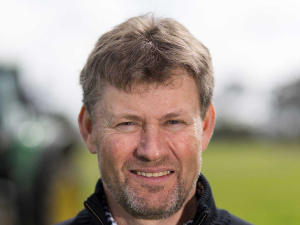
Mark Hooper has been appointed the new chair of NZPork, the industry organisation representing New Zealand pig farmers.

As the India-New Zealand free trade agreement enters into force, New Zealand’s apple industry has reaffirmed its commitment to the long-term development of India’s apple sector.
Fonterra shareholders can begin voting on Tuesday 20 October in the 2026 Board of Directors’ election, a Co-operative Council election in one Ward, and seven Annual Meeting resolutions.
National’s pledge to introduce 19 new national standards shows the party is serious about getting Wellington out of farming, Federated Farmers says.
The National Party’s policies to make it easier to grow fresh vegetables, secure reliable water and energy and simplify farm planning are practical changes that will give growers the confidence to invest, according to Horticulture New Zealand (HortNZ).
Fonterra Co-operative Group chief financial officer Andrew Murray has resigned to take up a role outside the dairy giant.