M.I.A.
OPINION: The previous government spent too much during the Covid-19 pandemic, despite warnings from officials, according to a briefing released by the Treasury.
 increase font size
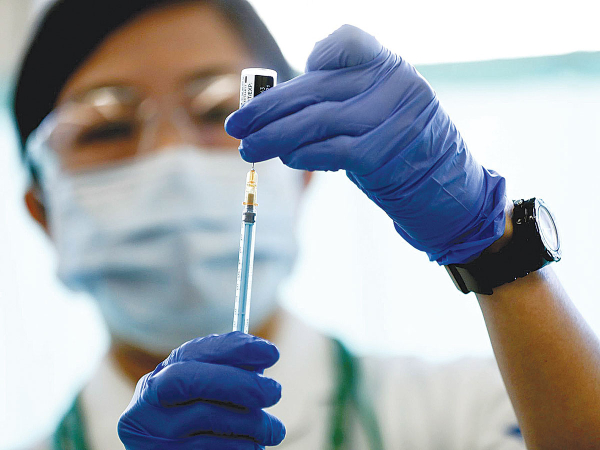 A new study from the University of Otago shows a visible urban/rural divide in Covid-19 vaccination rates.
According to a new study from the University of Otago, there was a visible rural/urban divide in Covid-19 vaccination rates.
The study, Rural-urban variation in COVID-19 vaccination uptake in Aotearoa New Zealand: Examining the national roll-out, sought to analyse vaccination uptake in rural versus urban settings during the peak period of New Zealand’s national vaccination roll-out in 2021.
The research found varying levels of vaccine uptake among different population groups. The study, published in Epidemiology and Infection, used a national dataset of 4.3 million health service users.
According to the study, at the national level, overall vaccination uptake in rural areas lagged most urban areas, with rural areas lagging behind their urban counterparts by 5-11% by December 2021.
However, the research found this gap is not as clear when also looking at vaccination rates in terms of ethnicity, age, and/or region.
While vaccination uptake among older people in rural areas largely reflected urban uptake, vaccination rates among younger people in rural areas tended to be lower than those of younger people in urban areas.
Talis Liepins, the lead author of the study and a PhD candidate in the University of Otago’s Department of General Practice and Rural Health, says the findings suggest opportunities for improvements in vaccination delivery models for rural and urban communities and further highlights the urban-rural divide in relation to equitable healthcare.
“It is important we advance general awareness around equity of access for rural populations and how health interactions for rural communities differ from urban communities,” says Liepins.
The researchers also found “considerable variance” in uptake between rural older and rural younger people; with the rural urban differences much more apparent in those aged less than 45 years.
Co-author, Professor Garry Nixon, head of rural section in the department of general practice and rural health, says that these differences, which were visible across population groups, suggest possible different barriers to access.
Funded by the Ministry of Health COVID-19 and National Immunisation Programme, the study is the first of three exploring the COVID- 19 vaccine rollout in rural Aotearoa New Zealand.
OPINION: The previous government spent too much during the Covid-19 pandemic, despite warnings from officials, according to a briefing released by the Treasury.
OPINION: Labour leader Chris 'Chippy' Hipkins is carrying on the world-class gaslighting of the nation that he and his cohorts started after their disastrous Covid response; now trying to undermine the Covid inquiry to protect his own backside.
OPINION: Did former PM Jacinda Ardern get fawning reviews for her book?
OPINION: Welcome to the second annual NZ Dairy Expo at Matamata – an event created to bring together the best of the New Zealand dairy industry in a focused, grassroots environment where dairy farmers and rural professionals can meet, talk, compare products, and make smart decisions for their farms.
A marketing expert says it’s unlikely that the recent outbreak of avian influenza on an Otago poultry farm will have a significant impact on New Zealand’s trade relationships.


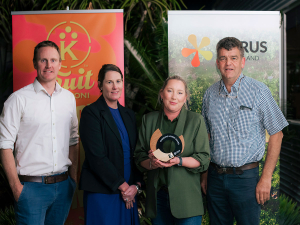
New Zealand's citrus growers were challenged to build their future on the value embedded in their fruit rather than the volume they produce, at Citrus New Zealand's annual gathering in Gisborne on 17 September.

Leading John Deere technicians and apprentices from New Zealand and Australians were recognised at the recent sixth annual JD Technician of the Year Awards, held in Brisbane.
In Dacre, near Invercargill in New Zealand’s South Island, Bruce Dinnington is running a dairy operation unlike any other.
A free online platform aggregating governance vacancies across rural and regional New Zealand has been launched.
Environment Minister Nicola Grigg has announced details of a new rural plastics recycling scheme.
Agricultural drone operators say that a government decision to allow lower-risk drone work without certification won’t lower standards but drive innovation and efficiency.