Farmers Urged to Review Budgets as Fuel and Fertiliser Prices Rise
As fuel and fertiliser prices rise and with uncertainty in the future, farmers are being urged to go over their budgets with a fine-tooth comb.
 increase font size
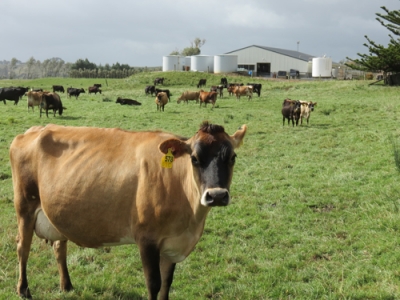
A dairy farm consultant says he is worried that this season’s low milk price will tip some young, innovative dairy farmers out of the industry.
James Allen, of AgFirst, Waikato, says the most vulnerable are new variable or lower order sharemilkers just starting in the industry. Allen did a study some years ago for DairyNZ on the state of sharemilking and is widely regarded as an expert in this area.
He says variable order sharemilkers in the 2013-14 season would have had the benefit of the higher $8.40 payout and the resulting retrospective payments. But he says those starting out in the past year and this new season wouldn’t have had the benefit of a good year.
“I feel very sorry for them because they have started out with an extremely low profit and in some cases a cash loss this year. My concern is how those guys are going to manage their cashflows to survive. We don’t want to lose good prospective farm owners,” he told Rural News.
Allen says the key issue with a variable order sharemilker agreement is that it’s a percentage based agreement and many of these were negotiated well in advance of the season when payout expectations were very good. He says the option of re-negotiating a contract is limited.
“There is no harm in bringing the situation up with the farm owner and seeing what capacity there is to renegotiate the contract. Of course, the farm owner is going through the same issues in terms of a drop in payout so they are going to be equally affected,” he explains.
“So at issue is the capacity and willingness of the other party to look at some sort of contract renegotiation but there are no guarantees or legal requirements to renegotiate.”
Allen says people who go sharemilking need to understand that by doing so they are accepting risk. He says the only alternative to mitigate such risk is to go to contract milking where people are not caught out by the low prices.
“Last year many of the contract milkers were feeling quite aggrieved about missing out on the $8.40 payout, but this year they are pretty happy about life.”
Allen says the key message is expect more volatility.
As fuel and fertiliser prices rise and with uncertainty in the future, farmers are being urged to go over their budgets with a fine-tooth comb.
For the most part, dairy farmers in the Waikato, Bay of Plenty, Tairawhiti and the Manawatu appear to have not been too badly affected by recent storms across the upper North Island.
Fears of a serious early drought in Hawke’s Bay have been allayed – for the moment at least.
Many farmers around the country are taking advantage of the high dairy payout to get maximum production out of their cows.
AgFirst, New Zealand's largest independent agribusiness consultancy, is turning 30 - celebrating three decades of "trusted advice, practical solutions, and innovative thinking".



Wool Impact and ASB have signed a new partnership with the bank set to provide financial backing to support the revitalisation of New Zealand's strong wool industry.

OPINION: Farmers have been clear: it is getting harder, not easier, to find and keep good people.
Last week marked New Zealand Sign Language Week and a South Canterbury tanker operator is sharing what it's like to be deaf in a busy Fonterra depot.
As fuel and fertiliser prices rise and with uncertainty in the future, farmers are being urged to go over their budgets with a fine-tooth comb.
Federated Farmers says reforms of local government announced last week will be music to farmers' ears.
Hinehou Timutimu, the 2026 Fonterra Dairy Woman of the Year, says she feels privileged to have won the award.