MPI cuts 391 jobs
The Ministry for Primary Industries (MPI) has informed staff it will cut 391 jobs following a consultation period.
 increase font size

Fifty-three new orchards were reported as infected with Psa –V in the past week, a big jump from just five new infections for the week before.
The weekly report from Kiwifruit Vine Health says there are now 1030 orchards infected, which is 31% of all New Zealand kiwifruit orchards and 39% of all orchard hectarage.
The big increase this week in new Psa-V results reflects notifications recently reported by pack-houses from monitoring results collated over several weeks.
The new Psa-V identifications include 45 orchards in the Te Puke region and eight in the Tauranga region. The total number of orchards identified with Psa-V is 1030.
Psa-V has been found on Bay of Plenty orchards in the following areas: Te Puke (824); Tauranga (97); Whakatane (47); Opotiki (30); Katikati (13); Waihi (14); as well as in South Auckland on five orchards in Franklin. See www.kvh.org.nz/statistics.
The Ministry for Primary Industries (MPI) has informed staff it will cut 391 jobs following a consultation period.

Despite experiencing the PSA outbreak first-hand growing up, Animal and Plant Health scholarship winner Sarah Wilson says deciding to study agribusiness was the best decision she could make.
A long running legal dispute between the Crown (MPI) and a group of kiwifruit growers over the incursion of kiwifruit vine disease Psa has been settled out of court.
The experience of PSA – and the way Italy and China dealt with Covid-19 – shaped how Trevelyans Packhouse proactively manages their way through the Covid pandemic.
The Crown will appeal the High Court’s decision that the government was negligent in allowing kiwifruit vine-killing disease Psa into the country.


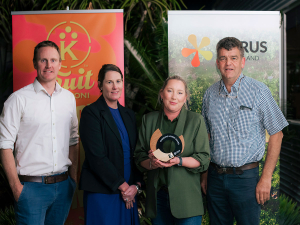
New Zealand's citrus growers were challenged to build their future on the value embedded in their fruit rather than the volume they produce, at Citrus New Zealand's annual gathering in Gisborne on 17 September.

Leading John Deere technicians and apprentices from New Zealand and Australians were recognised at the recent sixth annual JD Technician of the Year Awards, held in Brisbane.
In Dacre, near Invercargill in New Zealand’s South Island, Bruce Dinnington is running a dairy operation unlike any other.
A free online platform aggregating governance vacancies across rural and regional New Zealand has been launched.
Environment Minister Nicola Grigg has announced details of a new rural plastics recycling scheme.
Agricultural drone operators say that a government decision to allow lower-risk drone work without certification won’t lower standards but drive innovation and efficiency.