
Ravensdown Returns to Profit, Approves $15/Tonne Shareholder Rebate
Ravensdown has reported a net profit before tax and rebate of $50.1 million for the year ended 31 May 2026.
 increase font size
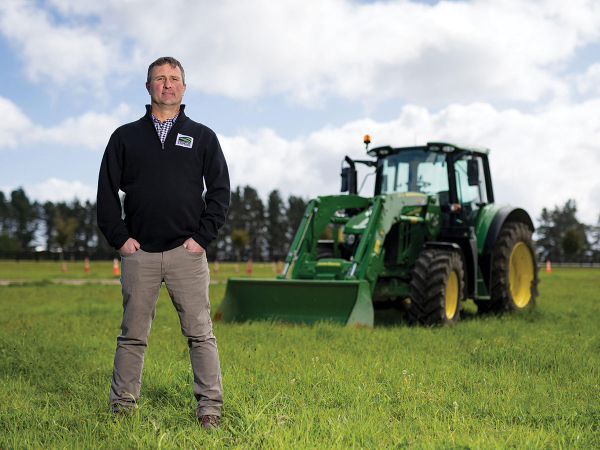 Federated Farmers arable chair David Birkett says dairy conversion is “a logical move” for any arable farmer one who wants to get out.
Some arable farmers are getting out of arable and converting to dairy in the faced of soaring fuel and fertiliser prices on top of a very poor growing season.
Leeston farmer and Federated Farmers arable chair David Birkett says dairy conversion is "a logical move" for anyone who wants to get out.
"The ability is there to do that in certain locations. Or they'll bring more livestock into the system," he told Rural News.
"Those are the changes people are making these days."
His comments come as diesel prices have doubled because of the Iran war, with fertiliser prices tipped to follow suit, following a season where poor weather has played havoc with crop yield and quality.
Birkett said there was still some harvesting to be done in Canterbury and the quality was yet to be determined.
"We're just still waiting to see what the quality is like, but yes it has been a tough year and then these increasing costs have exacerbated that problem.
"What we're currently doing is trying to work our a mechanism in which we can pass on those costs, because at the moment, particularly in arable, we don't have the ability to pass on any cost.
"We sign a contract now and we have to stick with that price for the whole year. And that's pretty hard going. Whereas everyone else in the value chain is able to pass costs on.
"We're going to struggle to survive if we have to absorb these costs anymore."
Birkett said the Iran war had basically doubled diesel fuel costs, from around $1.50 a litre on-farm delivered, to around the three dollar mark, even for bulk deliveries.
"Some of the gear we're using now is pretty big. A combine harvester can be up to a thousand litres a day, and then we've still got all the auxiliary tractors and trailers to cart product away."
Arable farmers were also replanting for the autumn.
"About 70 percent of our crop will go in the next six weeks. It's a pretty busy time, particularly on an arable farm."
Birkett said it was important for farmers to start looking at how they are using fuel.
"There are some jobs that just need to be done, particularly around getting food and product in the ground so that it's growing."
But there were other jobs which could be delayed.
"It's important that everyone's thinking if the job they're doing today is really essential for that fuel use."
He said that those planting out may need to ask whether they need to do "that last pass across the paddock" to get it perfect.
"Because every time we turn the key, as soon as you put your hand on the key, it's costing you significant money these days."
Farmers were also starting to consider changing to crops that needed less care and attention in spring and were therefore cheaper to grow. While that might mean taking a hit on the final value of the crop, the reduced costs could still leave them in a better position.
Fert Prices
Fertiliser companies are trying to ake sure people don't panic buy, by making it clear that they've got supply for autumn application.
But Federated Farmers arable chair David Birkett says spring fertiliser prices also looked to double from where they were.
"It sounds like they are locating different suppliers in the spring so they're hoping that the supply will be okay. But the unknown is the price, and we've already seen in Australia that the urea price is about A$1600."
Birkett said the feds had been talking with the Government about agriculture being an essential service, just as it was during Covid. While the Government was certainly listening, it was about global economics and influence.
"You know, the Government here in New Zealand is really along for the ride, to a degree."
Birkett said future thinking should be about how to build up domestic resilience.
"We've done a great job increasing exports but we've probably done it at the expense of our domestic economy, and when we have events like this, the domestic economy becomes more and more important.
"A little bit more focus on that domestic economy would put us in a stronger position when we have these types of events happening, which do seem to be happening more often," he said.
Ravensdown has reported a net profit before tax and rebate of $50.1 million for the year ended 31 May 2026.
Growers and farmers are being encouraged to have an important conversation before the coming season starts: how to prolong the effectiveness of the crop protection tools they rely on.
A new digital assistant is now helping Ballance Agri-Nutrients farmers speed up nutrient information and ordering.
Improving health and safety is about incremental gain rather than a sudden decision, says Leeston farmer and Federated Farmers health and safety spokesman David Birkett.
A huge reduction in ACC claims from on-farm accidents over the last five years is due to thousands of small, practical decisions being made in sheds, yards, paddocks and around kitchen tables across the country, says Safer Farms ambassador Lindy Nelson.


A Palmerston North shearer has been sentenced to six months' community detention and 12 months' supervision after being found to have physically abused three lambs while shearing them.
Power Farming has launched a joint venture in Southland.
Food rescue charity Meet the Need has released its 2025/26 Impact Report, revealing a record year of growth alongside a stark warning: demand for food support across New Zealand is rising faster than supply can keep up.
As we move into the second half of 2026, the Tractor and Machinery Association (TAMA) reports that Year-to-Date figures ending June 30 saw new tractor deliveries hitting 1,386 units or 10.7% ahead of the same period in 2025.
The avocado sector is entering the new season with a larger crop and positive market opportunities.
New Zealand growers have always adapted to changing conditions, but one challenge is steadily gaining ground across the horticulture sector: resistance.