Dairy Women's Network chief stepping down
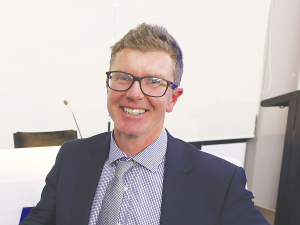
Dairy Women's Network chief executive Zelda de Villiers will step down from her role in May.
 increase font size
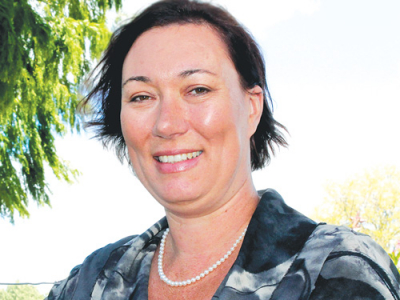 Dairy Women's Network executive Zelda de Villiers.
Many rural women feel isolated and that they are often wasting their skills and education in the farm environment, says a study.
Many are turning to social media for support as they feel traditional rural women's groups are not filling the void, says a student research project by NZ Young Farmers communication manager Nadine Porter.
Porter also says 58% of women surveyed were not using the skills they had been trained in, leaving them unfulfilled.
"There is a wasteland of knowledge among rural women that is not being utilised," Porter says.
"From university, to a career and then back to the farm where they may not be able to use their skills -- a vacuum exists.
"While the government is concentrating on bringing new people into the primary industry, we need to ask 'is there a way to use the skills that currently exist but are not being used to their full potential?' "
Commenting on the study, Dairy Women's Network (DWN) executive Zelda de Villiers points to the network offering support to its 9000+ membership -- filling gaps, catering for online engagement and holding a wide range of events where women can come together.
She urges women feeling isolated to go to the DWN website.
"Increasingly we are noticing women from other agricultural sectors joining our network as well as rural professionals," de Villiers says.
"Our 36 groups run 210 events per year, including learning and social events to connect, have fun and support each other."
Porter did the study through Lincoln University under the Kellogg's Rural Leadership Programme. She says 57% of rural women surveyed find isolation their top issue.
Most surprising, she says, is that 75% of survey respondents say social media forums, notably Facebook, arewhere they turn for support. They are using the 6000-strong Farming Mums NZ Facebook page.
Porter believes urgent research and targeted initiatives for NZ rural women and their families are needed.
Around 24% of women say their local schools offer them the most support including boards of trustees empowering and supporting the women in their communities.
"Coupled with 48% of respondents saying they do not have close family living in their area, isolation as a significant issue is a prevalent theme," Porter says.
De Villiers says rural women's increasing connections on social media such as Facebook keep them up-to-date on friends' and families' lives, and accesses industry and local news and events.
"Our live chat sessions are very popular and show high levels of engagement. Often we have chat sessions from 7-8pm where women can ask different industry experts questions.
"We have over 70 volunteer group leaders able to develop and utilise event management, presentation and facilitation skills, and their community leadership skills within the network.
DWN also offers paid and volunteer roles to develop and present training to members, lead projects and organise conferences.
"When we ask for expressions of interest from our members in these roles, many well qualified, passionate and capable applicants apply," de Villiers says.
Dairy Women's Network chief executive Zelda de Villiers will step down from her role in May.
The saying that ‘change is the only constant in life’ is true for the dairy industry and standing still is not an option, chair Cathy Brown told the Dairy Womens Network (DWN) annual meeting.
If you think milk price or weather are dairy farmers’ biggest concerns, think again – it’s people.
Focused, on-task and anticipating what comes next for the dairy industry: this was the mood of this year’s Dairy Womens Network conference, says chief executive Zelda De Villiers.
Three emerging dairy industry leaders are finalists in the sixth annual Fonterra Dairy Woman of the Year awards contest.


LIC shareholders have elected a new North Island representative to the co-operative's Board, along with five representatives to its Shareholder Reference Group (SRG), following the company's Annual Meeting held in Invercargill.
Farmers across parts of Southland and South Otago are continuing to deal with difficult conditions after a prolonged run of wet weather, with pressure building around feed supply, stock management, pasture damage, farm infrastructure and everyday workloads.
Federated Farmers says it welcomes Labour's commitment to reviewing the Sharemilking Agreements Act, calling on other major parties to do the same.
For Canterbury dairy farmers Sian Meijer and Rick Wobben, wearable technology has become one of their most valuable on-farm tools - helping manage 1850 cows across an expansive, high-performing dairy operation while improving efficiency, mating outcomes and day-to-day decision making.
Fonterra has unveiled its annual results for the 2026 financial year, posting $27 billion in revenue and close to $20 billion returned to New Zealand farmer owners and unit holders.
The first major update to the Dairy Cattle Code of Welfare in more than a decade has been released, marking what DairyNZ describes as an important step in ensuring animal welfare standards continue to evolve alongside scientific evidence and on-farm realities.